

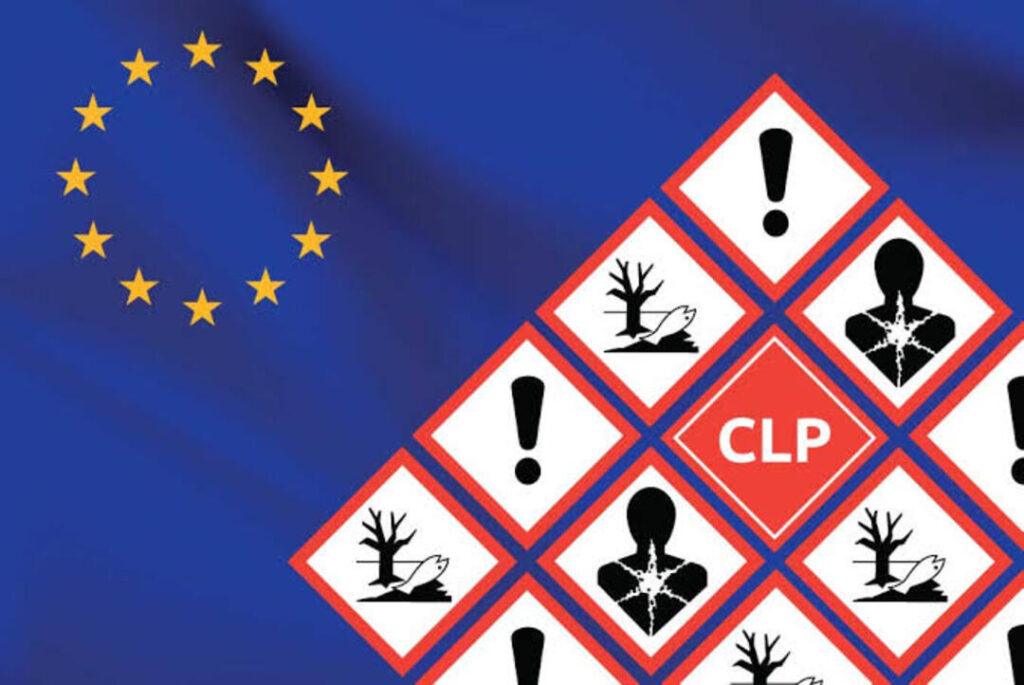
The 2026 EU chemical labeling deadlines create a calendar problem disguised as a labeling problem. Several CLP dates were changed, some obligations were postponed, and other deadlines—especially those tied to the new hazard classes—continued on their original schedule.
That distinction matters because a company can waste time redesigning labels for a deferred formatting rule while missing a classification change that already affects its mixtures. The safest approach is to connect label decisions with the underlying regulatory declarations rather than treating artwork as an isolated packaging task.
The 2026 Calendar Is Not One Deadline
The phrase 2026 EU chemical labeling deadlines covers separate legal changes with different scopes. The new hazard classes introduced under the EU hazard-class regulation address endocrine disruption, persistent and bioaccumulative properties, and persistent and mobile properties. Their transition dates depend on whether the product is a substance or mixture and whether it was newly placed on the market or already present.
A different reform amended the broader CLP framework for label formatting, digital labeling, advertisements, distance sales, relabeling timelines, and related requirements. Selected application dates from that reform were later moved to 2028.
The result is not a blanket delay. Classification deadlines still matter, even where certain presentation and sales-information rules were postponed.
| Date | Requirement or transition | Status in July 2026 | Supplier action |
| May 1, 2025 | New substances assessed against the new hazard classes | Already applicable | Confirm substance classifications and supporting data |
| May 1, 2026 | New mixtures assessed against the new hazard classes | Already applicable | Review mixture calculations, labels, SDSs, and notifications |
| November 1, 2026 | Transition ends for substances already on the market before May 1, 2025 | Approaching | Complete reclassification and communication updates |
| May 1, 2028 | Transition ends for mixtures already on the market before May 1, 2026 | Future | Build a portfolio plan rather than waiting for 2028 |
| January 1, 2028 | Selected revised CLP formatting, advertising, distance-sale, and relabeling rules begin | Postponed from earlier dates | Track final obligations and avoid premature assumptions |
This timeline should be applied product by product. “Placed on the market” status, product type, composition, and supply date can change which transition applies.
New Hazard Classes Can Change More Than the Label
The new categories cover endocrine disruptors for human health or the environment, PBT and vPvB substances, and PMT and vPvM substances. For mixtures newly placed on the EU market since May 1, 2026, suppliers should have already assessed whether available component data trigger classification.
A changed classification can affect the label, but it may also reach SDS Sections 2, 3, 11, 12, 14, or 15 depending on the product and evidence. Poison centre notification data may need review when the hazard profile or submitted information changes. Commercial catalogues and customer declarations may also become inconsistent if the update is made only in the artwork system.
That is why classification must lead the workflow. Updating a label before the technical assessment is complete risks creating a polished document that is still wrong.
The Stop-the-Clock Measure Did Not Cancel Preparation
Regulation (EU) 2025/2439 postponed specified formatting, relabeling, advertising, distance-sale, and filling-station provisions to January 1, 2028. The official postponement measure was designed to provide legal certainty while the EU continued work on simplification.
Suppliers should not interpret that move as permission to freeze all label governance. The delay gives companies more time to correct master data, standardize multilingual text, assess packaging constraints, validate fold-out label processes, and decide how digital information will be maintained.
It also creates a version-control challenge. Teams may hold draft artwork built for the original date, current artwork reflecting existing requirements, and future templates awaiting final implementation. Deferred does not mean deleted; it means the change must be controlled without being released too early.
SDS and Label Reviews Need the Same Trigger List
Many organizations update an SDS in one system and labels in another. That separation becomes risky when a new hazard conclusion, harmonized classification, composition change, supplier data update, or concentration shift affects both.
Create one regulatory trigger list for the entire product record. It should cover new toxicological or environmental data, Annex VI updates, changed impurity profiles, revised mixture calculations, new uses, packaging changes, language corrections, and notification consequences.
The review should also identify where no change is required. Reissuing every SDS merely because a deadline passed can overwhelm customers and obscure the revisions that actually matter. A documented no-change decision is stronger than an automatic publication cycle with no technical rationale.
Pressure Points Before November 2026
The nearest major transition is November 1, 2026, for substances that were already on the market before the new hazard classes became mandatory for new substances. Suppliers should identify affected substances, confirm data ownership, close information gaps, and determine whether downstream mixtures inherit consequences.
Watch for late supplier responses, conflicting classifications across the same substance, incomplete endocrine or persistence data, and labels that cannot accommodate revised text. These are signals that the work is still being handled as document production rather than regulatory assessment.
Companies should also monitor EU legislative finalization around the wider CLP simplification package. The 2028 date creates space, but the eventual operating rules may still require system, contract, packaging, and e-commerce changes. Waiting for final artwork guidance should not prevent data cleanup now.
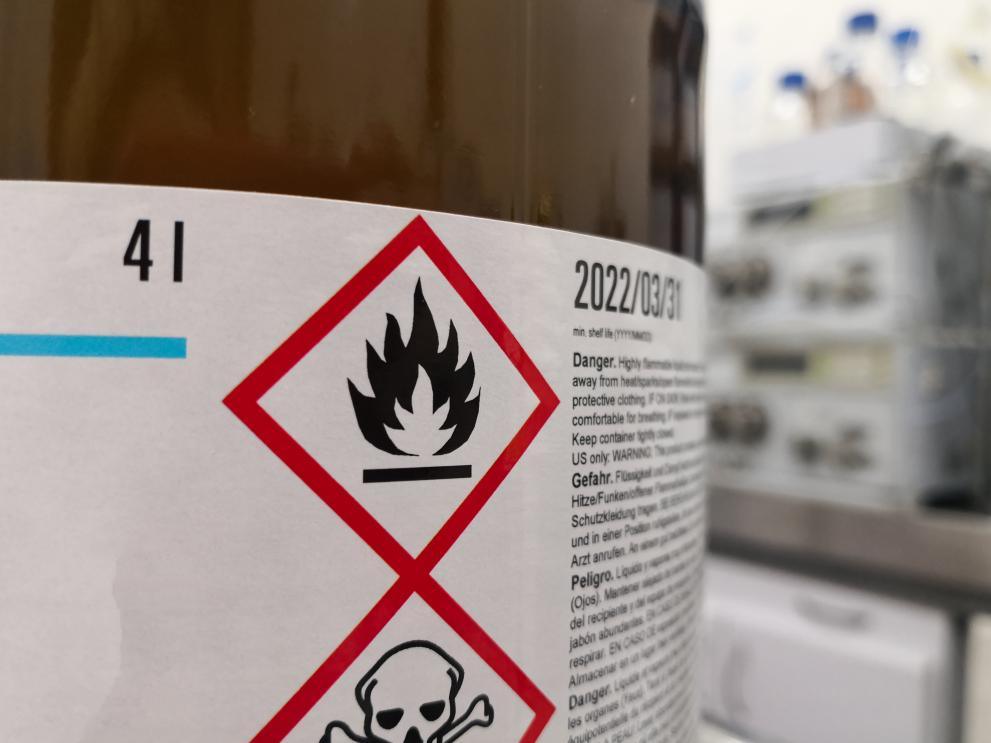
Use the 2026 EU Chemical Labeling Deadlines to Fix the System
The 2026 EU chemical labeling deadlines are best managed as a portfolio of legal triggers, not a single date on a packaging calendar. The expired May deadline, the approaching November transition, the 2028 mixture date, and the postponed CLP provisions each require a different action.
Suppliers that separate classification from formatting, synchronize SDS and label governance, and preserve clear version histories will avoid both premature redesign and late compliance. The immediate opportunity is to use the shifting timetable to build a process that can absorb the next ATP, hazard decision, or legislative change without starting over.