

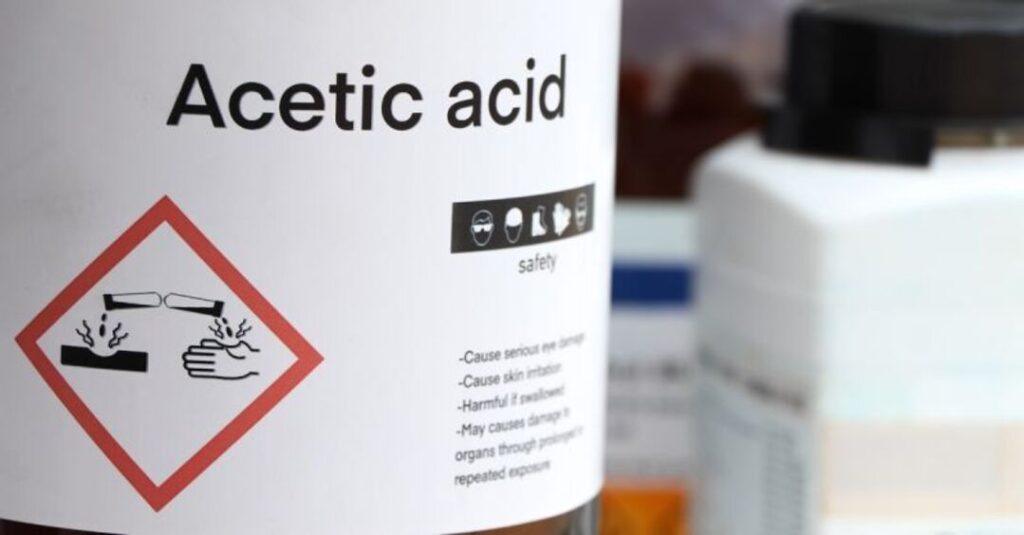
Acetic acid uses can look deceptively simple because many readers associate the chemical with vinegar. In industrial purchasing, however, acetic acid can shift from solvent, reagent, pH-control agent, or food-grade ingredient depending on concentration, grade, documentation, and handling controls.
That difference matters for buyers because the same chemical name does not prove the same application fit. A drum of glacial acetic acid, a diluted food-grade material, and a technical-grade industrial supply may all share the acetic acid identity, but they do not carry the same risk profile.
Acetic Acid Uses Depend On Concentration First
Acetic acid is an organic acid known for its sharp odor and acidic behavior. In diluted form, it is familiar in food-related uses. In concentrated or glacial form, it becomes a much stronger industrial material requiring stricter handling, storage, and documentation.
The concentration changes nearly everything: corrosivity, vapor concerns, packaging needs, PPE, transport classification, storage expectations, and suitability for end use. A buyer should never approve acetic acid based only on the chemical name.
For industrial teams, the first question should be practical: what concentration is being purchased, and what job must it perform? Cleaning, synthesis, pH adjustment, food processing, textile work, coatings, and laboratory use can each require a different grade or control level.
A useful purchasing review should connect the SDS, CoA, specification, label, and intended application. Kilburn’s guide to chemical grade decisions is relevant because acetic acid is a clear example of why grade language must be tied to actual use.
Industrial Solvent And Chemical Intermediate Roles Carry Process Risk
Acetic acid is used in industrial chemistry as a solvent, reagent, and feedstock for downstream materials. It can support production pathways tied to acetate esters, vinyl acetate, acetic anhydride, and other chemical intermediates used across manufacturing sectors.
That does not mean every industrial grade fits every industrial process. Process teams may care about water content, assay, residue, color, odor, metal impurities, chloride, sulfate, or other specification details depending on the application.
A solvent role may emphasize compatibility, evaporation behavior, purity, and residue profile. A chemical intermediate role may emphasize reaction consistency, impurity control, and batch-to-batch stability. A cleaning or pH-control role may require a different balance of performance, cost, safety, and documentation.
This is where procurement mistakes often begin. A buyer may select a lower-cost grade that appears chemically correct but does not support the required process margin. The use case sets the standard, not the product name.
Food-Grade Acetic Acid Is A Documentation Decision
Food-grade acetic acid requires a different review because intended use and regulatory context matter.
FDA guidance on food-grade acetic acid states that acetic acid is generally recognized as safe for use in foods when it is food-grade and used in accordance with good manufacturing practice. It also distinguishes diluted acetic acid from vinegar for labeling purposes.
That distinction is useful for buyers. A supplier saying “acetic acid” is not enough. The purchasing file should show whether the material is food-grade, whether the supplier can support the intended food-related use, and whether the documentation matches the market and application.
Food-grade review may include specification limits, allergen or origin declarations where relevant, packaging suitability, traceability, CoA expectations, and supplier change-control practices. A food-related buyer also needs to know whether the material is used directly in food, in processing, or in a related contact application.
Food-grade suitability is not a marketing claim. It is a documented fitness decision.
| Use Area | Common Role Of Acetic Acid | Buyer’s Main Check |
|---|---|---|
| Industrial solvent | Dissolves or carries materials in processes | Purity, water content, residue, compatibility |
| Chemical intermediate | Supports production of downstream chemicals | Assay, impurities, batch consistency |
| Food applications | Acidulant, flavor-related or pH-control role | Food-grade documentation and labeling fit |
| Cleaning and descaling | Helps remove mineral or alkaline residues | Concentration, PPE, surface compatibility |
| Textile and dyeing | Supports pH adjustment and processing | Grade, dilution control, process consistency |
| Laboratory use | Reagent or analytical material | Reagent grade, test-method suitability |
Handling Risk Increases With Strength And Exposure
Acetic acid is not handled the same way at every concentration. Diluted materials may carry different risk levels than concentrated or glacial acetic acid, which can be corrosive and irritating to skin, eyes, and the respiratory tract.
NIOSH’s acetic acid safety profile identifies exposure controls and first-aid considerations for workplace review. For buyers and EHS teams, that means the SDS must match the exact concentration and form supplied.
A generic SDS creates risk. The PPE, ventilation, spill response, storage, and first-aid guidance for concentrated acetic acid may not be appropriate for a diluted food-grade material, and the reverse is also true. The document should match the physical shipment.
Workers also need task-specific controls. Opening a drum, diluting acid, transferring material, sampling, cleaning equipment, and disposing of residues may each create different exposure scenarios. The hazard is not only in the container. It appears during use.
Storage And Packaging Should Match The Grade
Acetic acid storage should reflect concentration, packaging compatibility, ventilation needs, and segregation requirements.
Concentrated acetic acid should be kept in compatible containers with clear labels, tight closures, and appropriate separation from incompatible materials. Buyers should confirm whether the supplier recommends particular drum materials, liners, temperature ranges, ventilation, or secondary containment.
Packaging also affects quality. Water exposure, contamination, poor closures, damaged drums, and unclear labels can weaken traceability or alter suitability. A food-grade material may need cleaner packaging controls than a general industrial material. A high-purity grade may need tighter protection against contamination.
Storage teams should check labels, batch numbers, seals, damage, corrosion, leaks, and any unusual odor around containers. If a shipment arrives with questionable packaging, it should not be moved into normal inventory without review.
A clean CoA does not correct poor storage. Packaging protects the grade after the supplier releases the batch.

The Pressure Point Is Treating Acetic Acid As One Product
The biggest acetic acid procurement risk is assuming all grades are interchangeable.
A food-grade supply may be unnecessary and expensive for a simple industrial cleaning role. A technical-grade supply may be unsuitable for food-related use. A concentrated grade may require handling controls the site is not prepared to manage. A diluted material may fail a process that depends on higher acid strength.
Buyers should define the application before requesting quotes. Then they should ask for the correct concentration, grade, SDS, CoA, specification, packaging details, storage requirements, and supplier change-control expectations.
The next signal to monitor is substitution. If a supplier changes grade, source, concentration, packaging, or documentation format, the buyer should slow approval and review whether the material still fits the application.
Acetic acid uses will remain broad because the chemical is genuinely versatile. That versatility is also the reason buyers must be precise. The safest purchase is not the one that simply says “acetic acid” on the order; it is the one where concentration, grade, documentation, and use all line up before the material reaches production.
FAQ’s
What is acetic acid used for?
Acetic acid is used in food applications, industrial solvents, pH control, cleaning, textile processing, chemical intermediates, and laboratory work. The correct grade depends on the specific application.
Is acetic acid the same as vinegar?
No. Vinegar contains acetic acid, but diluted acetic acid is not automatically vinegar. Food-related use depends on concentration, grade, labeling, and regulatory requirements.
What should buyers check before purchasing acetic acid?
Buyers should check concentration, grade, SDS accuracy, CoA requirements, packaging compatibility, storage instructions, intended use, food-grade support if needed, and supplier change-control practices.