

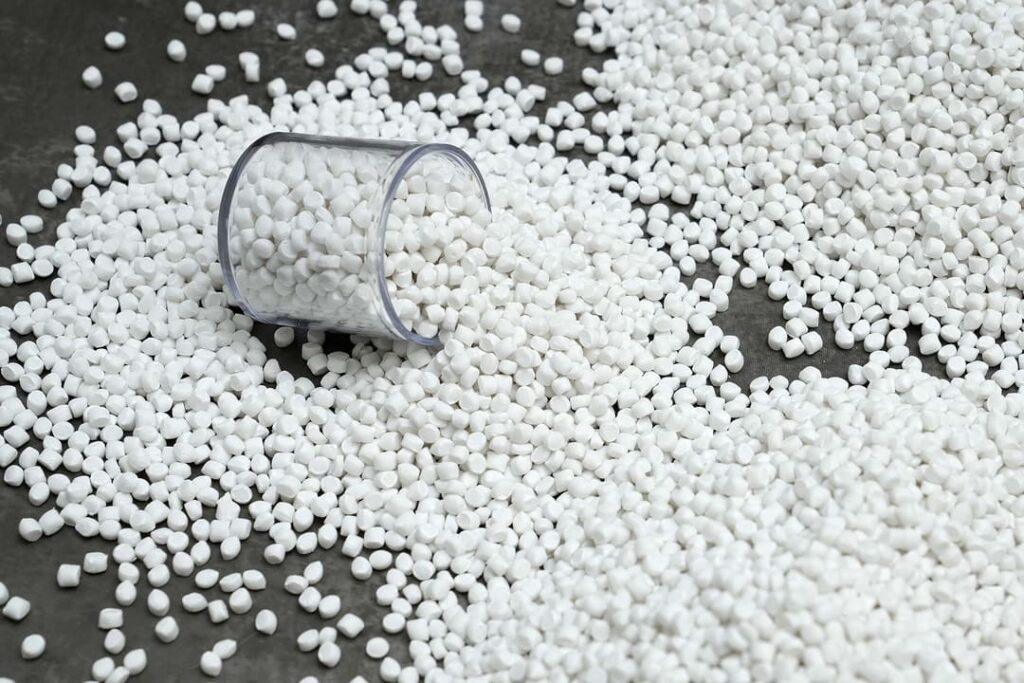
Calcium carbonate filler is often treated as a cost-saving mineral, but that view misses why buyers need to review it carefully. In plastics, paints, paper, rubber, adhesives, and construction products, the wrong particle size, whiteness, purity, or surface treatment can change performance before anyone questions the purchase order.
For industrial buyers, calcium carbonate should not be selected only by price per ton. Its value depends on how well the grade matches the application, the specification, and the production process. A practical chemical specification review helps buyers connect the numbers on the data sheet to real performance, not just supplier claims.
Calcium Carbonate Filler Is More Than Cheap Volume
Calcium carbonate is a naturally occurring mineral commonly associated with limestone, chalk, and marble. In manufacturing, it is widely used as a filler, extender, coating pigment, and performance modifier.
The attraction is easy to understand. Calcium carbonate can replace a portion of more expensive base materials, help control formulation cost, and improve certain physical or optical properties. PubChem’s calcium carbonate profile lists industrial uses across paint, paper, adhesives, and related applications.
But filler does not mean inactive. A poorly chosen calcium carbonate grade can affect viscosity, opacity, tensile strength, surface finish, gloss, abrasion, dispersion, processing speed, and finished-product consistency.
That is why cost control is only the entry point. The real buying decision is whether the filler supports the final product.
Particle Size Shapes Performance
Particle size is one of the most important variables in calcium carbonate selection.
Fine particles can improve surface smoothness, opacity, dispersion, and contact with the surrounding resin, coating, or binder. Coarser particles may reduce cost and support bulk loading, but they can also affect surface finish, mechanical properties, and processing behavior if not matched to the application.
In plastics, particle size can influence stiffness, impact behavior, extrusion stability, and film quality. In paints and coatings, it may affect opacity, sheen, sedimentation, viscosity, and scrub resistance. In paper, particle size and shape can influence brightness, printability, smoothness, and coating behavior.
Buyers should ask for particle size distribution, not only an average number. A narrow distribution may behave differently from a broader one even when the headline value looks similar. Particle size is performance, especially when the filler is doing more than reducing cost.
Whiteness And Brightness Affect The Finished Product
Calcium carbonate is often chosen partly for its white color, but whiteness should not be treated as a cosmetic bonus.
In paints, coatings, paper, plastics, and rubber goods, the mineral’s whiteness and brightness can influence final shade, opacity, tint strength, print quality, and appearance consistency. A filler with weaker optical properties may force the formulator to adjust pigment loading or accept a less consistent result.
The buyer should review whiteness, brightness, color tone, and batch consistency where appearance matters. A low-cost filler that creates color drift can raise production cost through rework, pigment adjustment, or customer rejection.
In appearance-sensitive products, whiteness is not just appearance.
| Buyer Review Point | Why It Matters | Possible Risk If Ignored |
|---|---|---|
| Particle size | Affects dispersion, smoothness, opacity, and strength | Poor finish, weak processing, inconsistent performance |
| Whiteness and brightness | Supports color control and opacity | Shade variation or higher pigment demand |
| Purity | Helps control contaminants and unwanted residues | Quality failures or customer complaints |
| Moisture content | Affects flow, processing, and storage stability | Caking, poor dispersion, process variation |
| Surface treatment | Changes compatibility with polymers or binders | Weak bonding or poor filler distribution |
| Batch consistency | Supports repeatable production | Formulation adjustments and rework |
Surface Treatment Can Change Compatibility
Some calcium carbonate fillers are untreated. Others are surface-treated to improve compatibility with polymers, coatings, sealants, or other systems.
Surface treatment can improve dispersion, reduce moisture sensitivity, improve processing, or strengthen interaction with the surrounding material. In plastics and rubber, treated grades may flow or bond differently from untreated grades. In coatings, surface chemistry can affect viscosity, stability, and final film properties.
The risk is assuming that two calcium carbonate grades are interchangeable because the mineral name is the same. A treated grade may perform well in one formulation and poorly in another. An untreated grade may be adequate for cost reduction but insufficient for performance-sensitive products.
Buyers should ask what treatment is used, whether it is declared on the technical data sheet, and whether supplier changes require notification. A silent change in treatment can alter production behavior without changing the product name.
Moisture And Purity Still Need Review
Calcium carbonate may look stable and simple, but storage and purity still matter.
Moisture can cause caking, poor flow, handling difficulty, and weak dispersion. If the filler is used in polymers, coatings, adhesives, or rubber compounds, excess moisture can affect processing or final properties. Packaging, warehouse humidity, damaged bags, and open partial containers all deserve attention.
Purity also matters. Depending on the source and grade, buyers may need to review acid insoluble matter, heavy metals, iron, magnesium compounds, silica, residue, or other impurities. Not every application needs the same limits, but every buyer should know which impurities matter for the intended use.
A general filler for construction products may not need the same control as a filler for a high-whiteness coating or performance plastic. The specification should reflect the application, not a generic mineral description.
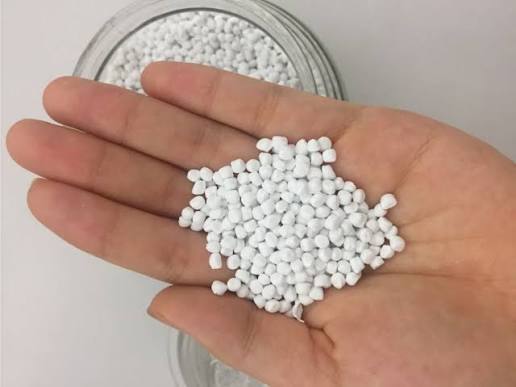
The Pressure Point Is Buying Filler Like A Commodity
The biggest procurement mistake is treating calcium carbonate as interchangeable bulk material. For paper and board, mineral suppliers such as Imerys describe calcium carbonate as a filler and coating pigment used for whiteness, printability, and fiber substitution in paper applications. That same principle applies more broadly: optical quality can influence both performance and cost.
A lower price may be attractive, but the real cost appears when the filler increases viscosity, reduces opacity, creates color variation, clogs equipment, changes film behavior, weakens mechanical performance, or forces reformulation. In those cases, cheap filler becomes expensive.
Buyers should compare suppliers using technical data, recent CoAs, particle size distribution, whiteness, moisture, purity, surface treatment, packaging, and batch consistency. They should also test new grades under real process conditions before approving substitution.
The next risk to monitor is supplier change. A change in quarry source, grinding process, classification method, treatment chemistry, packaging, or moisture control can affect performance even if the product name remains unchanged.
Calcium carbonate filler will continue to be valuable because it helps manufacturers balance cost and performance. The strongest buying decisions come from treating it as a technical input, not as inert volume. When particle size, whiteness, purity, moisture, and treatment are reviewed before purchase, the filler can support the product instead of quietly weakening it.
FAQ’s
What is calcium carbonate filler used for?
Calcium carbonate filler is used in plastics, paints, paper, rubber, adhesives, sealants, and construction products to control cost, improve opacity, adjust texture, and support performance.
Why does particle size matter in calcium carbonate?
Particle size affects dispersion, smoothness, opacity, viscosity, mechanical properties, and processing behavior. Two fillers with the same chemical name can perform differently if their particle size distributions differ.
Is calcium carbonate filler always interchangeable?
No. Grades can differ in particle size, whiteness, purity, moisture, surface treatment, and batch consistency. Buyers should test substitutions before approving them for production.