


Process intensification costs became easier to evaluate after the University of Pittsburgh and Lubrizol reported specific savings from converting a chemical dispersant line from batch to continuous production. As of June 29, 2026, the collaboration under DOE’s RAPID institute had reported a 65% reduction in capital costs and a 60% reduction in operating costs for that line, according to a Pitt engineering report. Those figures are significant, but they should be read as evidence from a specific application, not as a universal estimate for every specialty chemical process.
For procurement and application-solutions teams, the value of this case is not only the percentage reduction. It also shows how equipment footprint, production mode, scale-up risk, and site consolidation can affect sourcing decisions. The relevant question is not whether continuous production is automatically cheaper. It is whether the process, product quality requirements, safety controls, and site constraints support the investment case.
Reported Savings And Evidence Base
What Pitt And Lubrizol Reported
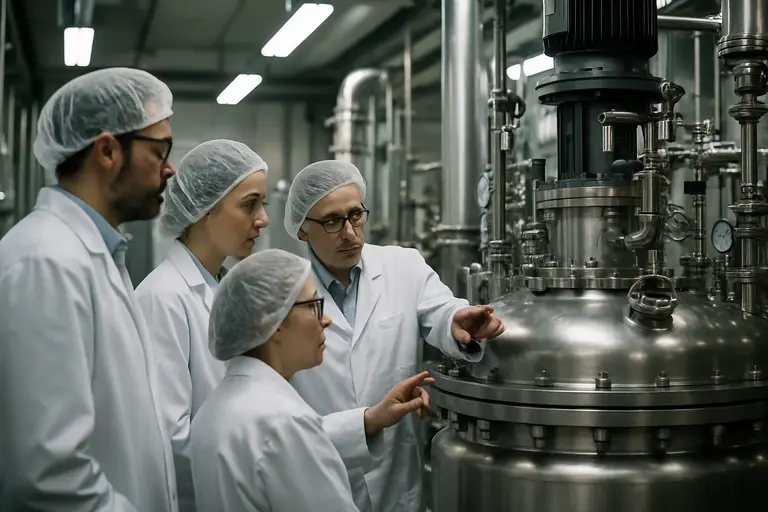
The reported dispersant-line conversion moved production from batch to continuous operation. The continuous-production module was described as shipping-container-sized, and the same Pitt report stated that it improved product quality as well as cost performance. The work was recognized in the 2025 Manufacturing USA Report to Congress as an example of scalable, cost-effective domestic specialty chemical manufacturing.
The project also had an identifiable research path. Pitt’s Swanson School research, led by Professor Götz Veser, produced a prototype reactor that served as the basis for the final continuous module at Lubrizol. That sequence matters for buyers because it suggests the savings were connected to a development program rather than a simple equipment substitution.
Why The Date Matters
Because the cited report was published before September 10, 2026, the collaboration should be discussed in the past tense as a reported result, not as an upcoming trial. The public information supports the statement that this particular line conversion produced reported CAPEX and OPEX reductions. It does not, by itself, provide a full breakdown of energy, labor, maintenance, raw-material loss, yield, or downtime contributions.
What Process Intensification Costs Included
Process Intensification Costs In Scope
In this case, process intensification costs are best understood as a capital-and-operating-cost comparison between the earlier batch route and the continuous production approach. CAPEX refers to the investment required for production assets. OPEX refers to costs incurred in operation. The reported 65% and 60% reductions are useful planning inputs, but they are not a substitute for plant-specific engineering and commercial review.
| Cost Or Performance Area | Publicly Reported Evidence | Procurement Reading |
|---|---|---|
| Capital cost | 65% CAPEX reduction for the converted dispersant line | Strong signal for asset-light expansion in that specific case |
| Operating cost | 60% OPEX reduction for the converted dispersant line | Supports review of labor, energy, cycle time, and utilization drivers |
| Product quality | Improvement reported with the compact continuous module | Quality gains may affect rejection, rework, and qualification assumptions |
| Footprint | Module described as shipping-container-sized | May reduce siting pressure, but site utilities and controls still matter |
| Transferability | Evidence comes from named Lubrizol applications | Requires case-by-case validation before budget adoption |
For procurement teams, process intensification costs should be separated into what is directly reported and what must be modeled. Directly reported figures include CAPEX and OPEX reductions for the dispersant-line case. Modeled items would include supplier qualification, spare parts, control systems, operator training, utilities, cleaning requirements, environmental controls, and regulatory review.
Procurement Reading Of The Pitt-Lubrizol Results
Single-Site Production And Cycle Time
A related 2025 AIChE conference proceeding described work titled Intensification of Lubrizol Additive Production: Optimization and Scale-up Using Batch and Continuous Flow Technologies. The proceeding stated that researchers redesigned a synthetic route to consolidate production at a single site, cut labor and overhead costs per metric ton, shortened cycle times, and reduced both CAPEX and OPEX, while introducing a continuous flow reactor as part of a pathway toward Modular Chemical Process Intensification units AIChE proceeding.
That information is especially relevant for sourcing because single-site consolidation can change the cost base beyond equipment purchase price. Fewer handoffs may reduce labor and overhead per metric ton, while shorter cycle times can affect working capital and scheduling. Those are plausible procurement impacts, but the public proceeding does not give enough detail to calculate a standard saving across other additive lines.
Commercial Terms That Need Review
The reported process intensification costs point to several contract questions. Buyers would need to clarify who owns modular assets, which party is responsible for controls integration, how performance acceptance is measured, and how product-quality improvements are documented. If a supplier proposes a continuous module, procurement should ask whether the quote compares like-for-like capacity, equivalent quality specifications, and the same environmental and safety obligations.
Regulatory planning also affects cost timing. A process that changes production route, site, operating mode, or analytical control may require staged review before full adoption. For a related discussion of compliance planning around continuous production, see the site’s analysis of continuous chemical production. For readers interested in related industrial themes, Mengo Industrial offers further insights.
Limits, Transferability, And Scale-Up Risk
Why The Savings Should Not Be Generalized Too Quickly
The Pitt-Lubrizol data are encouraging for modular and continuous manufacturing, but the evidence is application-specific. Specialty chemical processes differ by reaction chemistry, heat transfer, viscosity, solids handling, purification needs, hazard profile, quality testing, and permitted operating envelope. A compact reactor that works well for one dispersant or additive route may not carry the same economics into a process with different kinetics or separation requirements.
There is also a distinction between reported project economics and a procurement budget. Reported reductions can reflect the selected process boundary. A buyer still needs to know whether installation, commissioning, site utilities, maintenance, digital controls, validation batches, waste handling, and training are included in the comparison. If those items sit outside the published boundary, the internal business case should add them before approval.
Evidence Gaps For Cost Owners
The public sources available for this case do not appear to break the 65% CAPEX and 60% OPEX reductions into component-level savings. That limits how far a procurement team can benchmark the result. Without a component split, it is difficult to know whether the operating reduction came mainly from labor, energy, yield, reduced downtime, lower overhead, less rework, or a combination of factors.
This does not weaken the reported case; it defines its use. The figures are strong evidence that meaningful savings were reported for the Pitt-Lubrizol application. They are weaker evidence for predicting savings in unrelated chemical lines unless similar process conditions, quality needs, and site constraints can be shown.
Pitt-Lubrizol Process Intensification Costs
Decision Points For Application Solutions Teams
Pitt-Lubrizol process intensification costs should be treated as a practical reference case for continuous and modular production, not as a fixed savings rule. The reported dispersant-line conversion delivered large CAPEX and OPEX reductions, and the related additive-production work pointed to cycle-time, labor, overhead, and scale-up benefits. Those outcomes justify serious review by application-solutions and procurement teams.
A cautious adoption path would start with a defined product family, comparable batch baseline, expected production volume, required quality attributes, safety constraints, and regulatory pathway. From there, cost owners can test whether a compact continuous module changes the true cost per metric ton after installation, qualification, utilities, maintenance, and operating controls are included. Used this way, process intensification costs become a disciplined sourcing question rather than a broad claim about all chemical manufacturing.