

Data center emissions have become a sharper industrial-policy issue because the EPA took several 2026 actions aimed at easing parts of the permitting path for data center infrastructure. The central question is not whether all data centers emit pollution directly. Many do not during ordinary computing operations. The concern is narrower and more specific: how air-permitting rules apply to on-site power generation, backup generators, temporary turbines, and construction activity tied to large facilities.
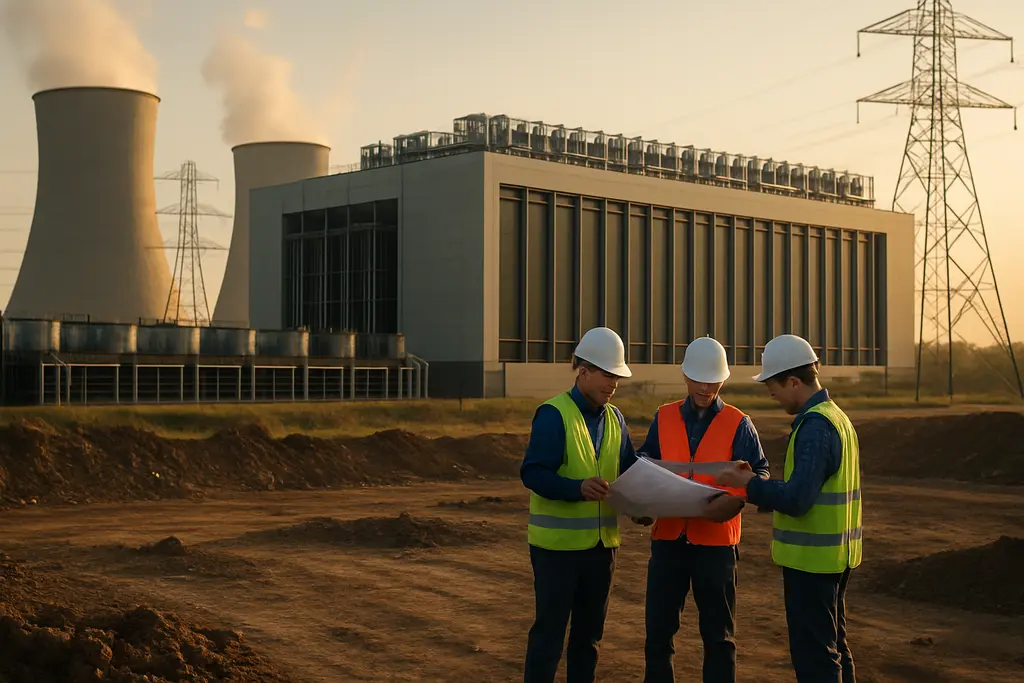
On May 11, 2026, the EPA proposed redefining “Begin Actual Construction” under Clean Air Act New Source Review rules. The agency said the change would allow non-polluting components, such as cement pads, piping, and wiring, to be built before a major NSR permit is obtained, according to the EPA proposal. That is a permitting-timing change, not a finding that later emissions sources are harmless.
Data Center Emissions And The Permit Question
Why Data Center Emissions Are Being Reassessed
The policy pressure comes from a mismatch between rapid data center development and slower utility, generation, and air-permit processes. Data centers can require large amounts of electricity, and some projects use diesel or gas backup generation for reliability. Other proposals involve on-site or “islanded” generation that is not connected to the public grid. The environmental significance depends on fuel, operating hours, equipment controls, location, and whether nearby communities already face elevated pollution burdens.
The research record supplied for this assessment points to rising electricity demand from data centers and a large fossil-fuel share in the power used by existing facilities. Those estimates should be read with caution where they come from preprint analysis, but they are directionally relevant: scale matters. A small change in permitting treatment for a few engines would have one level of impact; repeated application across major clusters could have a larger cumulative effect.
What Is Known Versus Uncertain
What is known is that the EPA proposed changes affecting construction sequencing and issued guidance on certain non-grid power arrangements. What remains uncertain is how many projects would change their construction schedules, how many would install extra temporary or backup generation, and whether state regulators would preserve public-notice practices even if federal requirements were relaxed.
For that reason, the potential effect on data center emissions is conditional. The proposal could reduce delays for certain construction steps, but the air-quality result would depend on the number of combustion units installed, their utilization, and the regulatory review applied before those units operate.
What The EPA Proposed In 2026
Construction Before A Major Permit
The May 11 proposal addressed when construction is considered to have begun for Clean Air Act NSR purposes. In practical terms, EPA’s proposed definition would let developers build non-emitting elements before obtaining the major permit tied to emitting equipment. This could help developers order work in parallel rather than waiting for every air-permit step before beginning site preparation.
That change may be economically meaningful for projects with long lead times for electrical equipment, site work, and backup power systems. It does not, by itself, authorize uncontrolled emissions. The key compliance question would remain whether an emitting source can be installed or operated, and under what permit terms. Industrial operators should treat the proposal as a sequencing change unless final regulatory text clearly states otherwise.
Islanded Power And Temporary Equipment
The research notes also state that, on July 27, 2026, EPA issued guidance saying “islanded” power generation for data centers would not be subject to the Clean Air Act Acid Rain Program when it is not connected to the public grid. The notes also describe a separate proposal that could treat temporary gas turbines used by data centers as mobile equipment rather than stationary sources.
Those distinctions matter because stationary-source classification can trigger different permitting duties than mobile equipment treatment. A looser classification could reduce permitting burdens for temporary generation. It could also make it harder for nearby residents to assess the full emissions profile of a large site if temporary equipment becomes a regular development bridge rather than a rare contingency.
Potential Effects On Air Pollution And Public Notice
Air Pollutants At Issue
The principal local pollutants identified in the research notes are nitrogen oxides and particulate matter from combustion equipment, especially diesel or gas generation. Greenhouse gas impacts are tied both to direct fuel use and to purchased electricity, depending on the grid mix serving the facility.
Public-health groups have warned that eased review could affect communities near data center clusters. The Associated Press reported that an EPA proposal could reduce public notice and comment requirements for some air pollution permits tied to data center infrastructure, particularly backup generators, in a way that could leave residents with less information about proposed sources near them AP reported.
The evidence supports a risk framing, not a definitive impact estimate. Reduced notice does not automatically mean higher emissions at every site. It does mean fewer formal opportunities for residents, local governments, and public-health organizations to review permit applications, submit comments, and challenge assumptions before construction or operation proceeds.
Community Transparency And Cumulative Risk
Community risk is partly cumulative. A single backup generator may be reviewed one way; a group of facilities with many units, plus traffic, construction dust, and supporting power infrastructure, may raise different questions. The research notes identify concern that weakened public participation could disproportionately affect vulnerable populations, especially where data centers are clustered near communities that already experience industrial burdens.
For regulators, the difficult issue is timing. Developers often seek certainty early, while emissions impacts become clearer only after equipment selection, operating assumptions, and power arrangements are documented. If permit timing is eased, transparency mechanisms become more important, not less, because the public record is one of the few ways to connect project scale with local air-quality implications.
Implementation Questions For Industrial Operators

Compliance Controls Still Matter
Industrial operators should avoid reading the EPA actions as a blanket exemption for data center emissions. The supported facts point to proposed and guidance-based changes in specific regulatory categories. They do not remove every Clean Air Act duty, state requirement, local zoning condition, or equipment-specific standard.
- Separate non-emitting construction activity from installation or operation of emitting equipment.
- Document whether power generation is grid-connected, islanded, temporary, backup, or part of normal operations.
- Preserve records on engine type, fuel, operating limits, maintenance, and emergency-use assumptions.
- Track state and local public-notice requirements, which may differ from federal minimums.
- Assess cumulative impacts where multiple data center projects are proposed in the same power or airshed area.
Procurement and construction teams may see shorter lead times if the proposal is finalized, but environmental, health, and safety teams still need a defensible classification for each emissions source. A project schedule should not be the only basis for deciding whether equipment is temporary, mobile, emergency-only, or stationary.
Why Scale Changes The Risk Calculation
The supplied research notes include estimates that data centers already account for a meaningful share of U.S. electricity use and could account for a larger share by 2030. While the precise figures vary by study method and scenario, the implication is consistent: electricity demand growth can convert small permitting differences into broader air and climate questions.
That does not mean every data center has the same footprint. Facilities powered by cleaner grids, lower-emitting backup systems, strict operating limits, and transparent permit records would present different risks from facilities relying heavily on fossil generation. Related industrial policy coverage from the same network can be explored further at SGTT.
Data Center Emissions Under The EPA Proposal
The EPA’s 2026 actions could speed some elements of data center development by allowing non-polluting construction work to proceed earlier and by narrowing how certain power arrangements are treated. The potential downside is not proven at a national scale, but it is plausible where eased review reduces scrutiny of diesel or gas equipment that operates near populated areas.
A cautious assessment is that data center emissions may rise if faster construction and looser classification lead to more combustion equipment, longer operating hours, or less public review. They may not rise materially where equipment remains tightly limited, cleaner power is used, and state regulators keep detailed notice and permit-review procedures in place.
The policy test is therefore practical: whether final rules preserve enough information for regulators and communities to understand the emissions sources attached to each project. Without that record, the debate shifts from measurable permit conditions to assumptions about growth, reliability, and risk.