

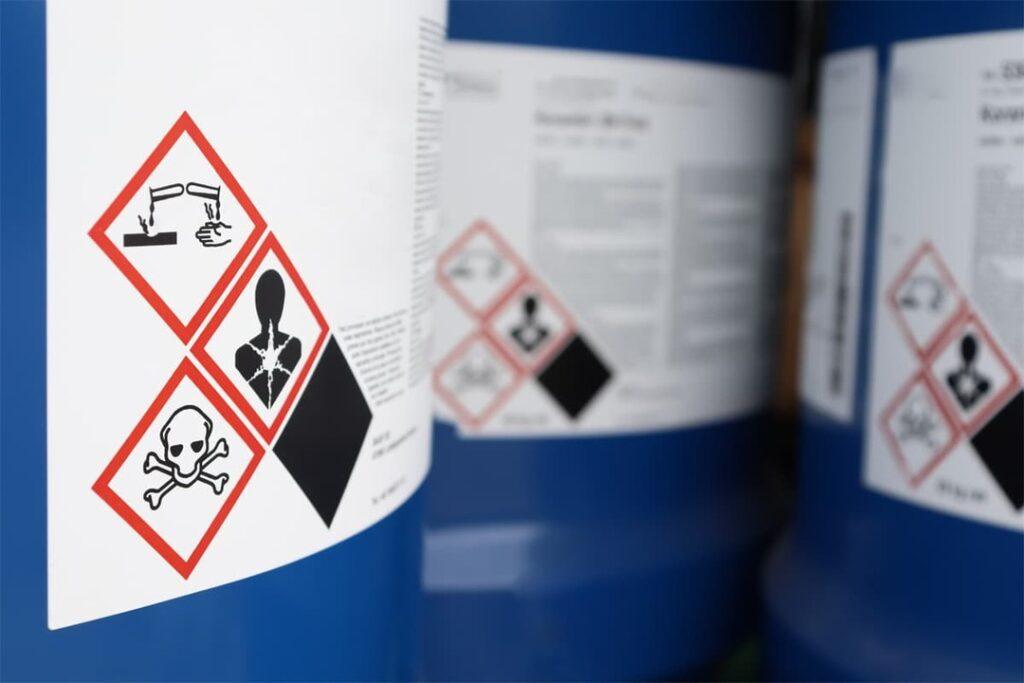
Chemical labels and documentation must match because every container tells a story before anyone opens it. If the label, safety data sheet, certificate, and internal record do not agree, the problem is not just clerical; it can affect handling decisions, audit readiness, storage controls, and production confidence.
For industrial buyers and facility teams, the safest approach is to treat documentation as a live compliance system, not a folder that gets checked only during inspection season. A stronger chemical compliance file helps connect labels, SDS records, product specifications, supplier documents, batch details, and purchasing decisions into one defensible record.
Chemical Labels And Documentation Are One Control System
A label is the first point of contact. It may be seen by warehouse staff, production workers, supervisors, transport handlers, emergency responders, auditors, and quality teams. Documentation sits behind that label, giving deeper information about hazards, handling, composition, storage, disposal, and supplier identity.
When those two layers disagree, confidence breaks down quickly. A drum label may use one product name while the SDS uses another. A batch record may show one grade while the certificate points to a different specification. A storage team may rely on a hazard pictogram that does not match the documented hazard classification.
That mismatch forces workers to guess, and guessing is a weak operating procedure. The label should be the doorway to the same truth found in the documents. If it is not, the facility has to stop and verify before the material moves further into use.
The Real Risk Is Confusion At The Point Of Use
Documentation errors usually become serious when they reach the work area. A purchasing team may notice a mismatch and request clarification. A warehouse employee, however, may be making a faster decision: where to store the container, what PPE to use, whether it can sit near another material, or whether it needs special handling.
That is why chemical labels and documentation should be checked before the product is released into normal workflow. The goal is not paperwork perfection for its own sake. The goal is to prevent uncertainty when workers are handling real containers in real environments.
Official hazard communication guidance from OSHA frames labels and safety data sheets as core tools for communicating chemical hazards to employees. That connection matters because a facility cannot train workers effectively if the written file and container identity do not point in the same direction.
A mismatch may seem small at first. But if it leads to the wrong storage zone, the wrong PPE, the wrong emergency response, or the wrong disposal route, it becomes operational risk.
Where Mismatches Usually Start
Most documentation problems do not come from one dramatic failure. They develop through small handoffs: supplier changes, revised SDS versions, renamed products, repackaged containers, translated labels, secondary containers, outdated templates, manual data entry, or rushed receiving checks.
A product may arrive with a compliant supplier label, then be transferred into a smaller container with incomplete identification. A newer SDS may be saved in one system while an older version remains printed in the storage area. A product code may change while the purchasing description remains unchanged.
| Mismatch Area | Common Problem | Operational Risk |
|---|---|---|
| Product name | Label and SDS use different names | Workers may question identity |
| Hazard information | Pictograms or warnings do not align | PPE or storage decisions may be wrong |
| Supplier details | Vendor records differ from documents | Traceability becomes weaker |
| Batch or lot data | Certificate does not match container | Quality checks may be delayed |
| Revision dates | Old SDS remains in circulation | Teams may rely on outdated information |
These issues are preventable, but only if companies treat receiving, labeling, and document control as connected steps. A document saved somewhere in the system is not enough if the label in front of the worker tells a different story.
SDS, CoA, TDS, And Labels Must Not Compete
Chemical documentation has different jobs. The SDS supports safety and hazard communication. The Certificate of Analysis may confirm batch-specific test results. The Technical Data Sheet may explain product properties or performance-related specifications. The label identifies the container and communicates essential hazard and handling information.
Each document serves a purpose, but none should contradict the basic identity of the material. If a buyer orders one grade, the label identifies another, and the CoA references a third description, the receiving team should not force the material through the system just to keep production moving.
This is where document alignment becomes a quality control issue, not just a compliance issue. Consistent names, grades, codes, batch numbers, hazard details, and revision dates help every department speak the same language.
The Globally Harmonized System described by the UNECE is built around harmonized hazard communication elements, including labels and safety data sheets. That does not remove the need for facility-level checking. It makes internal consistency more important because teams rely on standardized signals to make fast decisions.
Receiving Checks Should Catch Problems Early
The best time to catch a mismatch is before the material enters inventory. Receiving teams should compare the container label against the purchase order, SDS, CoA when applicable, and internal product record. If the details do not align, the container should be held for clarification rather than released into storage or production.
This does not require overcomplicated bureaucracy. It requires a clear checklist and authority to pause questionable material. The person receiving the product should know what must match and who to contact when something does not.
Useful checks include product name, supplier name, grade, container count, hazard label elements, batch or lot number, SDS revision date, and required storage conditions. If the facility uses internal item codes, those codes should also connect cleanly to supplier documents.
Fast receiving should not mean blind receiving. A delay at the dock is usually less costly than a cleanup, rejected batch, failed audit, or unsafe handling decision later.
The Next Pressure Point Is Version Control
As suppliers update documents and facilities add digital systems, version control becomes one of the biggest pressure points. A company may have the right SDS in one database, an older copy in a binder, a different file attached to a purchase record, and a label template that has not been reviewed in months.
That kind of inconsistency weakens trust. Workers may not know which document is current. Auditors may question whether the facility can prove control. Buyers may struggle to compare products accurately if the supporting documents are not synchronized.
Facilities should build a routine for reviewing document revisions, retiring outdated files, checking label templates, and confirming that secondary containers follow the same identity rules as original containers. The more chemicals a business handles, the more important this discipline becomes.
Chemical labels and documentation are not separate administrative details. They are the visible and written parts of the same safety, compliance, and quality system. When they match, workers can act with confidence; when they do not, every handling decision becomes harder to defend.