

Acetone vs isopropyl alcohol is not a simple question of which solvent is stronger. In industrial cleaning, surface preparation, electronics work, coatings, and maintenance, the better choice depends on evaporation speed, residue needs, material compatibility, flammability controls, and what the surface can tolerate.
That is why solvent selection should begin with the application, not the chemical name. A solvent that removes residue quickly may also attack plastics, coatings, adhesives, or seals, while a gentler option may leave more time for wiping but require tighter drying and contamination control.
Acetone Vs Isopropyl Alcohol Starts With Cleaning Behavior
Acetone and isopropyl alcohol are both widely used solvents, but they behave differently during cleaning.
Acetone is known for aggressive solvency and fast evaporation. It can remove oils, greases, uncured resins, adhesives, coatings, and certain organic residues quickly. That speed is useful when the goal is rapid cleaning or surface preparation before bonding, painting, or assembly.
Isopropyl alcohol, often called IPA, is typically less aggressive. It is widely used for general cleaning, wipe-downs, electronics cleaning, disinfectant-related uses, and residue removal where slower evaporation and broader surface tolerance may help.
The practical question is not which solvent is “better.” The question is which solvent removes the target soil without damaging the substrate, leaving unwanted residue, creating unsafe vapor conditions, or disrupting the next process step.
Kilburn’s guide to solvent selection is a useful next step because cleaning power alone does not define a good solvent choice.
Evaporation Speed Changes The Workflow
Evaporation is one of the biggest differences between acetone and IPA.
Acetone evaporates very quickly. That can be useful when a surface must dry fast, but it also reduces contact time. If workers need a solvent to stay wet long enough to dissolve residue, acetone may disappear too quickly unless the process is designed around that behavior.
IPA usually evaporates more slowly than acetone. That gives workers more time to wipe, dissolve, and remove contamination. It may also be easier to control in some cleaning tasks, especially where precision wiping matters.
The tradeoff is drying time. IPA may leave moisture or residues behind if the grade, water content, wiping method, or drying environment is not controlled. Lower-purity IPA solutions contain more water, which can matter for electronics, optical surfaces, coatings, or moisture-sensitive components.
For buyers, evaporation speed is a process variable, not only a convenience.
Surface Compatibility Can Decide The Winner
The wrong solvent can clean the residue and damage the part.
Acetone can attack or soften some plastics, paints, coatings, adhesives, elastomers, and seal materials. That makes compatibility testing essential before using it on finished parts, polymer surfaces, labels, gaskets, or coated components.
IPA is often chosen when a less aggressive solvent is needed, but it is not automatically safe for every surface. Some coatings, inks, adhesives, and plastics may still be affected, especially with repeated exposure, long contact time, or high-purity solvent.
A buyer should ask three questions before approving either solvent: what is being removed, what surface is being cleaned, and what happens after cleaning? A solvent used before bonding must not leave contamination that weakens adhesion. A solvent used on electronics must not introduce moisture or residue. A solvent used in production must not damage equipment materials.
Small compatibility failures can create expensive quality problems later.
| Selection Factor | Acetone | Isopropyl Alcohol |
|---|---|---|
| Cleaning strength | Stronger for many organic residues | Moderate and widely used for wipe-downs |
| Evaporation | Very fast | Slower than acetone |
| Surface risk | Higher risk for some plastics and coatings | Usually gentler, but still needs testing |
| Water content concern | Usually low water in suitable grades | Depends heavily on IPA concentration |
| Common use fit | Adhesives, resins, coatings, fast drying | Electronics, general cleaning, precision wiping |
| Main buyer concern | Compatibility and vapor control | Purity, water content, drying behavior |
Flammability Controls Are Not Optional
Both acetone and isopropyl alcohol are flammable liquids, so storage and use need practical controls.
OSHA’s chemical database identifies acetone with a flash point of 0°F and isopropyl alcohol with a flash point of 53°F. Those values help explain why ignition control, ventilation, container closure, bonding and grounding where needed, and approved storage practices matter.
The risk is not limited to open flames. Sparks, hot surfaces, static discharge, poorly ventilated areas, and vapor accumulation can create unsafe conditions. Fast evaporation may increase vapor presence quickly, especially with acetone.
Workers should use the SDS, site procedures, and task-specific risk review before opening, transferring, spraying, wiping, or disposing of solvent. PPE should reflect splash risk, vapor exposure, glove compatibility, and the amount of solvent handled.
A solvent that feels familiar can still create serious fire and exposure risk.
Grade, Water Content, And Residue Matter
Solvent grade can change the outcome.
Industrial acetone, reagent-grade acetone, electronics-grade solvent, and general-purpose cleaning solvent may not have the same impurity profile or residue expectations. The same is true for IPA. A 70% IPA solution behaves differently from 99% IPA because water content changes drying, cleaning, and material interaction.
For general cleaning, lower-cost grades may be acceptable. For electronics, optical parts, adhesives, coatings, or controlled manufacturing, buyers may need tighter limits for nonvolatile residue, water, metals, acidity, or other contaminants.
A Certificate of Analysis can help when solvent quality affects the finished process. The SDS supports hazard and handling decisions, while the technical data sheet or specification helps clarify purity, residue, and intended use.
The buyer should avoid assuming that any bottle labeled acetone or IPA will fit the job. Grade is part of performance.
The Pressure Point Is Substitution Without Testing
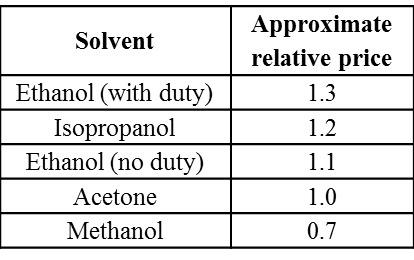
Solvent substitutions often happen under pressure. A supplier runs short. A team wants faster drying. A buyer finds a lower-cost option. A process owner assumes IPA can replace acetone, or acetone can replace IPA, because both are common solvents.
That is where problems start.
A replacement solvent should be tested against the soil, surface, process step, drying requirement, residue tolerance, safety controls, and waste-handling expectations. The review should also confirm whether existing gloves, containers, transfer tools, ventilation, and storage areas remain suitable.
A substitution that works once during a quick trial may still fail under production conditions. Repeated wiping, larger surfaces, longer exposure, different temperatures, or different operators can reveal issues not seen in a small test.
Acetone vs isopropyl alcohol should be decided through application fit, not habit. Acetone may be the right choice when fast, aggressive cleaning is needed and surface compatibility is proven. IPA may be better when controlled wipe-downs, broader surface tolerance, or electronics-related cleaning matter. The safest buyer decision is the one that matches solvent behavior to the process before the material reaches the floor.
FAQ’s
Is acetone stronger than isopropyl alcohol?
Acetone is generally more aggressive for many organic residues, adhesives, resins, and coatings. That can improve cleaning speed but may also increase surface damage risk.
Which dries faster, acetone or isopropyl alcohol?
Acetone usually dries faster than isopropyl alcohol. Fast drying can help surface preparation, but it may reduce contact time and increase vapor-control concerns.
Can IPA replace acetone in cleaning?
IPA can replace acetone only after testing. The buyer should confirm cleaning performance, surface compatibility, residue, drying time, flammability controls, and process requirements before switching.