

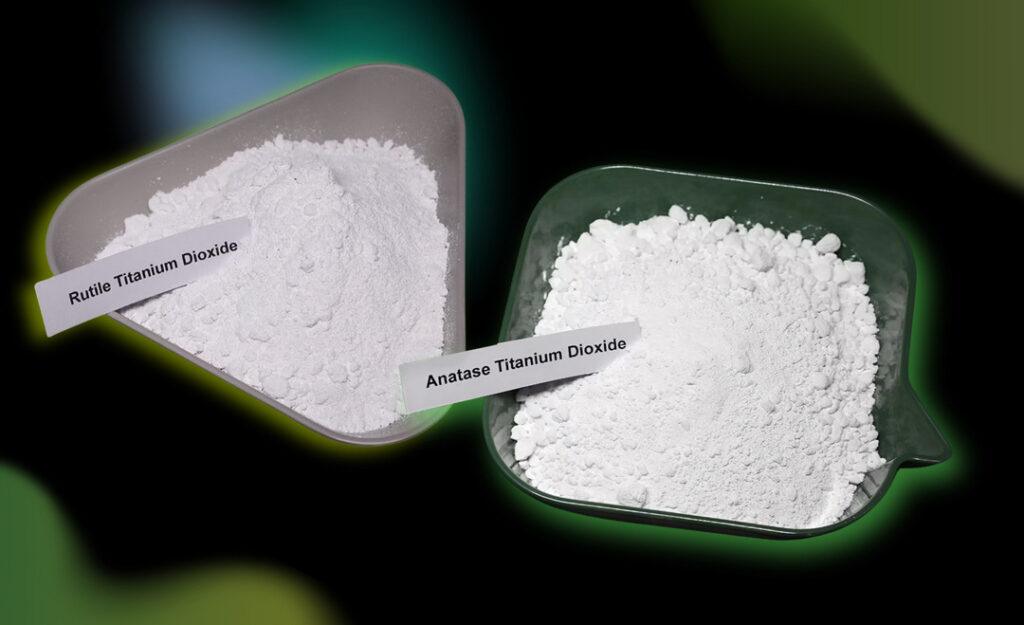
Anatase vs Rutile Titanium Dioxide is not just a chemistry comparison; it is a product selection decision that can shape opacity, brightness, durability, processing behavior, and final product quality. For manufacturers working with coatings, plastics, paper, rubber, inks, or related industrial formulations, choosing the wrong grade can create problems that are expensive to fix after production begins.
For buyers reviewing titanium dioxide grades, the same discipline used in impurity control for industrial chemicals should guide product selection. The real question is not which form sounds better on a specification sheet. The better question is which grade fits the performance pressure of the application, because titanium dioxide often sits inside a larger system of binders, fillers, resins, process conditions, and customer expectations.
Anatase vs Rutile Titanium Dioxide Starts With Structure
Anatase and rutile are both crystalline forms of titanium dioxide, commonly written as TiO2. They share the same chemical formula, but their crystal structures are different, and that difference affects how they behave in industrial use.
A basic titanium dioxide compound profile shows why buyers should not treat TiO2 as a single interchangeable material. The chemistry may look simple on paper, but commercial performance depends on grade, crystal form, surface treatment, particle size, dispersion behavior, and end-use conditions.
Rutile is generally associated with strong opacity, higher refractive index, and better durability in demanding pigment applications. Anatase is often valued where brightness, whiteness, and certain indoor or less weather-exposed uses matter more than maximum outdoor durability.
That does not mean rutile is automatically superior, or that anatase is a lower-value choice. The right titanium dioxide grade is the one that matches the product’s real operating conditions.
A basic titanium dioxide compound profile also helps explain why the same chemical formula can still lead to different practical decisions in purchasing and formulation.
The Main Difference Is Performance Under Pressure
The biggest mistake in product selection is treating anatase and rutile as simple substitutes. In practice, they often serve different priorities.
Rutile usually performs well where hiding power, weather resistance, and long-term stability are important. That makes it common in exterior coatings, plastics exposed to light, and products where color retention and durability carry commercial value.
Anatase is commonly considered where high whiteness, clean brightness, and cost-effective pigment performance are central. It may be suitable for indoor paints, paper, rubber, certain inks, and applications where extreme outdoor exposure is not the main performance test.
The distinction matters because titanium dioxide is rarely judged alone. A buyer may see strong lab brightness but still face dispersion issues. A formulator may choose high opacity but later discover that processing conditions, compatibility, or surface treatment affect the final finish.
| Selection Factor | Anatase Titanium Dioxide | Rutile Titanium Dioxide |
|---|---|---|
| Typical strength | Brightness and whiteness | Opacity and durability |
| Common use direction | Indoor or less exposed applications | Exterior or higher-stress applications |
| Weathering performance | Usually lower than rutile | Usually stronger than anatase |
| Product selection concern | Fit with finish, cost, and brightness needs | Fit with durability and hiding power needs |
| Buyer’s key question | Is long-term exposure limited? | Is maximum stability required? |
Brightness, Opacity, And Durability Should Not Be Separated
Many buyers begin with whiteness or price. That is understandable, but it can narrow the decision too quickly. Titanium dioxide selection should balance brightness, opacity, durability, and processing performance together.
Brightness helps the product look cleaner and more visually consistent. Opacity helps cover the underlying surface or base material. Durability helps the final product resist breakdown, discoloration, or performance loss under exposure.
The role of titanium dioxide as a white pigment for whiteness and opacity is well established in standard titanium dioxide descriptions. But industrial buyers still need to ask how that pigment behaves in their specific formula, not just how it is described generally.
A coating, for example, may need opacity at a target film thickness. A plastic product may need color strength without processing instability. A paper application may prioritize brightness and surface appearance. An ink system may care about dispersion, gloss, and print behavior.
A grade that performs well in one industry can disappoint in another if the selection logic is too broad.
Application Fit Matters More Than A Generic Grade Preference
The practical decision usually begins with the application, not the crystal form.
For exterior coatings, rutile often becomes the stronger candidate because exposure to sunlight, moisture, and temperature changes can punish weaker pigment choices. The same logic may apply to outdoor plastics, roofing-related materials, and industrial finishes where durability is part of the product promise.
For indoor applications, anatase may remain attractive when the main expectations are brightness, whiteness, smooth appearance, and controlled cost. In those cases, paying for a performance profile the product does not need may not improve the final result.
This is where procurement and technical teams should work together. Purchasing may focus on price, availability, and supplier terms. Technical teams may focus on dispersion, undertone, opacity, and aging behavior. Both views matter.
The strongest selection process asks practical questions early: Will the product face outdoor exposure? Does it need high hiding power? Is brightness the main visual goal? Will the formula be sensitive to dispersion problems? Is the customer judging appearance, durability, cost, or all three?
Specification Sheets Are Useful But Not Enough
Technical data sheets help buyers compare grades, but they should not replace application testing. A specification sheet can show useful values, yet it cannot fully predict how a titanium dioxide grade will behave in every formulation.
Particle size, surface treatment, oil absorption, moisture content, and dispersion behavior can all influence manufacturing results. Even when two products appear similar, small differences can affect processing, finish, or consistency across batches.
That is why serious product selection should include sample evaluation before bulk purchasing. Lab testing, pilot batches, and controlled comparisons can reveal issues that are not obvious from a document alone.
A lower-cost grade may look attractive until it requires higher loading, causes processing delays, or fails to deliver the expected finish. A premium grade may be unnecessary if the product only needs basic indoor whiteness. Selection should be based on total formulation performance, not purchase price alone.
The Next Pressure Point Is Consistency Across Supply
The next challenge for buyers is not only choosing between anatase and rutile. It is maintaining consistent product performance once the grade is selected.
Industrial buyers need dependable supply, repeatable quality, and clear documentation. A grade that performs well once must keep performing across production cycles. If color, dispersion, or opacity shifts from batch to batch, the cost appears in rework, customer complaints, or manufacturing inefficiency.
That pressure is especially important for manufacturers serving competitive markets where margins are tight and quality expectations are high. Product teams may not have the flexibility to reformulate every time supply changes.
This is why titanium dioxide selection should include both technical fit and supplier reliability. The best choice is not simply the grade that works in a sample jar. It is the grade that can support repeatable production at commercial scale.
Anatase vs Rutile Titanium Dioxide ultimately comes down to disciplined product selection. Rutile may be the stronger fit when durability and opacity carry the most weight. Anatase may be the better match when brightness, whiteness, and indoor performance are the main priorities. The opportunity is in choosing with precision before production begins, because the wrong pigment decision can quietly affect every layer of the final product.