

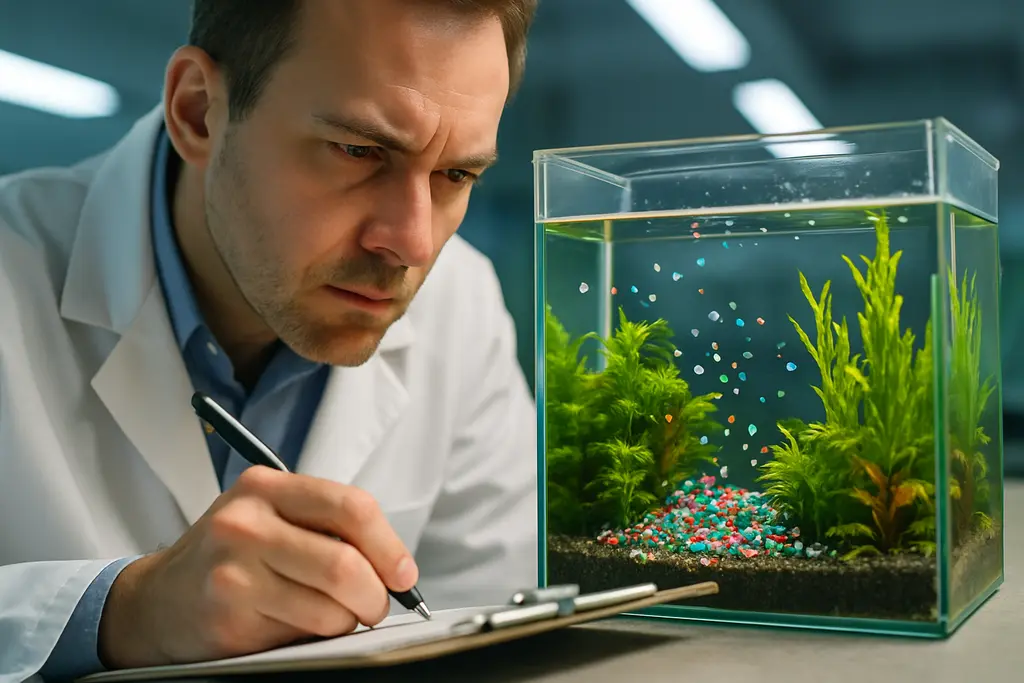
Biomimetic Microplastic Cleanup is drawing attention in supply chain planning because several recent studies and funded projects point to measurable microplastic capture in water systems, washing-machine effluent, and stormwater runoff. The evidence is not uniform, and it does not yet support a single preferred technology for all industrial settings. It does, however, give procurement, sustainability, and EHS teams a clearer basis for asking what has been field-tested, what remains a prototype, and what happens to captured particles after removal.
The most relevant signal for industrial buyers is not the bioinspired concept by itself. It is the tested operating context. A fish-gill-inspired device for laundry discharge, a biofilter receiving urban runoff, and a sponge-like sorbent used in seawater face different solids loads, flow patterns, maintenance demands, and waste-disposal questions. Treating them as interchangeable would overstate the evidence.
Why Biomimetic Microplastic Cleanup Is Being Tested
Bioinspired microplastic control is being studied because conventional filtration can face clogging, pressure-drop, and maintenance problems when fibres, fragments, and organic matter move together through water. In supply chain terms, this matters where textiles, appliance makers, wastewater contractors, site operators, and logistics teams each hold only part of the responsibility for particle capture and disposal.
Biomimetic Microplastic Cleanup At Appliance Scale
The European Union-funded SuspensionFlow project reported work between June 1, 2024, and November 30, 2025, on a washing-machine-scale biomimetic filter inspired by ram-feeding fish and gill structures. According to the project reporting, the prototype achieved over 80% microplastic fibre retention, maintained stable flow, resisted clogging, and outperformed conventional dead-end filters in the tested setting, as reported by European Commission CORDIS.
That result is relevant for textile and appliance supply chains because it targets a known pathway: fibres released during washing. Still, the project evidence describes a prototype, not a broadly deployed commercial system. Buyers would need information on durability, cleaning frequency, replacement parts, user behaviour, captured-fibre handling, and costs before treating the approach as ready for procurement specifications.
For those interested in industrial trends and environmental safety procurement topics within the same network, the Mengo Industrial website offers insights into related industrial developments. The same caution applies across bioinspired material selection; prior coverage of geomimicry materials stressed that performance evidence tends to be case-specific and early-stage.
What The Field Evidence Shows
Field evidence is particularly valuable because laboratory water is rarely the same as runoff or industrial effluent. Suspended sediment, natural organic matter, salts, surfactants, and changing flow rates can alter performance. For supply chain teams, field data can help separate a promising mechanism from a serviceable operating unit.
Stormwater Biofilters Offer Field Data
A May 2026 study of seven biofiltration and bioretention systems in Southern California used paired influent and effluent sampling across 18 storm events. The study reported a median event-mean concentration reduction of 72% for microplastic particles. For 14 events where runoff volume was measured, the median total microplastic load removal was 93%. Removal was reported across size fractions ranging from 20-63 micrometres to greater than 500 micrometres, with event-mean concentration reductions varying by fraction from 68% to nearly 100%, according to the peer-reviewed ACS study.
This is stronger evidence than a single bench-scale demonstration because it involved real storm events and operating biofilters. Even so, the findings should not be read as a guarantee that every bioretention cell will deliver the same result. Design, maintenance, catchment conditions, rainfall intensity, and the starting mix of particles can all affect performance.
Biomimetic Microplastic Cleanup also includes engineered filters and sorbent materials that were reported in 2025 and 2026 with high removal values in laboratory or scaled-up water tests. Those data points are useful for technology screening, but the research notes show sensitivity to water chemistry and test conditions in some cases. That is a practical limit for industrial buyers handling variable effluents.
Supply Chain Implications For Industrial Buyers
Microplastic control is not only an environmental engineering question. It affects product design, equipment procurement, wastewater service agreements, maintenance planning, waste classification, and supplier qualification. A technology that captures fibres well but creates a difficult concentrate stream may shift risk rather than remove it.
Procurement Questions For Filters And Service Contracts
Industrial buyers should ask for evidence tied to their own operating conditions. For a washing-machine or textile-effluent application, fibre size, detergent chemistry, cycle frequency, filter-cleaning method, pressure drop, and user compliance may matter. For stormwater, hydraulic loading, sediment, vegetation condition, media age, and maintenance intervals become central. For marine or process-water treatment, salinity and competing particles can change removal efficiency.
- Has the device been tested in the same type of water or only in prepared laboratory samples?
- Is the reported metric particle count, mass removal, concentration reduction, or total load reduction?
- What particle sizes, shapes, and polymers were included in the test?
- How is the captured material removed, stored, transported, and disposed of?
- What maintenance action is required when flow drops or solids accumulate?
These questions are not barriers to adoption. They are the minimum due-diligence steps needed to compare technologies fairly. A high removal percentage under one test condition may be less relevant than a lower but verified removal rate in the exact water stream a facility manages.
Limits Before Wider Deployment
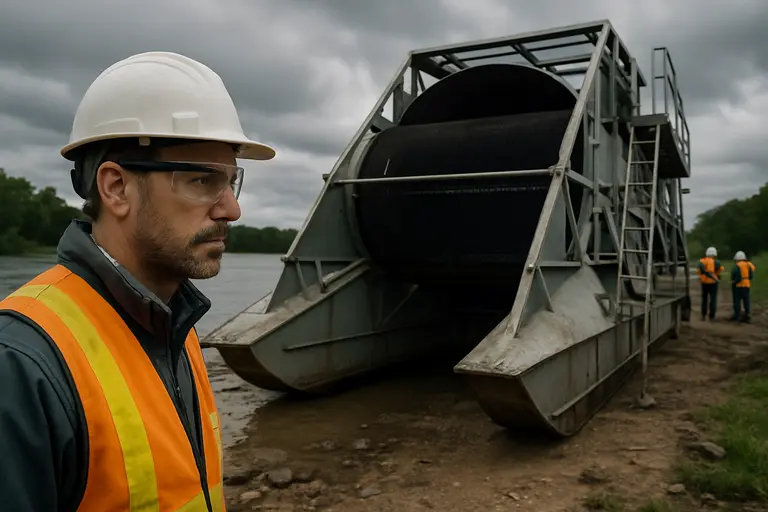
The research base points to progress, but it also shows why cautious interpretation is needed. Microplastics vary by size, polymer, density, surface chemistry, and shape. Fibres from laundering do not behave exactly like fragments in stormwater or nanoplastics in seawater. Some reported devices are designed to avoid clogging; others rely on sorption surfaces or structured flow. Each approach brings different maintenance and waste-handling requirements.
Capture Is Not The Same As Destruction
For most filtration and sorption systems, removal from water means transfer into a filter, sludge, sponge, cartridge, or concentrate stream. That can reduce discharge, but it does not by itself destroy the particles. Supply chain contracts should define who owns the captured material, how it is characterized, whether it is regenerated or discarded, and what records are kept.
Regulatory treatment may also differ by jurisdiction and waste stream. The research supplied for this article does not identify a new universal rule requiring a particular biomimetic device. That means adoption decisions are likely to be driven by local discharge expectations, brand and customer pressure, corporate sustainability targets, and site-specific risk assessments rather than a single global mandate.
Biomimetic Microplastic Cleanup should therefore be evaluated as a set of targeted tools, not as a settled replacement for existing wastewater, stormwater, or product-design controls. In many facilities, source reduction, material substitution, screening, treatment, and sludge management may all need to be considered together.
Biomimetic Microplastic Cleanup Needs Measured Adoption
The strongest near-term case for these technologies is in applications where the pathway is well defined and the test evidence closely matches the operating environment. Appliance-scale fibre filters may be relevant where laundry discharge is the primary concern. Biofiltration systems may be relevant where urban runoff is a major pathway. Engineered sponges and sorbents may warrant pilot testing where water chemistry and regeneration requirements are understood.
Biomimetic Microplastic Cleanup is becoming more credible because recent work includes both prototype development and field monitoring, but the evidence remains application-specific. For supply chain teams, the prudent next step is not broad specification by marketing label. It is controlled piloting, clear performance metrics, lifecycle review of captured material, and contracts that assign maintenance and disposal responsibilities before installation.