

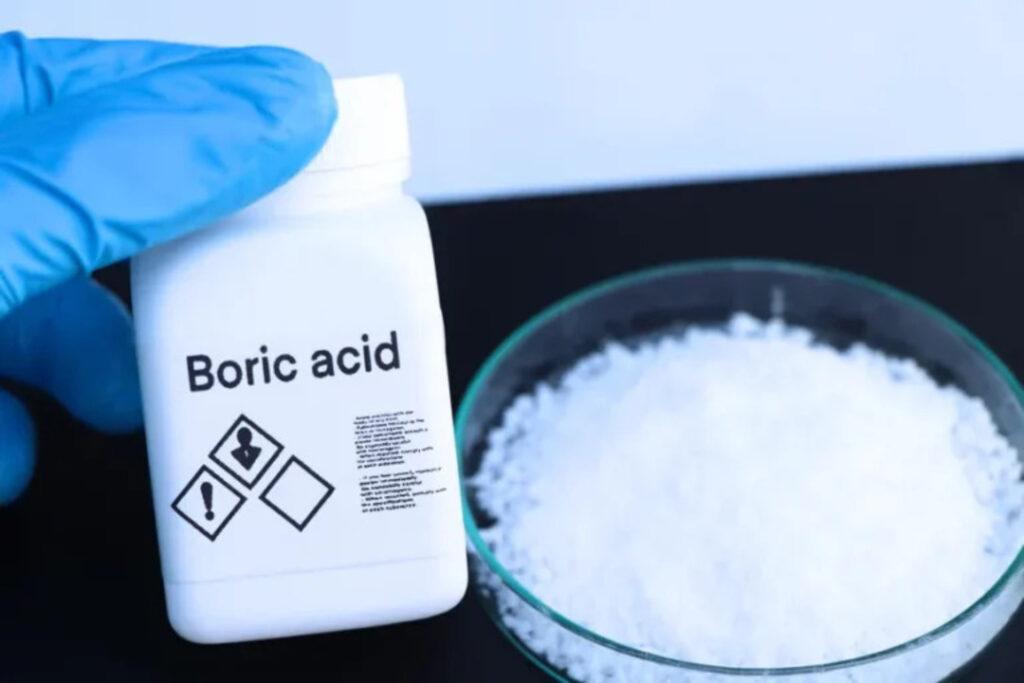
Boric acid uses are easy to underestimate because the compound rarely draws the attention given to stronger acids, alkalis, or solvents. Yet in glass, ceramics, flame-retardant systems, buffering, agriculture, and industrial formulations, boric acid can influence durability, heat behavior, stability, and finished-product quality.
For buyers, the central question is not whether boric acid is useful. It is whether the grade, particle form, purity, packaging, and documentation match the application. One material name can sit behind very different performance expectations.
Boric Acid Uses Cut Across Materials And Formulations
Boric acid is a boron-containing compound used in a wide range of industrial and specialty applications. PubChem’s boric acid profile identifies the compound and related chemical information, making it a useful starting point for confirming identity and technical review.
In industrial use, boric acid may support glass and ceramic production, flame-retardant systems, buffering, wood treatment, agriculture, cosmetics, pharmaceuticals, and chemical formulations. Those applications do not all require the same grade.
A glass manufacturer may care about boron content, impurities, and melting behavior. A ceramics buyer may review particle size and consistency. A formulation buyer may care about solubility, pH effect, trace impurities, or documentation supporting the intended market.
That is why application determines suitability. Boric acid should not be treated as one interchangeable commodity across every end use.
Glass And Ceramics Depend On Consistency
Boric acid is associated with boron chemistry used in glass and ceramic systems, where boron-containing materials can influence thermal behavior, durability, and processing. Buyers in these sectors usually need repeatable chemistry because small shifts can affect melting, glaze behavior, finish, or physical performance.
The practical review should include assay, boron content, moisture, insoluble matter, particle size, and impurities that may affect color or process stability. If the material is used in high-value glass or specialty ceramics, even modest variation can create expensive production consequences.
Packaging also matters. Moisture exposure, damaged bags, poor sealing, or contamination can weaken handling consistency. A product that looks simple in dry powder form can still cause process disruption if it clumps, varies between lots, or arrives with unclear labeling.
Kilburn’s guide on chemical data sheets is relevant here because boric acid buyers need to connect assay, purity, particle size, and supplier data to real manufacturing behavior.
Flame Retardants Require A Fit-For-Use Review
Boric acid and other boron compounds are used in some flame-retardant systems. Research on boron-based fire retardancy discusses boron compounds in natural polymeric materials, including their role in dehydration and barrier-forming behavior.
That does not mean boric acid can be dropped into any material and expected to solve fire performance. Flame-retardant applications depend on the substrate, loading level, processing method, moisture behavior, compatibility, regulatory requirements, and finished-product testing.
Buyers should avoid vague claims such as “flame retardant grade” unless the supplier can support the exact application. A textile, wood product, polymer composite, or coating may require different formulation evidence and performance testing.
The buyer’s file should include the product specification, CoA, SDS, intended-use statement where relevant, and any test data needed by the customer or regulatory environment.
| Use Area | Why Boric Acid Is Used | Buyer’s Main Review |
|---|---|---|
| Glass | Supports boron chemistry in glass systems | Assay, impurities, moisture, consistency |
| Ceramics | Helps influence glaze and material behavior | Particle size, purity, batch repeatability |
| Flame retardants | Supports certain fire-resistance formulations | Fit-for-use testing and compatibility |
| Buffering | Helps control pH in selected formulations | Concentration, solubility, formulation impact |
| Agriculture | Supplies boron in controlled contexts | Grade, dosage control, regulatory fit |
| Specialty formulations | Used in cosmetics, pharma, or industrial blends | Documentation and market-specific suitability |
Buffering And Formulation Work Demand Precision
Boric acid is a weak acid, which makes it useful in selected buffering or formulation contexts. That role is different from a strong mineral acid used for aggressive pH adjustment.
In formulations, the buyer may care about solubility, pH behavior, particle form, purity, microbial concerns, and compatibility with other ingredients. A small amount can affect stability, texture, preservation strategy, or process response depending on the system.
This is especially true where boric acid enters cosmetics, pharmaceuticals, or other controlled markets. A grade that is fine for industrial buffering may not be supported for personal-care or pharma-related use. Documentation should match the market, not merely the chemistry.
The phrase “same chemical” is not enough. Same use case is what matters.
Storage And Handling Still Need Control
Boric acid is not handled like hydrochloric acid or caustic soda, but that does not make storage unimportant.
Dry material should be protected from contamination, moisture, damaged packaging, and label loss. If particle size matters, rough handling or poor storage can affect flow, dusting, or blending behavior. If purity matters, cross-contamination can create quality problems.
Warehouse teams should inspect bags, drums, liners, pallet condition, seals, and labels. Partial containers should be closed and identified clearly. If boric acid is used in regulated or customer-sensitive applications, traceability from batch to final use should be preserved.
The SDS should still be reviewed for safe handling, dust control, PPE, and spill cleanup. Low-drama handling is not the same as no-control handling.
The Pressure Point Is Documentation By End Use
The main boric acid procurement risk is using a technically correct product in a commercially wrong application.
A supplier may offer industrial-grade material, but the buyer may need a grade suitable for ceramics, agriculture, cosmetics, flame retardants, or a customer-specific formulation. Without a clear documentation review, the site may discover the mismatch only after production or customer audit.
Buyers should request the SDS, CoA, product specification, particle size data, packaging details, shelf-life guidance if applicable, and any use-specific declarations required by the market. Supplier change control matters too. A source change or impurity shift can affect color, melt behavior, formulation stability, or customer acceptance.
Boric acid uses remain broad because the compound is versatile. The buying discipline is to narrow that versatility into a clear application match. The strongest decision is not simply approving boric acid; it is approving the right grade, from the right supplier, with the right documentation for the job.
FAQ’s
What is boric acid used for industrially?
Boric acid is used in glass, ceramics, flame-retardant systems, buffering, agriculture, wood treatment, specialty formulations, cosmetics, and pharmaceutical-related applications, depending on grade and documentation.
Is boric acid the same for every application?
No. Boric acid grades can differ in purity, particle size, moisture, impurities, packaging, and documentation support. Buyers should match the grade to the exact end use.
Why does boric acid documentation matter?
Documentation helps prove identity, quality, intended-use suitability, traceability, and safety requirements. It becomes especially important in regulated, customer-sensitive, or performance-critical applications.