

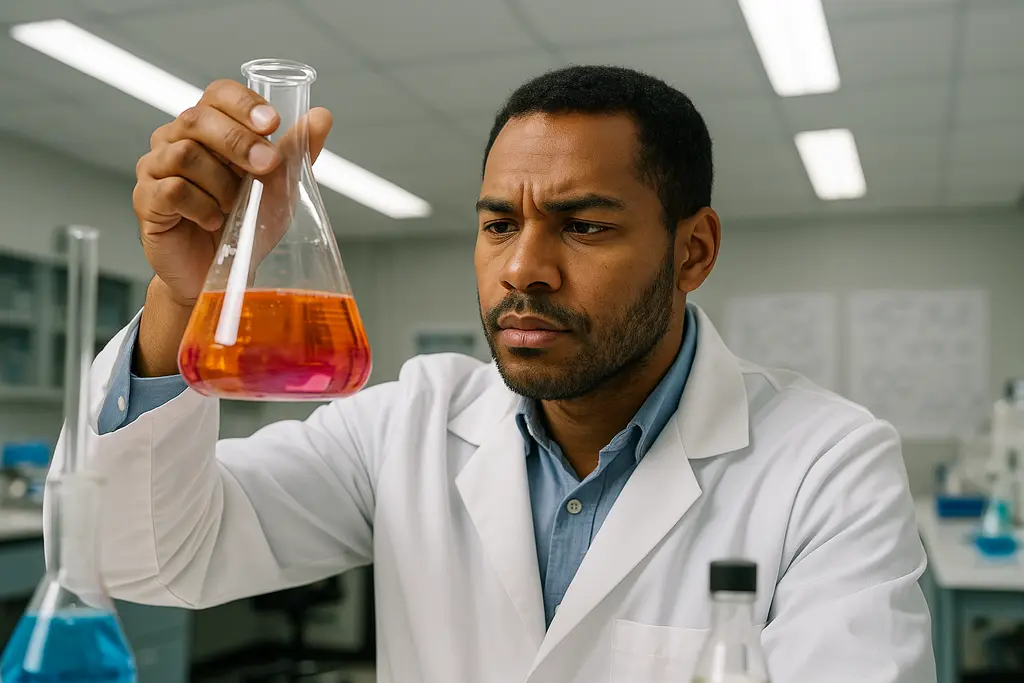
The Chemical Industry Outlook for 2026 points to a sector working through weak demand signals, capacity pressure, and slower economic growth. Innovation remains a practical response, but the evidence available in current forecasts supports a selective view: projects need to improve reliability, efficiency, product differentiation, or decision quality rather than serve as broad technology experiments.
The 2026 picture is not uniformly negative, and forecasts can change as trade policy, energy costs, customer inventories, and regional demand shift. Still, the available data indicate a cautious operating environment. That means chemical producers, distributors, and industrial buyers should read innovation claims through the lens of implementation cost, compliance obligations, and measurable operating gains.
Chemical Industry Outlook Signals Slower Growth
Production Forecasts Show Limited Momentum
Forecasts cited by PCI Magazine indicate that global chemical production growth has been adjusted downward to about 2% for 2026, reflecting a prolonged industry downcycle and persistent pressure in basic chemicals PCI Magazine analysis. That figure is not a collapse, but it suggests limited room for volume-led recovery if customers remain cautious and capacity utilization stays under strain.
Deloitte projects U.S. chemical production volumes to contract by 0.2% in 2026, with global GDP growth slowing to 3.1% and U.S. growth decelerating to 1.4% Deloitte outlook. Those projections connect chemical-sector demand to broader industrial and consumer activity. They do not prove that every product line will weaken, but they do support closer scrutiny of capital allocation and inventory commitments.
Why The Chemical Industry Outlook Matters For Buyers
For buyers, the Chemical Industry Outlook matters because supply risk is not only a question of product availability. It can also involve pricing resets, longer lead times, contract renegotiation, and changes in supplier investment priorities. A producer facing lower operating rates may still maintain service levels, but it may be less willing to support low-margin customization or inventory buffers without stronger commercial justification.
This is where procurement and technical teams should coordinate. Specifications, substitute materials, approved supplier lists, and testing requirements can determine whether a buyer can respond quickly if a source changes terms or reduces production. A related U.S. demand discussion is available in the site’s chemical output forecast, which is relevant for teams comparing domestic planning assumptions.
Innovation Under Economic Pressure
Research And Development Needs A Clear Business Case
Innovation in this setting is best treated as a disciplined operating choice, not a general promise of growth. Deloitte’s outlook notes that chemical companies are investing in research and development and digital models to improve innovation and efficiency. The supported inference is narrower: companies appear to be seeking ways to defend margins, improve execution, and develop differentiated offerings while volume growth remains limited.
That distinction matters for compliance and product stewardship. A new formulation, process aid, coating ingredient, additive package, or specialty material may offer performance advantages, but it can also change documentation, classification, labeling, exposure control, storage, transportation, customer qualification, or end-use review. The commercial value of innovation is therefore partly dependent on how early these requirements are evaluated.
Digital Models And AI Need Operational Boundaries
Artificial intelligence and other intelligent applications are being scaled in parts of the industry to improve efficiency and operations, according to the research supplied. The strongest near-term use cases are likely to be bounded: maintenance prioritization, process monitoring, demand planning, quality prediction, energy optimization, or document workflows. These systems can support decisions, but they do not remove the need for qualified engineering, EHS, quality, and regulatory review.
Data quality is a likely constraint. Plant data may be incomplete, inconsistent across sites, or affected by sensor drift, production changes, and legacy systems. Commercial teams may also have demand data that reflects past ordering patterns rather than current customer consumption. For these reasons, digital investments should include validation steps, exception handling, user accountability, cybersecurity review, and change-management controls.
Supply Chains, Trade, And Capacity Discipline
Trade Tensions Affect Planning Assumptions
Current research indicates that geopolitical and trade tensions are affecting supply chains, delaying investment decisions, and reducing trade volumes, with U.S. chemical imports projected to reach their lowest levels since 2020. The practical effect is that sourcing plans built on stable cross-border flows may need revision. This does not mean reshoring is always economical, but it does support more explicit comparison of duty exposure, lead time, supplier concentration, and alternate grades.
Companies comparing supplier networks may also track related industrial sourcing resources such as those provided by Mengo Industries. Any such review should still be grounded in documented specifications, supplier qualification evidence, and applicable regulatory requirements rather than general claims about availability.
Overcapacity Changes The Innovation Question
Persistent overcapacity, particularly in basic chemicals, is reported as a continuing source of pressure on operating rates and margins. In that context, innovation may not mean adding more volume. It may mean reducing cost variability, improving yield, supporting higher-value grades, or moving toward specialty applications where customer qualification and performance needs are more specific.
Specialty materials can offer a different demand profile from commodity lines, but they are not insulated from economic pressure. The path from development to revenue may require application testing, customer trials, regulatory checks, production scale-up, and supply assurance. For readers tracking this area, the site’s discussion of specialty chemicals market innovation provides a related view of how material performance and compliance expectations can shape adoption.
Implementation Risks For 2026 Innovation Programs
Measurable Returns Should Be Defined Early
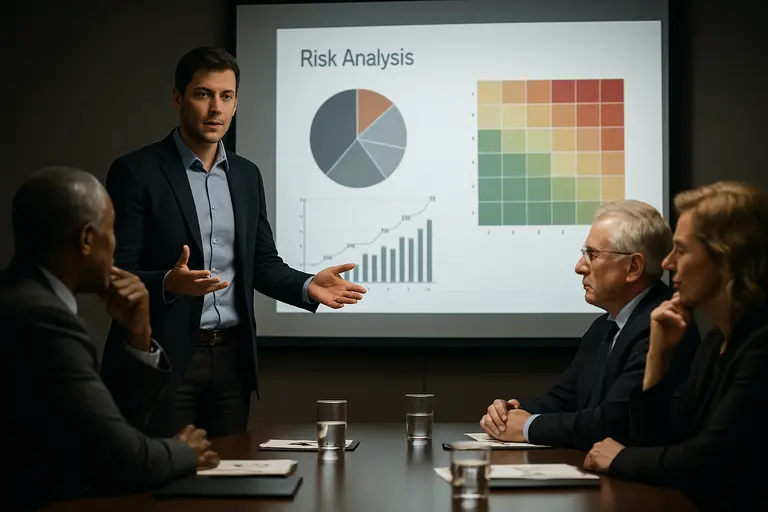
Research notes indicate that sustainability and digital spending are shifting toward initiatives with measurable returns. That is consistent with an industry facing cost pressure, but it also raises a governance question: which measurements are credible enough to guide investment? Energy savings, scrap reduction, faster batch release, lower rework, fewer stockouts, or improved forecast accuracy can be tracked, but each requires a baseline and a method for separating project effects from market changes.
For chemical businesses, measurement should not be limited to financial indicators. Safety, product quality, environmental compliance, and customer acceptance can decide whether a project is viable. A process change that appears to improve yield may still require review if it changes emissions, waste streams, impurity profile, worker exposure, or downstream customer performance.
Compliance Documentation Can Limit Speed
Innovation projects often move faster in presentations than in regulated operations. Documentation can include safety data sheet review, technical data sheets, certificates, transport classifications, storage compatibility guidance, customer change notices, and internal management-of-change records. None of these steps should be treated as paperwork after the fact. They are part of the evidence chain that allows customers and regulators to understand what has changed.
Implementation barriers are likely to vary by segment. A digital planning tool may face data and workflow barriers, while a new product chemistry may face testing, registration, labeling, and customer approval barriers. A facility efficiency project may depend on capital timing, contractor capacity, and maintenance windows. The 2026 operating environment may make these barriers more visible because teams have less tolerance for projects that do not produce practical results.
Chemical Industry Outlook Needs Focused Innovation
Strategic Choices Should Match The Evidence
The most defensible response to the 2026 outlook is not to cut innovation broadly or fund it without limits. A disciplined Chemical Industry Outlook points to focused investment: projects that improve resilience, reduce avoidable cost, support differentiated products, or improve the quality of operating decisions. The evidence does not support a claim that digital tools, AI, or new materials will offset all macroeconomic pressure.
For management teams, the near-term test is whether each initiative can survive a structured review. What demand signal supports it? Which operational constraint does it address? What compliance documentation is needed? What customer evidence is required? What metric will show whether it worked? These questions are practical safeguards in a year when slower growth, trade uncertainty, and overcapacity may leave little room for vague programs.
Innovation can still be a useful strategy in 2026, but only when its purpose is specific. The companies best positioned to act are likely to be those that connect technical work, supply planning, commercial discipline, and compliance review before market pressure forces hurried decisions.