

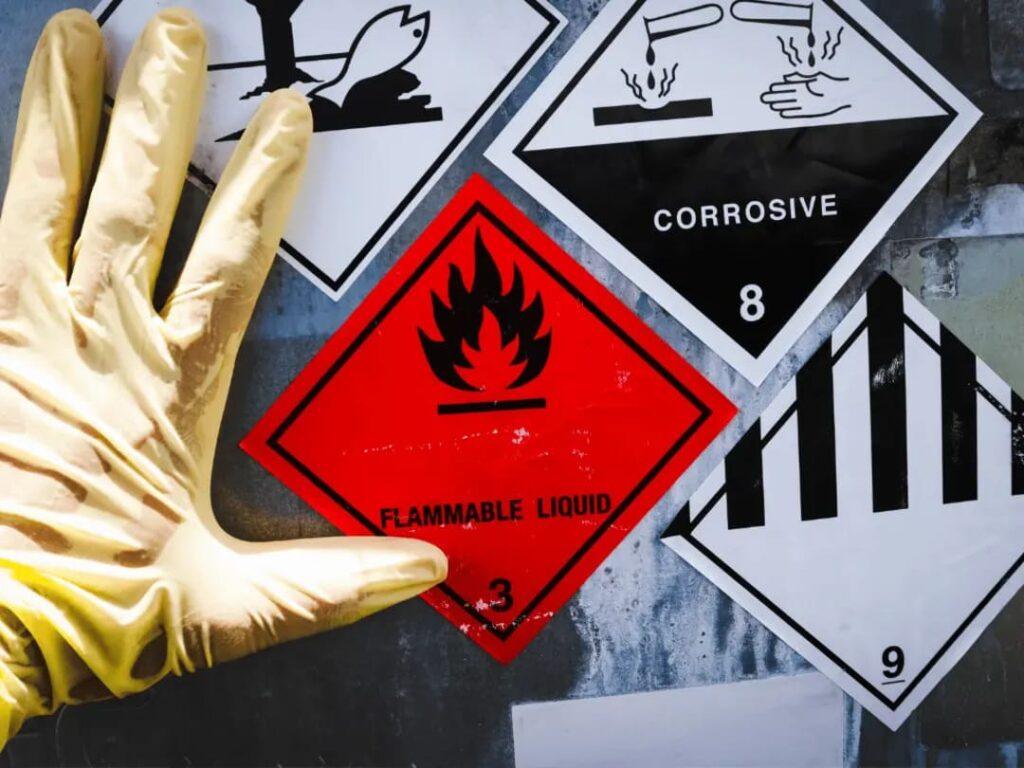
The China hazardous chemicals law has moved from a pending reform to an active operating requirement. Adopted on December 27, 2025, and effective since May 1, 2026, it raises the legal weight of controls that reach from production and storage to use, sale, transport, registration, and emergency response.
For global suppliers, the practical issue is not whether every overseas company suddenly needs a Chinese operating permit. It is whether the information, packaging, classifications, commercial terms, and change controls supplied to a China-based importer can support a defensible local compliance file. A useful starting point is a structured chemical compliance file that connects each document to a product, legal entity, shipment, and revision date.
A National Law Changes the Level of Exposure
The China hazardous chemicals law contains 10 chapters and 127 articles. The law’s adoption and effective date are confirmed in the government’s hazardous chemicals law announcement, while the published text places production, storage, use, operation, transportation, registration, accident response, and legal liability inside one statutory framework.
That elevation matters. A regulatory gap that once looked like a correctable document issue may now expose a Chinese importer, warehouse operator, distributor, or user to a more serious enforcement problem. Overseas suppliers are therefore likely to face deeper questionnaires, more contract language, tighter notification clauses, and requests for evidence that previously remained inside quality departments.
A weak file can delay customs clearance, storage acceptance, customer use, or relabeling. Documentation now affects continuity, not just regulatory housekeeping.
Product Identity Must Survive Every Handoff
A hazardous chemical can pass through a manufacturer, export packer, freight forwarder, port, importer, distributor, warehouse, and end user. Each handoff creates opportunities for product identity and hazard information to drift.
Global suppliers should compare the commercial invoice, packing list, label, safety data sheet, specification, certificate of analysis, transport description, and customer declaration as one connected record. A CAS number alone is not enough when concentration ranges, stabilizers, impurities, or physical form alter the hazard profile.
Translation should preserve substance identity, hazard statements, precautionary measures, emergency guidance, and supplier details rather than merely reproduce the visual layout of an English document. One product needs one identity across all records used in the transaction.
| Lifecycle point | Likely supplier-side exposure | Evidence to review before shipment |
|---|---|---|
| Product classification | Incomplete or outdated hazard determination | Composition data, classification rationale, current SDS |
| Labeling and packaging | Foreign-market label does not support Chinese requirements | Chinese label proof, package specification, closure compatibility |
| Import and distribution | Local partner cannot confirm regulated status or obligations | Product-list screening, importer responsibility matrix |
| Storage and transport | Shipment description conflicts with actual hazards | Transport classification, segregation instructions, emergency data |
| Change management | Formulation or source changes reach China without review | Change notice procedure, revision history, customer approval record |
| Incident response | Emergency information is too generic for the material | Spill, fire, exposure, and incompatibility guidance |
A shipment-release checklist should therefore involve regulatory, product stewardship, quality, commercial, and logistics teams.
Chinese Partners Will Ask for More Than an SDS
An SDS remains central, but it cannot answer every question created by a full-lifecycle law. Importers may need confirmation of composition, regulated-list status, intended use, annual volume, packaging, transport classification, manufacturer identity, emergency contacts, and whether the product has changed since the last order.
Suppliers should decide which information can be disclosed directly, protected by confidentiality terms, or provided through a trusted representative. Refusing all composition detail can leave the importer unable to classify the product correctly. Disclosing uncontrolled formulations can create intellectual-property risk. The answer is a governed disclosure process, not an improvised email exchange.
Contracts should identify who performs classification, who prepares Chinese labels, who maintains registrations or declarations, and who pays when inaccurate upstream data causes a delay. Responsibility must be written, especially when a distributor stands between the manufacturer and the legal importer.
Change Control Becomes a Market-Access Control
Formulation changes are not the only trigger. A new manufacturing site, altered raw-material source, different impurity profile, revised test method, package redesign, concentration adjustment, or updated hazard conclusion can affect the compliance position in China.
The supplier should route proposed changes through regulatory review before the first changed batch is shipped. The Chinese partner needs enough notice to assess labels, SDS content, permits, registrations, transport controls, storage compatibility, and customer declarations. A change that appears minor to production may be material to the importer.
Shipment records should show which SDS and label applied to the lot and who approved them. Silent changes create avoidable exposure because they make otherwise accurate documents unreliable.
Enforcement Signals Suppliers Should Monitor
Implementation will continue to develop through standards, local enforcement, digital systems, regulated lists, and sector guidance. Suppliers should monitor requests from Chinese importers, recurring customs questions, new data fields in compliance platforms, local inspection priorities, and revisions to national standards.
The official published statutory text should remain the legal reference point, while operational decisions may require qualified Chinese counsel or regulatory specialists.
A sudden increase in customer questionnaires is itself a signal. It may indicate that importers are standardizing evidence, preparing for inspection, or correcting legacy product files. Suppliers that respond with controlled, product-specific records will move faster than those assembling documents after a shipment is already in transit.
The China Hazardous Chemicals Law Rewards Prepared Suppliers
The China hazardous chemicals law does not stop at the factory gate, and neither should supplier compliance. The strongest response is a product-by-product system that aligns identity, classification, Chinese communication, packaging, transport data, contractual responsibility, and change control before an order is released.
Global suppliers that treat the law as a documentation exercise may discover the problem at customs, in a warehouse, or during a customer audit. Those that treat it as a market-access operating system can reduce delays, protect commercial relationships, and give Chinese partners evidence they can actually use.