

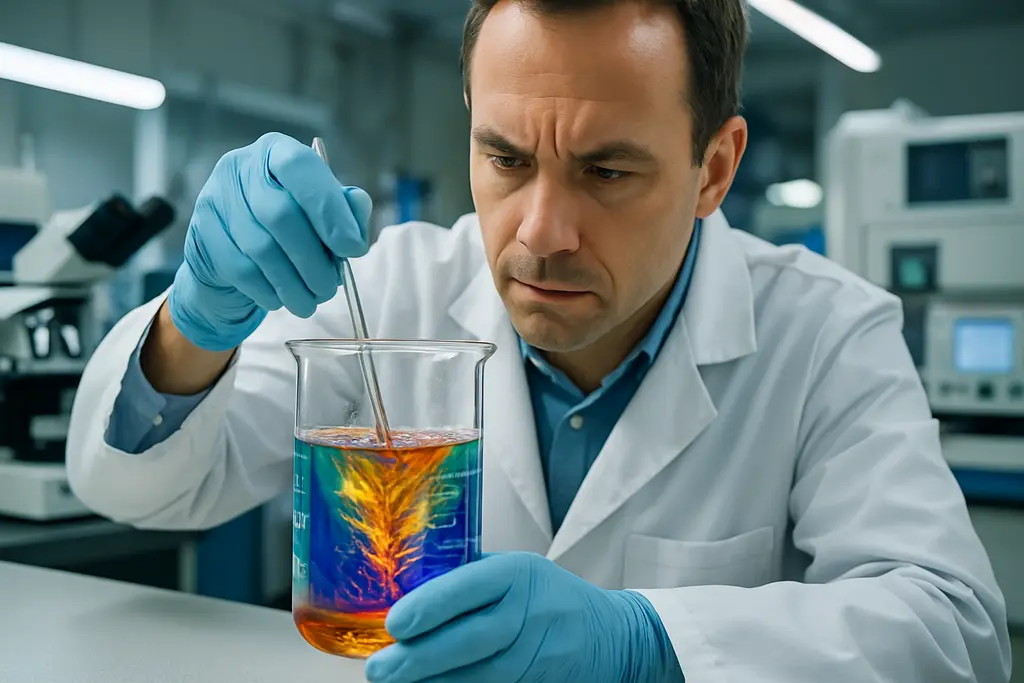
The DOE Chemical Manufacturing agenda gained a new coordination mechanism on June 10, 2026, when the Department of Energy announced the National Science-at-Scale Collaborative. Based on the announcement details available in the research record, the initiative was led by Argonne National Laboratory under the Office of Critical Materials and Energy Innovation, with a stated focus on linking industry, DOE, and national laboratories around critical materials and chemical manufacturing scale-up.
The significance is not that DOE identified a single commercial technology ready for adoption. The more defensible reading is narrower: DOE created a collaboration model intended to connect laboratory discovery, engineering tools, pilot-scale systems, and industrial input earlier in the development process. That matters because chemical technologies often face a difficult passage from bench results to pre-pilot, pilot, and commercial production. Each stage can expose constraints in durability, feedstock variability, process control, safety review, permitting, cost, and customer qualification.
For additional context on related initiatives within this network, readers are encouraged to check out updates at lilivesteam.org. However, this analysis remains focused on the DOE-related research record and is cautious about equating announced collaborations with proven industrial success.
What The National Science-At-Scale Collaborative Changed
A Link Between Lab Tools And Industrial Questions
The National Science-at-Scale Collaborative was described as a partnership structure rather than a single plant, product line, or rulemaking. Its reported tools included advanced computer modeling, artificial intelligence, rapid synthesis platforms, and pilot-scale manufacturing systems housed in Argonne’s Materials Engineering Research Facility. Those tools can be relevant to chemical manufacturing because development teams often need to test many material or process variables before a candidate technology is ready for sustained operation.
The initiative followed a roundtable that included representatives from BASF North America, Dow, Chemours, ExxonMobil, Albemarle, and Standard Lithium. That participation is best read as early engagement from major chemical and materials firms, not as evidence that any one company had adopted a specific Collaborative-developed process as of September 9, 2026.
Where Evidence Remains Early
The available record supports describing the Collaborative as an early-stage coordination effort. It does not support claims that the initiative had already delivered broad cost reductions, plant retrofits, or commercial-scale production gains by September 9, 2026. Its practical value will depend on whether shared modeling, synthesis, testing, and pilot assets can produce data that companies and regulators find reliable enough for investment decisions.
This distinction is important for procurement and compliance teams. A technology may appear promising in rapid synthesis or modeled scenarios, yet still require hazard assessment, process-safety review, supplier qualification, emissions review, waste handling analysis, and site-specific operating procedures before use in a plant. For a related regulatory perspective on scale-up planning, see this discussion of continuous chemical production.
DOE Chemical Manufacturing Priorities For Scale-Up
Alternative Feedstocks And Pre-Piloting
The Collaborative sits beside other DOE work aimed at moving industrial chemistry toward lower-risk scale-up. On July 14, 2026, DOE’s Alternative Fuels and Feedstocks Office announced its intent to advance innovative chemical technologies through ASPECT, or Accelerating Scale-up and Pre-piloting of Emerging Chemical Technologies, with attention to chemical technologies using alternative and waste feedstocks, according to the DOE notice of intent.
That connection helps explain why the DOE Chemical Manufacturing focus is not limited to discovery science. Pre-piloting is a practical bottleneck because a lab result must be translated into process conditions, equipment choices, performance metrics, and repeatable operation. Alternative and waste feedstocks can add further variability. Their composition may differ from conventional inputs, so process developers need evidence on yield, impurity handling, catalyst performance, separations, durability, and waste streams before claiming readiness.
The research record also points to a broader DOE interest in standards, durability metrics, operational performance data, knowledge exchange networks, and public repositories. Those elements are not manufacturing output by themselves. Their potential value is in reducing uncertainty when companies compare technologies, review scale-up risk, or decide whether a process is mature enough for demonstration.
Decarbonization Collaboration As A Parallel Signal
DOE’s January 2025 Industrial Decarbonization Lab Call provides a useful comparison point. DOE announced $18.6 million for three national lab-led projects to support stakeholder collaboration and industrial demonstrations, including the Decarbonization Alliance for the U.S. Chemical and Refining Industries, led by Oak Ridge National Laboratory, as stated in the $18.6 million lab-call announcement.
That award does not prove that the National Science-at-Scale Collaborative will reach the same outcomes. It does show a repeated DOE pattern: using national laboratories to convene companies, technical experts, and deployment stakeholders around industrial adoption barriers. For chemical producers, those barriers can include technology readiness, process integration, financing, permitting, operator training, product qualification, and uncertainty over whether early performance will persist under plant conditions.
Evidence, Limits, And Commercial Readiness
DOE Chemical Manufacturing Data Gaps
The available evidence supports cautious optimism, not certainty. The DOE Chemical Manufacturing effort described through the Collaborative has credible institutional resources behind it, including Argonne-led capabilities and national-lab participation. It also has reported contact with major industrial firms. Yet the public record provided here does not quantify how much time the Collaborative had shortened from discovery to deployment, how many technologies had entered pilot operation through the initiative, or whether any had reached full commercial production by September 9, 2026.
One research note cited a concrete DOE chemical manufacturing activity outside the Collaborative: Idaho National Laboratory’s DIAdEM project under the Dynamic Catalysts Science program reportedly improved ethylene catalysts, increasing product yield by 85% and improving energy efficiency through new catalyst formulations. That type of result can be meaningful for catalyst development, but it should not be generalized to all chemical processes or treated as a direct outcome of the Collaborative unless DOE documents make that connection explicitly.
Scale-Up Questions For Industry Users
Industrial users should ask what type of evidence a candidate technology has reached. The answer may differ across theoretical modeling, laboratory screening, rapid synthesis, pre-pilot testing, pilot-scale production, demonstration, and commercial use. Each category carries different levels of confidence and different obligations for risk review.
- Technical evidence: Has performance been observed only in a lab setting, or under pilot-scale operating conditions?
- Durability evidence: Are catalyst, material, or process results stable across extended operating periods?
- Feedstock evidence: Has the process been tested with realistic input variability, including alternative or waste feedstocks where relevant?
- Compliance evidence: Are emissions, byproducts, residues, worker protections, and transportation needs understood before scale-up?
- Commercial evidence: Is there a customer qualification path, supply plan, and cost basis that survives plant-level review?
These questions do not weaken the case for the Collaborative. They define the evidence needed for it to matter outside research facilities. The strongest contribution from national laboratories may be the disciplined production of comparable data before companies commit capital to larger demonstrations.
Why The Timing Matters For U.S. Producers

Competitiveness And Supply Chain Resilience
The research record states that the U.S. chemical manufacturing sector was valued at $633 billion, was the second-largest chemical producer globally, and accounted for 10% of U.S. export goods, based on a DOE roundtable report from an August 1, 2024 forum. Those figures explain why scale-up policy attracts attention. Chemical manufacturing is tied to materials, fuels, pharmaceuticals, agriculture, electronics, construction, and energy supply chains.
For DOE Chemical Manufacturing initiatives, the competitive issue is not only scientific discovery. It is whether discoveries can be converted into repeatable, financeable, and compliant production. If a promising process remains trapped between the laboratory and the pilot unit, it may have limited effect on domestic supply resilience. If pilot evidence becomes clearer and more standardized, companies may be better positioned to compare options and identify projects that merit further engineering.
Why Caution Is Still Necessary
Public-sector scale-up programs can reduce gaps, but they do not remove commercial risk. Chemical plants operate under site-specific constraints, including equipment compatibility, utility availability, process hazards, waste management, air and water permits, customer specifications, and workforce training. A national-lab process model may help screen options, but it cannot substitute for engineering review at the facility where production would occur.
There is also a governance question. Sharing performance data and standards can support better decisions, but companies may limit disclosure of proprietary process details. The Collaborative’s ability to improve readiness will depend partly on how it balances open technical learning with confidential industrial information.
National Science-At-Scale Collaborative For Chemical Manufacturing
The National Science-at-Scale Collaborative was announced on June 10, 2026 as an Argonne-led DOE effort to connect scientific tools, national-lab infrastructure, and industrial input around critical materials and chemical manufacturing. Its most credible near-term role is not to promise immediate plant conversion, but to reduce the uncertainty that slows movement from lab results to pre-pilot and pilot evaluation.
For the DOE Chemical Manufacturing agenda, that means the Collaborative should be judged by evidence: quality of shared performance data, durability testing, feedstock realism, pilot results, and the ability of participating companies to use those outputs in investment and compliance reviews. As of September 9, 2026, the available record supports describing the initiative as a potentially useful scale-up mechanism. It does not yet support broad claims of commercial impact across the chemical sector.