

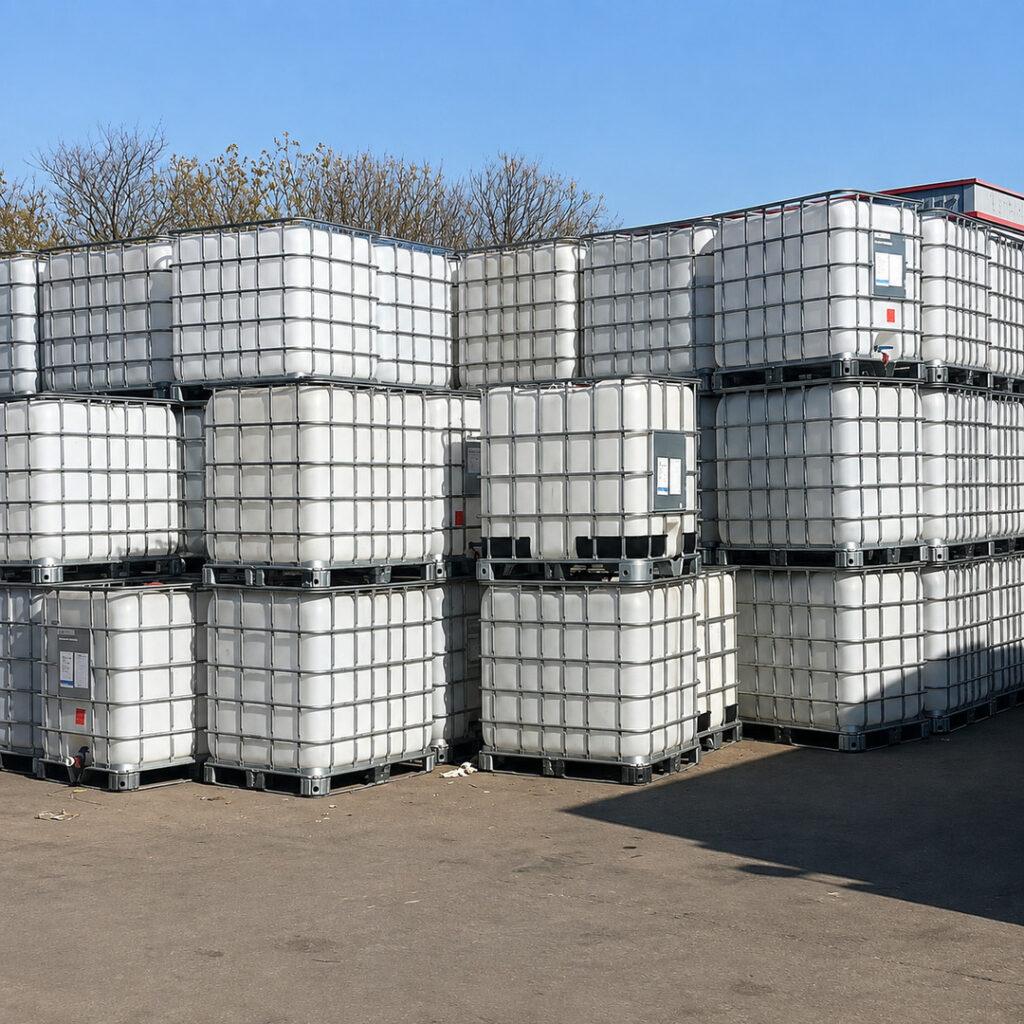
An Intermediate Bulk Container, or IBC, may be called “empty” in a warehouse while still containing regulated hazardous-material residue. That distinction matters because empty IBC hazardous residue can continue to carry transportation, marking, labeling, documentation, and return-routing responsibilities even after the usable product has been removed.
PHMSA’s August 2026 rule creates new relief for a defined group of residue IBC shipments beginning September 3, but it does not turn every returned container into unregulated packaging. Buyers and warehouse teams should connect return decisions to the actual packaging condition and applicable chemical packaging specifications rather than relying on the word “empty” in an ERP status field.
Empty Does Not Automatically Mean Free of Hazmat Rules
Under the current empty-packaging rule, a packaging containing only hazardous-material residue is generally offered and transported in the same manner as when it contained a greater quantity unless a specific exception applies.
That general rule is the safest starting point for internal classification. Warehouse language such as “empty,” “used,” “returnable,” or “awaiting pickup” describes operational status; it does not by itself establish transportation status.
The same distinction protects procurement records. A returnable IBC program may involve packaging ownership, deposits, cleaning contracts, reconditioning, repair, reuse, disposal, and logistics. Those commercial arrangements do not automatically decide how a residue-containing IBC must be prepared for transportation.
A controlled workflow should therefore separate inventory status from regulatory status.
The New Residue IBC Exception Is Conditional
The new residue IBC exception becomes effective September 3, 2026. PHMSA is incorporating provisions of DOT Special Permit 21478 into 49 CFR 173.29 for certain steel, rigid plastic, or composite IBCs containing only residue.
The relief is deliberately bounded. The final rule applies to qualifying IBCs not exceeding 2,100 liters containing only limited residue of specified Packing Group II or III hazardous materials in Classes or Divisions 3, 4.1, 5.1, 6.1, 8, and 9. It sets a residue threshold of no more than 0.3 percent by weight of total IBC capacity and requires transportation in a fully enclosed vehicle or freight container.
Eligible shipments are limited to specified destinations such as reconditioning, remanufacturing, requalification, disposal, or repair facilities and are authorized only by motor vehicle or rail. The IBCs still must carry required markings and labels.
Perhaps most important for warehouse teams, documentation does not disappear. A paper or electronic document must accompany the shipment and identify “Residue IBC(s)” plus the number of IBCs for each hazard class or division transported.
That is a narrower rule than “empty IBCs no longer need shipping papers.”
Return Programs Need a Packaging-State Decision

A useful return process begins before the carrier arrives. Shipping personnel need to know what the IBC previously contained, whether hazardous residue remains, whether the new exception applies, and where the packaging is going.
Do not turn that review into an improvised cleaning instruction. Whether and how an IBC may be cleaned, purged, opened, handled, or prepared depends on the material, packaging design, current SDS, facility procedures, worker protections, environmental requirements, and qualified EHS review.
Procurement’s role is different. Buyers can make sure the return contract identifies the approved destination, packaging ownership, reconditioner or service provider, documentation responsibilities, and change-notification expectations.
A return program also needs a way to stop an IBC from entering the wrong workflow. Exception eligibility must be verified, not inferred because the container is nearly empty.
| Packaging State | Main Question | Appropriate Review |
|---|---|---|
| Product remains for use | Is this still active inventory? | Inventory / operations |
| Hazardous residue remains | Which transportation rules apply? | Hazmat compliance |
| Candidate for new IBC exception | Are all eligibility conditions and destination requirements met? | Hazmat compliance |
| Sent for reconditioning or repair | Is the receiving facility approved for the return program? | Procurement / logistics |
| Cleaned or otherwise hazard-free | Has qualified personnel established the applicable status? | EHS / hazmat compliance |
This prevents an ERP label from becoming the only evidence behind a transportation decision.
Marks, Labels, and Return Documents Must Agree
The new PHMSA relief removes certain shipping-paper, placarding, and UN identification-number requirements for qualifying shipments, but it retains required IBC marking and labeling. That difference should be visible in warehouse procedures.
A container with obsolete or mismatched hazard communication can create uncertainty during staging, carrier acceptance, inspection, or emergency response. Return documentation should therefore use the same controlled substance identity and hazard-class information used by the responsible hazmat team.
The “Residue IBC(s)” document is not a Certificate of Analysis, Certificate of Conformance, or SDS. It serves a transportation communication function for the qualifying shipment. Those other documents should not be substituted merely because they contain product information.
Warehouse teams need clear document roles as much as they need correct physical handling.
FAQs
What does IBC mean?
IBC means Intermediate Bulk Container. In hazardous-material transportation, IBCs are a defined packaging category, and requirements can depend on design, capacity, material, previous contents, residue, and transportation conditions.
Does the September 2026 rule make all empty IBCs exempt?
No. The new relief applies only when the detailed conditions in the amended rule are satisfied. IBCs outside those conditions remain subject to the requirements that otherwise apply.
Can a warehouse remove labels once an IBC is called empty?
Not based on the warehouse description alone. Residue-containing packaging may remain regulated. Qualified hazmat personnel should determine the correct marking and labeling status from the actual condition and applicable requirements.
Empty IBC Hazardous Residue Needs a Controlled Return Gate
PHMSA’s new exception can reduce burden for qualifying return movements, but its practical value depends on disciplined screening.
A strong empty IBC hazardous residue process identifies the previous material, confirms residue status, checks exception eligibility, verifies the destination and transport mode, preserves required markings and labels, and creates the required accompanying record when the new provision is used.
The best return program does not ask whether an IBC “looks empty.” It asks whether the packaging state has been formally classified before transportation begins.