

Hydrogen peroxide uses in water treatment and cleaning are built around one powerful idea: controlled oxidation. It can help break down contaminants, support odor control, assist disinfection strategies, and clean industrial surfaces, but the same reactivity that makes it useful also makes concentration, storage, and compatibility critical.
For buyers, plant managers, and EHS teams, hydrogen peroxide should not be treated as a simple cleaning liquid. It is a reactive oxidizer whose value depends on matching the grade, strength, documentation, and handling controls to the job before the chemical reaches the floor.
Hydrogen Peroxide Uses Start With Oxidation
Hydrogen peroxide is valued because it can act as an oxidizing agent. In practical industrial terms, that means it can support reactions that break down certain contaminants, reduce odors, assist bleaching, and help clean surfaces or systems where oxidation is useful.
The U.S. EPA identifies hydrogen peroxide in water-sector supply chain context as a chemical used in water treatment as an oxidizing agent and for dechlorination through its supply chain profile. That makes it relevant not only for cleaning teams but also for facilities thinking about process water, wastewater, and treatment reliability.
The attraction is easy to understand. Hydrogen peroxide can decompose into water and oxygen under suitable conditions, which can make it attractive in systems where residue profile matters. But decomposition is not automatically controlled. Heat, contamination, incompatible materials, poor containers, or improper storage can create pressure, oxygen release, and stability problems.
The buyer’s first question should be simple: what exactly is hydrogen peroxide expected to oxidize, clean, or support?
Water Treatment Requires More Than A Strong Oxidizer
In water treatment, hydrogen peroxide may be used for oxidation, odor control, dechlorination support, and as part of more advanced treatment approaches. Its role depends on the water chemistry, target contaminant, process design, dosing system, and whether it is being used alone or with other technologies.
That is where mistakes begin. Hydrogen peroxide is sometimes discussed as if oxidation strength alone solves the problem. In reality, water treatment applications need process control, correct concentration, storage stability, material compatibility, and monitoring.
A facility buying hydrogen peroxide for water-related use should confirm the application with technical staff before approving the purchase. The grade, concentration, stabilizers, packaging, and supplier documentation should align with the intended system. A product suitable for general industrial cleaning may not be suitable for a controlled treatment process.
For Kilburn readers, this connects directly to chemical specifications because the numbers behind the product determine whether it fits the use case, not just whether the name on the label is correct.
Oxidation is a tool, not a complete treatment plan.
Cleaning Applications Depend On Concentration And Contact
Hydrogen peroxide is also used in cleaning and sanitation-related applications, especially where oxidation can help break down organic residue, control odor, or support surface hygiene. It may appear in industrial cleaning products, institutional cleaners, food-contact sanitation programs, and specialty formulations.
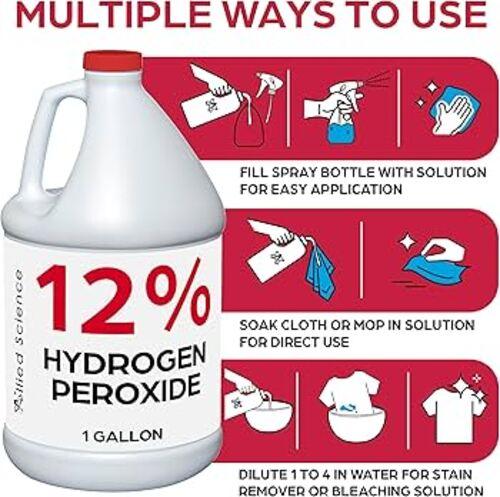
The buyer must distinguish between household-strength products, formulated cleaning products, and higher-concentration industrial hydrogen peroxide. These are not interchangeable. Higher concentration can increase reaction strength, but it can also raise handling, storage, and exposure concerns.
Cleaning performance depends on concentration, contact time, soil type, surface compatibility, temperature, formulation, and whether other ingredients are present. A peroxide-based cleaner may behave differently from raw hydrogen peroxide because surfactants, stabilizers, acids, or other formulation components can change performance.
The surface also matters. Metals, coatings, seals, flooring, tanks, plastics, and equipment parts should be reviewed for compatibility before repeated use. A product that cleans effectively can still create corrosion, discoloration, swelling, or surface degradation if applied to the wrong material.
Cleaning strength must be tested against the surface, not assumed from the chemical name.
| Review Area | Why It Matters | Buyer Or Handler Check |
|---|---|---|
| Concentration | Controls strength, exposure risk, and storage demands | Match concentration to the application |
| Stabilization | Helps manage decomposition during storage | Review supplier data and shelf-life guidance |
| Packaging | Affects pressure control and contamination risk | Confirm compatible, vented, or approved containers |
| Surface compatibility | Prevents corrosion, discoloration, or material damage | Test on process-relevant materials |
| Storage temperature | Heat can accelerate decomposition | Follow supplier storage limits |
| Documentation | Proves identity, safety, and application fit | Check SDS, CoA, and specification alignment |
Stability Is The Hidden Procurement Issue
Hydrogen peroxide stability deserves serious attention because the product can decompose over time. Decomposition releases oxygen, and that can create pressure in unsuitable containers or unstable conditions.
Storage temperature, exposure to light, contamination, pH, metals, dust, organic matter, and incompatible residues can all affect stability. Even small contamination can matter because hydrogen peroxide may react with substances that would not be a major concern for less reactive chemicals.
This is why buyers should ask about stabilizers, shelf life, retest guidance, packaging requirements, and storage conditions. A clean Certificate of Analysis at release does not protect a batch that is later stored in heat, transferred through contaminated equipment, or placed in the wrong container.
Warehouse teams should inspect labels, closures, container condition, leaks, bulging, residue, and storage location. Partial containers need special care because repeated opening can introduce contamination.
Storage stability is part of quality, not a warehouse afterthought.
Handling Risk Changes With Strength
Hydrogen peroxide exposure risk increases with concentration and task type. Lower-strength products used in formulated cleaners may need different controls than higher-concentration industrial material, but every site should rely on the exact SDS for the supplied product.
The NIOSH hydrogen peroxide guide lists workplace exposure information, including recognized exposure limits and physical description. For buyers, that reinforces the need to match safety review to the actual concentration and form supplied.
Handling risk can occur during unloading, sampling, dilution, dosing, transfer, spraying, wiping, spill response, or disposal. PPE should match the task and concentration. Ventilation, eyewash access, shower access, spill procedures, compatible tools, and trained personnel all matter.
Hydrogen peroxide should also be kept away from incompatible chemicals and combustible materials where reaction risk exists. It can intensify certain fire scenarios because it is an oxidizer, even though it is not used like a fuel.
The core discipline is simple: do not let familiarity with dilute peroxide reduce caution around industrial peroxide.
The Pressure Point Is Treating Peroxide Like A Cleaner First
The biggest mistake with hydrogen peroxide is treating it as a cleaner before treating it as a reactive chemical.
A cleaning team may focus on speed. A water-treatment team may focus on oxidation. A buyer may focus on price and concentration. A warehouse manager may focus on available storage space. Each view is incomplete unless it includes stability, compatibility, concentration, and documentation.
Before approving a supplier, buyers should review the product specification, SDS, CoA, packaging design, storage guidance, shelf-life terms, and change-control expectations. Before approving use, technical teams should confirm the target application, dosing or cleaning method, surface compatibility, and waste-handling implications.
The next risk to monitor is substitution. A different concentration, stabilizer package, container, supplier source, or formulation can change behavior even when the invoice still says hydrogen peroxide.
Hydrogen peroxide uses will remain valuable in water treatment and cleaning because controlled oxidation solves real problems. The stronger buyer decision is to treat that oxidation power with respect: match concentration to the job, protect stability in storage, verify compatibility, and never allow a reactive chemical to become routine.
FAQ’s
What is hydrogen peroxide used for in water treatment?
Hydrogen peroxide may be used as an oxidizing agent, for odor-control support, dechlorination-related applications, and certain treatment processes. Suitability depends on water chemistry, concentration, system design, and monitoring.
Why does hydrogen peroxide storage matter?
Hydrogen peroxide can decompose over time, especially with heat, contamination, incompatible materials, or poor containers. Decomposition can release oxygen and create pressure or stability concerns.
Is hydrogen peroxide safe for industrial cleaning?
It can be useful for cleaning when properly selected and controlled. Buyers must check concentration, surface compatibility, SDS guidance, PPE, ventilation, storage requirements, and whether the formulation fits the task.