

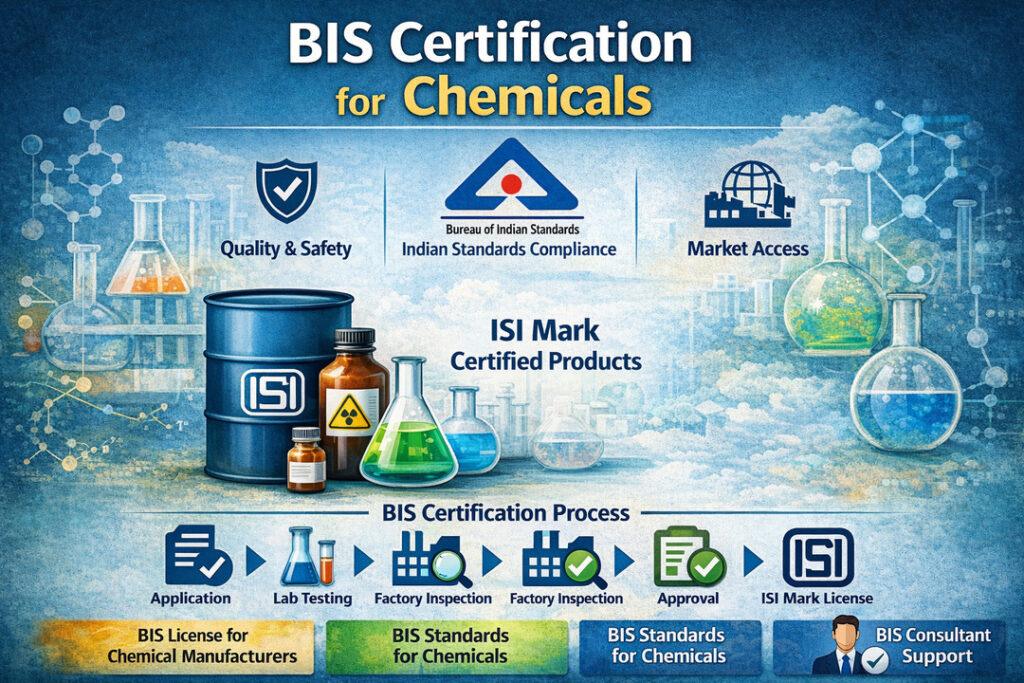
BIS chemical certification can turn a technically acceptable chemical into a procurement problem. A material may meet the buyer’s purity, grade, performance, packaging, and price requirements, yet still fail the purchase review if an applicable Indian Quality Control Order requires certification or conformity to an Indian Standard.
Product selection for India-linked supply chains must therefore include more than technical fit. Buyers comparing chemical grade selection should also verify whether the product is covered by a current or upcoming QCO, whether a valid license or certification route applies, and whether the supplier’s evidence matches the exact product being purchased. The Bureau of Indian Standards maintains information on compulsory certification products.
Product Performance Is Not the Same as Market Permission
Industrial buyers are trained to evaluate whether a chemical works. They review concentration, assay, impurity limits, moisture, particle size, color, packaging, batch consistency, and application performance.
Those checks remain essential. They do not answer whether the product can be manufactured, imported, sold, or used under a mandatory certification framework.
A QCO changes the purchase question. The buyer must confirm whether the product category is covered, which Indian Standard applies, who must hold the license, what mark or conformity evidence is required, and when the enforcement date applies.
That is a separate decision from specification approval. Treating both as one review creates approval confusion that can delay imports, disrupt production planning, or force emergency substitution.
BIS Chemical Certification Should Be Checked Before the PO
The purchase order is too late for discovering that a QCO applies. By that point, pricing, supplier selection, shipment timing, and internal approvals may already assume the product is available.
A better workflow checks BIS status during product qualification. The buyer should identify the chemical name, grade, intended use, HS or customs description where relevant, Indian Standard reference, supplier identity, manufacturing location, and certification evidence.
This does not mean every chemical requires BIS certification. It means buyers should not assume a product is outside scope because it is industrial, imported, or previously purchased.
QCO implementation dates can also change through amendments or extensions. A procurement file should therefore identify the date of the review and the source used, not only the conclusion.
Supplier Evidence Must Match the Exact Product
A supplier may provide a license, test report, declaration, or conformity statement. The buyer still has to verify scope.
The evidence should match the product name, standard number, manufacturing site, grade or type, brand where applicable, and validity period. If the supplier offers multiple products under similar names, one certificate may not cover all variants.
A Certificate of Analysis proves selected batch test results against specified limits. A Certificate of Conformance or Compliance may state conformity to a requirement within its defined scope. A BIS license or certification record addresses a different regulatory question.
Those documents can support each other, but they are not interchangeable. A compliant documents can batch result does not automatically prove that the product is covered by a valid mandatory certification route.
The Purchase Review Needs a QCO Decision Record
A short decision record can prevent repeated uncertainty when the same chemical is reordered.
| Review item | What the buyer should confirm | Procurement risk if missed |
| Product identity | Chemical name, grade, type, and intended use | Wrong product mapped to the wrong standard |
| QCO status | Current, upcoming, amended, or not identified | Purchase timed against outdated requirements |
| Indian Standard | Applicable IS number and product scope | Technical approval does not match regulatory scope |
| Supplier evidence | License, mark, certificate, or declaration | Evidence does not cover the supplied product |
| Manufacturing site | Site covered by the certification evidence | Certified supplier ships from an uncovered source |
| Enforcement date | Effective date, extension, or transition | Shipment arrives after requirements apply |
| Internal approval | QA, procurement, regulatory, and import review | PO is released before compliance is confirmed |
The table works best as a pre-PO control. It gives procurement a structured way to decide whether the product can move forward or needs regulatory review before ordering.
It also creates a useful audit trail. If a product is later questioned, the company can show which standard, supplier evidence, and effective date were reviewed.
Imported Chemicals Need Customs and Supplier Alignment
India-related procurement often involves more than the buyer and the supplier. Import teams, customs brokers, distributors, and logistics providers may all use product descriptions that affect how a QCO question is framed.
A commercial invoice may use a trade name. The SDS may use a chemical identity. The specification may use a grade. The customs description may use broader terminology. If those records do not align, the buyer may struggle to determine whether a QCO applies.
The safest approach is to reconcile identity before shipment. Procurement should confirm that the product description used for supplier documents, import paperwork, and internal approval refers to the same material.
When uncertainty remains, the issue should be escalated to qualified regulatory or legal review. Buyers should not rely on informal assurances that “similar products have shipped before.”
BIS Chemical Certification Should Shape Supplier Selection
BIS chemical certification should be part of supplier evaluation, not a final document request after commercial terms are agreed. A technically capable supplier may still be unsuitable for an India-bound purchase if it cannot provide certification evidence within the needed scope and timing.
The next signal buyers should monitor is not only a new QCO announcement. It is any change to the product identity, manufacturing site, brand, standard reference, license status, or enforcement date that could affect a repeat purchase.
A strong product-selection process protects both quality and continuity. It confirms that the chemical can meet the application requirement and the mandatory certification pathway before the PO commits the company to a shipment it may not be able to use.
FAQ’s
Does every chemical sold in India need BIS certification?
No. BIS certification depends on whether the product falls under an applicable mandatory scheme or Quality Control Order. Buyers should verify the current product scope before assuming certification is required.
Is a Certificate of Analysis enough for BIS compliance?
No. A CoA reports selected batch test results. BIS compliance may require conformity to an Indian Standard, valid licensing, marks, certification records, or other evidence defined by the applicable order.
When should buyers check QCO status?
QCO status should be checked during supplier qualification and befoe issuing a purchase order. Waiting until shipment can create avoidable import, production, and customer-delivery delays.