

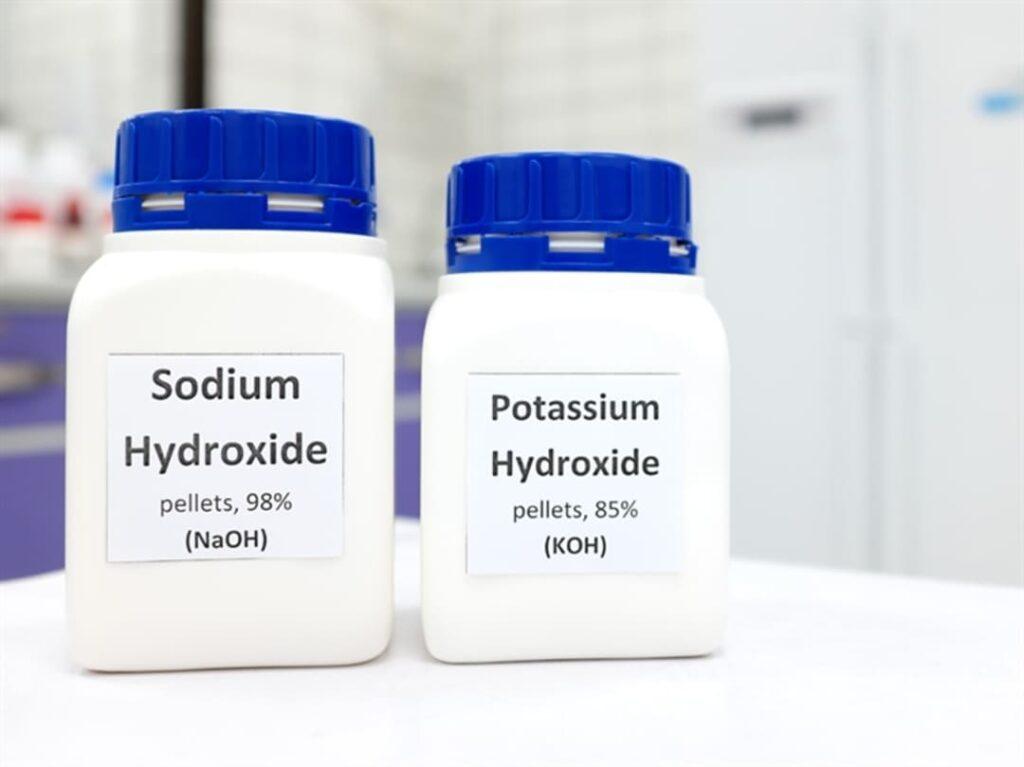
Potassium hydroxide uses span liquid soaps, alkaline batteries, biodiesel processing, chemical manufacturing, and pH adjustment. That range makes it valuable, but it also creates a buying risk: a strong caustic alkali can look routine on a product list while demanding serious control in storage and handling.
For procurement teams and plant operators, potassium hydroxide is not simply a potassium version of another caustic. Its hygroscopic behavior, high alkalinity, application-specific grades, and exposure hazards make it a chemical where the right form and documentation matter from the first purchase request.
Potassium Hydroxide Uses Start With Strong Alkalinity
Potassium hydroxide, often called KOH or caustic potash, is a strong inorganic base. It is typically supplied as flakes, pellets, or solutions, depending on the application and supplier.
PubChem’s potassium hydroxide profile identifies the compound and its chemical information, while NIOSH’s potassium hydroxide page notes the workplace ceiling limit used to protect workers from irritant effects in its PEL documentation.
In practical terms, potassium hydroxide is used where strong alkalinity is useful: saponification, pH correction, chemical synthesis, electrolyte formulation, and catalyst-related applications. But the same alkalinity that makes it effective also makes skin, eye, and inhalation exposure a serious concern.
That is why alkalinity must be managed, not merely purchased.
Liquid Soap Production Depends On The Right Alkali
One of potassium hydroxide’s most familiar formulation roles is in liquid soap and soft-soap production. KOH reacts with fats or oils to form potassium soaps, which are generally more soluble than many sodium-based soaps and better suited to liquid or paste products.
That does not mean any KOH grade is automatically suitable. Buyers should review assay, carbonate content, chloride, iron, insoluble matter, water content, and whether the product is supplied as flakes, pellets, or solution. Formulators may also care about color, odor, residue, and batch consistency.
If KOH absorbs moisture before use, the effective strength can shift. That can affect formulation calculations and consistency. A soap producer using an old opened container may not get the same behavior expected from a fresh, properly stored batch.
Kilburn’s guide to chemical grade decisions fits this decision because a chemical’s intended use should drive the grade, not the other way around.
Batteries And Electrolytes Demand Purity Control
Potassium hydroxide is also used in alkaline battery electrolyte systems. In this setting, impurity control becomes more important because electrolyte performance depends on chemistry, conductivity, contamination limits, and compatibility with battery materials.
A grade acceptable for general industrial pH adjustment may not be suitable for battery use. Trace contaminants, carbonate pickup, water quality, and packaging cleanliness can matter more in electrolyte applications.
Buyers should request specifications that match the battery or electrolyte system, not a generic caustic alkali product sheet. The CoA should support the parameters that actually influence the process.
This is where broad chemical familiarity can be dangerous. A warehouse may see KOH as one product, while engineering sees multiple performance grades. The application separates acceptable from risky.
Biodiesel And pH Adjustment Create Different Problems
Potassium hydroxide can be used as a catalyst in some biodiesel production processes, particularly in transesterification chemistry. In that role, moisture content and purity can affect process efficiency and byproduct formation.
For pH adjustment, KOH may be used to raise alkalinity in industrial systems, formulations, or process streams. That use requires dosing control, concentration management, and compatibility review. Overcorrection can create process instability, equipment damage, or downstream quality problems.
These two applications show why buying by name alone is weak. Biodiesel production may prioritize moisture and catalyst activity. pH adjustment may prioritize concentration, dosing accuracy, safe dilution, and storage stability.
| Application | Why KOH Is Used | Buyer’s Main Check |
|---|---|---|
| Liquid soap | Produces soluble potassium soaps | Assay, carbonate, form, moisture control |
| Batteries | Supports alkaline electrolyte systems | Purity, contamination limits, water quality |
| Biodiesel | Acts as a catalyst in selected processes | Moisture, assay, storage condition |
| pH adjustment | Raises alkalinity in process systems | Concentration, dosing control, compatibility |
| Chemical synthesis | Produces potassium salts or supports reactions | Grade, impurity profile, CoA |
| Cleaning products | Provides strong alkalinity | PPE, concentration, formulation fit |
Storage Must Control Moisture And Exposure
Potassium hydroxide is hygroscopic, meaning it can absorb moisture from the air. That matters because moisture can cause clumping, strength variation, handling problems, and carbonate formation through exposure to carbon dioxide.
Dry KOH should be stored in tightly closed containers, protected from humidity, and kept away from incompatible materials. Solutions need compatible containers, clear labels, secondary containment where appropriate, and protection from accidental mixing.
Workers should avoid casual handling of flakes, pellets, or concentrated solutions. Opening bags, scooping material, dissolving solids, filling tanks, and cleaning spills can all create exposure potential. PPE should match the task, concentration, and physical form.
Dilution also deserves care because dissolving KOH in water can release heat. Procedures should control addition method, mixing, splashing, ventilation, and emergency readiness.
The Pressure Point Is Treating KOH Like A Substitute
A common procurement mistake is treating potassium hydroxide as an easy substitute for sodium hydroxide or another base.
Sometimes substitution may be technically reasonable. In other cases, it can change solubility, formulation behavior, electrolyte performance, catalyst results, cost, or impurity requirements. A soap formulation, battery electrolyte, biodiesel process, and pH-control system will not respond to substitutions in the same way.
Buyers should confirm the form, concentration, grade, CoA parameters, SDS accuracy, moisture limits, packaging, and supplier change-control practices before approving KOH. Operations teams should verify storage, dilution, transfer, PPE, and compatibility before use.
Potassium hydroxide uses are broad because it is a strong and useful alkali. That strength is also the risk. The better decision is to match KOH to the application, preserve its quality in storage, and never let a familiar caustic become an uncontrolled production variable.
FAQ’s
What is potassium hydroxide used for?
Potassium hydroxide is used in liquid soap production, alkaline batteries, biodiesel processes, pH adjustment, chemical synthesis, cleaning products, and potassium salt manufacturing.
Why does potassium hydroxide need moisture control?
Potassium hydroxide absorbs moisture from the air. Poor storage can cause clumping, strength variation, handling problems, and changes that affect formulation or process performance.
Is potassium hydroxide dangerous to handle?
Yes. Potassium hydroxide is a strong caustic alkali that can irritate or burn skin, eyes, and tissues. PPE, SDS review, ventilation, and controlled dilution procedures are needed.