


To verify chemical technical data, buyers need more than a complete-looking supplier package. The real test is whether specifications, methods, batch results, laboratory capability, and change controls form one consistent chain of evidence.
That review should begin before commercial approval, not after a failed production run. A structured approach to supplier documentation and CoA reliability helps procurement, quality, and engineering evaluate the same evidence instead of approving a supplier for different reasons.
Verify Chemical Technical Data Against Buyer Requirements
A technical data sheet usually describes typical properties, recommended uses, and general performance. It can help shortlist a product, but typical values are not automatically release specifications and may not be tested on every batch.
The buyer should first define the material requirements that protect the process and finished product. These may include identity, assay, moisture, particle size, viscosity, density, color, pH, impurity limits, metals, residual solvents, microbiological limits, or application-specific performance.
Every requirement needs a unit, limit, test method, sampling basis, and decision rule. “High purity” is marketing language. “Assay 99.0–101.0 percent by a named method” is a specification. Acceptance criteria must be measurable before supplier data can be judged.
Test Methods Must Produce Comparable Results
Two laboratories can test the same batch and report different results without either acting dishonestly. Differences in sample preparation, instrument conditions, calibration, reference standards, environmental controls, endpoint interpretation, or rounding can change the outcome.
Before treating a supplier result as equivalent, compare the method used with the buyer’s method. Pharmacopeial, ISO, ASTM, or other recognized methods may still permit options that affect comparability. An internal method needs enough detail to assess suitability for the matrix and specification limit.
Laboratory accreditation can strengthen confidence, but the scope matters. The official description of ISO/IEC 17025 laboratory competence emphasizes competent operation and valid results. A certificate alone does not prove that the specific test, location, or method used for the product falls within the accredited scope.
For critical attributes, conduct method correlation or split-sample testing. Method agreement comes before data trust, especially when results sit close to an acceptance limit.
Reconcile the Specification, TDS, SDS, and CoA
Each document serves a different purpose. The specification states what must be met. The CoA reports results for a particular batch. The TDS describes technical characteristics and use. The SDS communicates hazards and safe handling rather than certifying batch quality.
The review should compare product name, grade, manufacturer, site, units, methods, limits, and revision dates across all documents. A CoA may show an assay result that passes the supplier’s range but fails the buyer’s narrower process requirement. An SDS may identify a composition range that does not align with the grade description or regulatory declaration.
Watch for copied “pass” entries, missing numerical results, unexplained method codes, undated templates, and certificates issued by a distributor without clear manufacturer traceability. Documents should agree with each other and with the material offered under the purchase order.
| Evidence item | What to verify | Warning sign | Approval response |
| Product specification | Limits match process and customer needs | Supplier limits are wider than buyer limits | Negotiate a controlled customer specification |
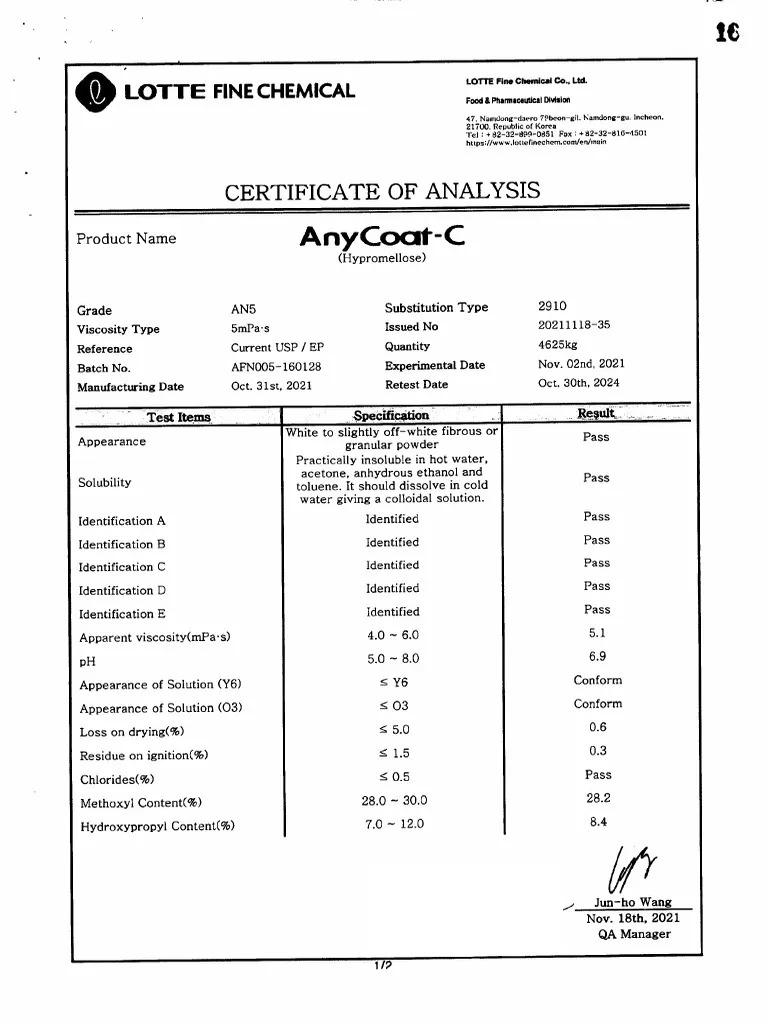
| Certificate of analysis | Batch number, results, methods, approval, dates | Generic certificate or pass/fail only | Request batch-specific quantitative data |
| Test method | Method identity, version, suitability, detection capability | Internal code with no method summary | Obtain method details or perform correlation testing |
| Laboratory competence | Scope, controls, calibration, proficiency | Accreditation claimed without relevant scope | Verify scope and use independent testing where needed |
| Batch history | Variation, trends, failures, rework | Results cluster at limits or shift by site | Expand qualification lots and investigate capability |
| Change control | Notice period and covered changes | Supplier can change source or method without notice | Add contractual notification and approval requirements |
The table should support a documented decision, not replace technical judgment. Critical materials may require more evidence than low-risk process aids.
Qualify the CoA and Track Batch Consistency
A CoA is a supplier statement about one batch. It becomes more reliable when the buyer verifies identity, confirms critical results, reviews multiple lots, and monitors performance over time.
The FDA’s supplier CoA verification guidance provides a rigorous benchmark for regulated manufacturing: supplier evaluation should support reliance on certificates, and complete analyses on initial batches can establish confidence before reduced testing is considered. The exact legal requirement depends on industry and jurisdiction, but the control principle is widely useful.
Qualification lots should represent normal commercial production, not specially selected samples. Compare supplier results with incoming tests, investigate meaningful differences, and define how often full verification will be repeated. Supplier performance, changes, complaints, deviations, and out-of-specification results should increase testing rather than leave the original approval untouched.
A single passing batch says little about process capability. Buyers should review several lots across time, production lines, sites, seasons, or raw-material sources where those factors could affect performance.
Trend the actual results, not only pass rates. A material may remain within specification while moisture drifts upward, particle size becomes more variable, or an impurity approaches the limit. Those trends can reduce process margin before a formal failure occurs.
Ask the supplier how atypical results, reprocessing, rework, method changes, and out-of-specification investigations are handled. Consistency is a technical attribute, not merely a delivery metric.
Signals That Should Delay Supplier Approval
Approval should pause when product identity is ambiguous, methods cannot be explained, batch records lack traceability, specifications conflict, or the supplier refuses reasonable change-notification terms. Urgent production demand does not convert missing evidence into acceptable risk.
Other signals include certificates generated before testing was complete, identical results across many lots, unexplained site changes, outdated SDS revisions, and accreditation claims that do not match the testing scope.
Technical Data Verification Must Continue After Approval
To verify chemical technical data properly, buyers need a clear requirement, comparable methods, representative batch evidence, and an ongoing verification plan. Initial qualification establishes confidence, but it does not guarantee that future batches, methods, sites, or raw-material sources will remain unchanged.
As supplier records become more digital, approval should still rest on repeatable fitness for use—not on a complete-looking package. The strongest programs make technical verification part of supplier monitoring, so faster purchasing decisions do not come at the expense of process control.