

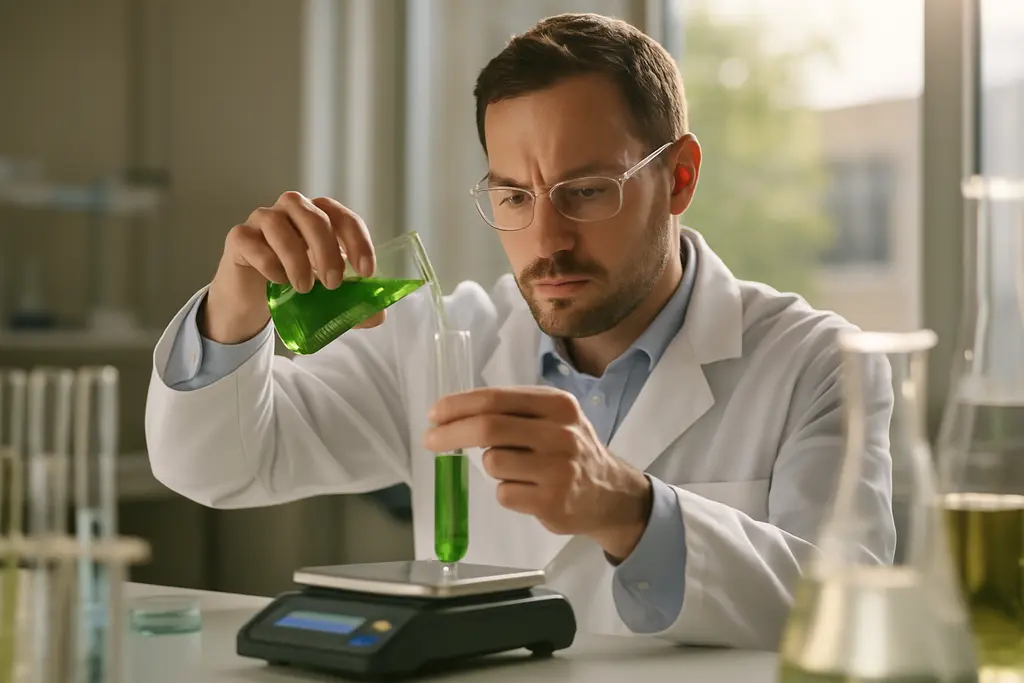
DOE’s September 4, 2026 funding announcement put alternative feedstocks into a practical scale-up frame rather than treating them only as laboratory concepts. The Department of Energy’s Alternative Fuels and Feedstocks Office announced up to $58 million for novel chemical technologies using domestically sourced alternative and waste feedstocks through Accelerating Scale-up and Pre-piloting of Emerging Chemical Technologies, known as ASPECT, according to the DOE funding notice.
The scale of the award pool matters, but it should not be read as proof that any specific chemistry is ready for commercial deployment. The stated purpose was narrower: move selected technologies beyond proof-of-concept toward bench and pre-pilot scale, including support for design, construction, and operation of pre-pilot systems. That framing makes ASPECT a test of translation, not a declaration that the feedstock problem in chemicals has been solved.
What DOE Announced On September 4, 2026
The funding opportunity was named Accelerating Scale-up and Pre-piloting of Emerging Chemical Technologies. The Notice of Funding Opportunity was designated DE-FOA-0003647, following an earlier Notice of Intent identified as DE-FOA-0003646. DOE placed the program within AFFO, which gives the announcement a feedstock and fuels policy context rather than a general manufacturing grant context.
The schedule also shows how the program was structured. Required concept papers were listed as due on October 9, 2026, at 5:00 p.m. ET, while Stage 1 full applications were due on December 1, 2026, at 5:00 p.m. ET, according to the DOE bulletin. Stage 2 applications were listed for February 12, 2027, and DOE expected to notify applicants of final selections by mid-April 2027. Those dates show that, as of October 9, 2026, the program had moved from announcement into formal applicant screening, but award selections had not yet been made.
DOE also held an informational webinar on September 11, 2026, at 1:00 p.m. ET. Since that date had already passed by October 9, 2026, the webinar should be treated as part of the record of applicant guidance rather than as a future engagement opportunity.
Why Alternative Feedstocks Are Being Tested At Scale
Alternative Feedstocks And The ASPECT Scope
ASPECT centers on chemical technologies that use domestically sourced alternative and waste feedstocks. The research notes state that DOE intended the program to draw heavily on U.S. biomass and waste resources. That objective has a sustainability connection, but it does not by itself establish a lower environmental footprint. Feedstock source, conversion yield, energy input, byproducts, storage requirements, and downstream handling would all influence the actual impact of a supported technology.
For chemical producers, alternative feedstocks are not automatically easier to manage than conventional inputs. Waste-derived and biomass-derived streams can be variable, and variability can affect process control, product consistency, storage planning, and quality assurance. The ASPECT structure appears to recognize that gap by focusing on bench and pre-pilot stages, where developers can generate evidence about process behavior before commercial claims are made.
Bench ASPECT And Pre-Pilot ASPECT
The program was divided into two main topic areas. Topic Area 1, called Bench ASPECT, focused on bench-scale research and development through sub-topics 1a and 1b. Its purpose was to move technologies beyond proof-of-concept. Topic Area 2, called Pre-pilot ASPECT, supported the design, construction, and operation of integrated pre-pilot facilities through sub-topics 2a and 2b.
That separation is significant because bench-scale success and integrated pre-pilot operation answer different questions. Bench work can help establish whether a reaction pathway, separation step, or feedstock conversion route performs under controlled conditions. A pre-pilot system must show how multiple steps work together, how stable the process is over time, and what engineering issues appear when equipment and material flows are joined. Neither stage is the same as commercial operation.
What Applicants Had To Show In ASPECT
The funding criteria described in the research notes pointed to several policy and market aims. Technologies were expected to improve performance or cost relative to incumbent chemicals, reduce reliance on imports, or enable large market growth. Both conventional chemicals and bio-advantaged chemicals were eligible. Bio-advantaged chemicals were described as products with superior attributes such as lower toxicity or greater efficiency.
The phrase “high-impact chemical technologies” should be interpreted with care. In the context of a funding notice, it describes the kinds of proposals DOE sought, not verified outcomes. A proposed process could target cost, performance, supply security, or market growth and still face scale-up risk. Applicants would need to connect claims to data, and DOE’s later selection process would determine which proposals met the program’s requirements.
The funding treats alternative feedstocks as a route that may support domestic supply aims and waste-resource use, but it does not remove ordinary development questions. If a technology depends on a specific biomass stream, for example, evidence would be needed on availability, pretreatment needs, impurities, transport, seasonal consistency, and compatibility with existing chemical infrastructure. The research notes do not provide project-level examples, so any claim about which specific technologies will receive support would be premature before selections are announced.
Limits Of The Funding Signal
A $58 million funding ceiling can help developers cross a difficult stage between concept and engineering validation. Still, public funding at this stage is not equivalent to commercial readiness. The research notes describe movement toward bench and pre-pilot scale, not full production assets, widespread procurement, or proven market adoption.
The distinction is especially relevant for sustainability claims. A process that uses waste or biomass as input may still require substantial energy, solvents, catalysts, separations, or logistics. Some of those factors could improve relative to incumbent routes; others could add cost or operational burden. Without life-cycle data, facility-level performance, and verified product specifications, broad claims about emissions, toxicity, or resource savings would exceed the evidence provided in the announcement.
For storage and handling teams, the practical question is not just whether a feedstock is renewable, waste-derived, or domestic. It is whether the material can be received, stored, transferred, sampled, and processed under controlled conditions. Feedstock variability can affect tankage, labeling, segregation, contamination control, moisture management, and quality testing. Those issues are not resolved by grant language. They become part of the evidence that bench and pre-pilot work is expected to produce.
Coverage related to science-policy, such as research and stories featured in the Harvard Science Review, often highlight similar reporting challenges. Early-stage public funding plays a key role but does not equate to proven industrial performance.
Alternative Feedstocks Need Evidence Before Scale
If alternative feedstocks are to support chemical innovation, the strongest case will come from measured performance across the stages DOE identified: proof-of-concept, bench-scale development, and integrated pre-pilot operation. ASPECT was designed around that progression. The program’s value will depend on whether funded teams can produce credible data on cost, performance, feedstock flexibility, system integration, and operational reliability.
The timing also matters for how the announcement should be read. On October 9, 2026, DOE had announced the program and reached the concept-paper deadline listed in the funding schedule, but final selections were not expected until mid-April 2027. That means the public record supported analysis of DOE’s goals and program design, not conclusions about winning technologies or their industrial effects.
For chemical companies evaluating sustainability pathways, the cautious lesson is clear. ASPECT may help move promising feedstock routes into more informative testing, but it does not eliminate the need for engineering validation, safety review, procurement analysis, and environmental accounting. The funding is best understood as an evidence-building step for the chemical sector, not a finished answer to feedstock substitution.