

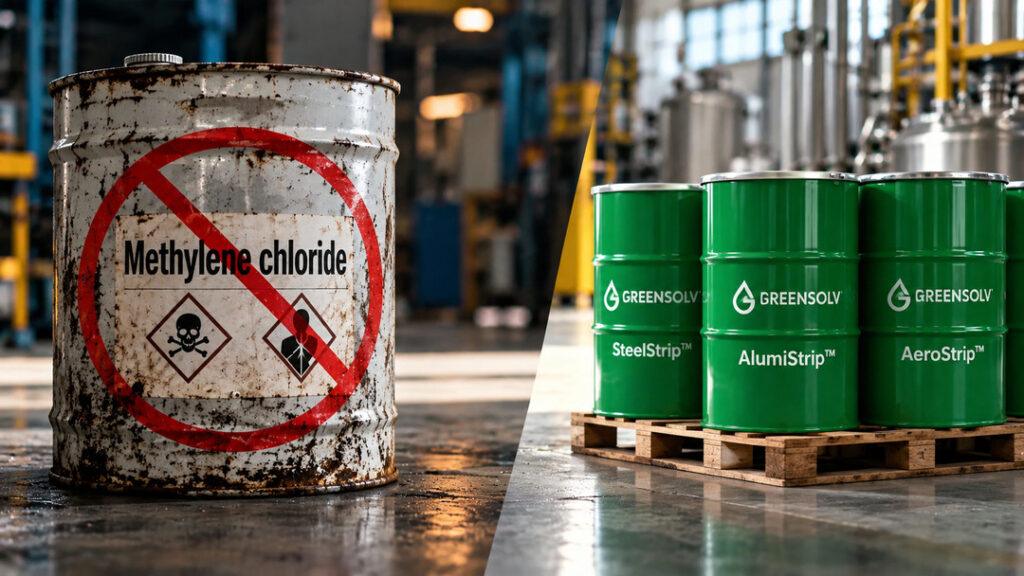
The methylene chloride EPA rule that restricted most uses of the solvent is no longer standing after a federal appeals court vacated both the 2024 regulation and its underlying risk determination. For chemical buyers, formulators, and EHS teams, however, that does not translate into a simple return to pre-rule business.
The September 15, 2026 decision changes the federal TSCA framework surrounding methylene chloride, also known as dichloromethane or DCM. It does not make the solvent less hazardous, eliminate separate occupational-safety requirements, or justify restoring a discontinued use without reviewing why it was removed in the first place.
The Methylene Chloride EPA Rule Was Vacated, Not Merely Delayed
In 2024, EPA finalized a Toxic Substances Control Act rule prohibiting most consumer, commercial, and industrial uses of methylene chloride while allowing specified uses to continue under workplace protections.
That framework was built on EPA’s revised determination that methylene chloride, considered as a whole chemical, presented an unreasonable risk to human health under its conditions of use.
The Fifth Circuit rejected that approach. In its September 15 court decision, the court vacated the 2024 rule and the associated risk determination and sent the matter back to EPA.
Among its findings, the court held that TSCA requires EPA to evaluate unreasonable risk under individual conditions of use rather than rely on a whole-chemical determination. It also rejected EPA’s treatment of personal protective equipment where evidence showed PPE was used or reasonably foreseeable.
That distinction is consequential. Vacatur removes the rule itself, rather than simply moving one compliance deadline.
A Court Decision Does Not Reverse the Hazard Profile
The regulatory change can easily be misunderstood as a new safety finding. It is not.
The court did not determine that methylene chloride is harmless. Its opinion expressly recognizes that overexposure can cause serious injury or death and that the chemical has carcinogenic properties. The dispute concerned how EPA evaluated risk and exercised its TSCA authority.
Methylene chloride is highly volatile, which makes inhalation exposure a central workplace concern. OSHA continues to regulate occupational exposure separately from the vacated EPA rule.
Under the current OSHA methylene chloride standard, the permissible exposure limit is 25 ppm as an eight-hour time-weighted average, while the 15-minute short-term exposure limit is 125 ppm. The standard also addresses monitoring, regulated areas, engineering controls, respiratory protection, medical surveillance, training, and recordkeeping under applicable conditions.
Regulatory relief and hazard reduction are different questions.
Buyers Should Not Treat Vacatur as an Automatic Purchasing Reset
A purchasing department may see the court ruling and ask whether methylene chloride can simply return to an approved-material list. That is too narrow a decision framework.
A product may have been removed, substituted, reformulated, restricted contractually, or qualified under a different process during implementation of the 2024 rule. Reversing those changes can affect supplier approvals, customer specifications, ventilation requirements, waste procedures, insurance expectations, worker training, and product stewardship records.
The first task should therefore be determining what actually changed because of the vacated rule.
| Decision area | What changed after vacatur | What still requires review |
|---|---|---|
| TSCA 2024 restrictions | Vacated by the Fifth Circuit | EPA’s next regulatory action |
| Worker exposure | EPA framework changed | OSHA requirements and actual exposure |
| Supplier qualification | Restrictions may affect availability | Specifications, SDSs and approved sources |
| Reformulation | Regulatory reason may have changed | Technical and customer qualification |
| Procurement | Some blocked uses may be reconsidered | Site controls and downstream obligations |
| Documentation | Compliance basis must be updated | Records supporting current decisions |
The table shows why a simple “allowed/not allowed” field in purchasing software is insufficient. Regulatory status should be connected to the specific use, facility, process, and exposure scenario.
EHS Teams Need to Separate TSCA Status From Workplace Controls
Facilities using methylene chloride should review their compliance files without automatically dismantling controls created during the earlier rulemaking period.
Ventilation improvements, closed-transfer systems, exposure monitoring, restricted work areas, training, and appropriately selected protective equipment may still serve an occupational-safety function regardless of whether a particular TSCA requirement survives.
The same logic applies to documentation. Companies already maintaining use-specific chemical records can adapt that structure rather than discard it. Kilburn’s discussion of TSCA compliance controls illustrates why chemical identity alone rarely answers every regulatory question; intended use and operating conditions also matter.
An EHS review should distinguish three categories: controls required by another applicable rule, controls justified by measured or foreseeable exposure, and controls adopted solely to comply with provisions that have now been vacated.
That distinction prevents legal change from becoming uncontrolled operational change.

Reformulators Should Preserve the Evidence Behind Substitution Decisions
Formulators face a different question. If methylene chloride was replaced because of the 2024 EPA rule, should the previous formulation return?
Not necessarily.
Substitution often triggers laboratory work, customer qualification, process adjustments, specification revisions, new raw-material approvals, and stability or performance testing. Once those investments have been made, the regulatory status of the original solvent is only one factor in deciding whether to reverse course.
Companies should compare performance, cost, worker exposure, process compatibility, waste handling, supply resilience, and customer requirements rather than assuming the old formulation becomes preferable again.
There is also value in preserving why the original change occurred. If EPA develops a narrower replacement regulation, a company with a documented substitution history can evaluate the new requirements much faster than one that erased the earlier decision trail.
EPA’s Next Move Is the Pressure Point to Watch
The court remanded the matter to EPA, meaning federal regulation of methylene chloride has not reached a permanent endpoint.
EPA could conduct new condition-of-use analyses, rebuild portions of the risk determination, propose narrower restrictions, reconsider exposure assumptions, or take other steps consistent with the court’s interpretation of TSCA. The exact path and timing should not be assumed before the agency acts.
Companies should also remember that the 2019 prohibition on methylene chloride for consumer paint and coating removal was a separate rule and was not the rule challenged in this case.
That makes change control more valuable than prediction. Regulatory teams should record which requirements were tied specifically to the vacated 2024 action, identify controls supported independently by OSHA or site risk assessments, and monitor EPA proceedings before making expensive reversals.
Regulatory Uncertainty Rewards Better Chemical Governance
The Fifth Circuit decision substantially changes the federal regulatory position, but it does not turn methylene chloride into an ordinary purchasing decision.
For purchasers, EHS teams, and formulators, the strongest response is to separate legal status from chemical risk, preserve useful exposure controls, document the basis for procurement and formulation decisions, and avoid treating regulatory vacatur as evidence that previous hazards disappeared.
The next version of the methylene chloride EPA rule may look very different from the one issued in 2024. Companies with use-specific records and disciplined change management will be better positioned to respond without repeatedly rebuilding their compliance programs from scratch.
Frequently asked questions
Is EPA’s 2024 methylene chloride rule still enforceable?
The Fifth Circuit vacated the 2024 risk management rule and its associated risk determination on September 15, 2026. EPA must now determine its next steps consistent with the court’s decision.
Does the ruling eliminate OSHA requirements for methylene chloride?
No. OSHA’s occupational methylene chloride standard is separate from EPA’s TSCA rule and continues to establish workplace exposure limits and related requirements for covered employers.
Can companies immediately return to uses they discontinued because of the EPA rule?
The court decision changes the TSCA regulatory basis, but businesses should first review OSHA obligations, exposure controls, customer requirements, formulation qualifications, contractual restrictions, and any other rules applicable to the specific use.