

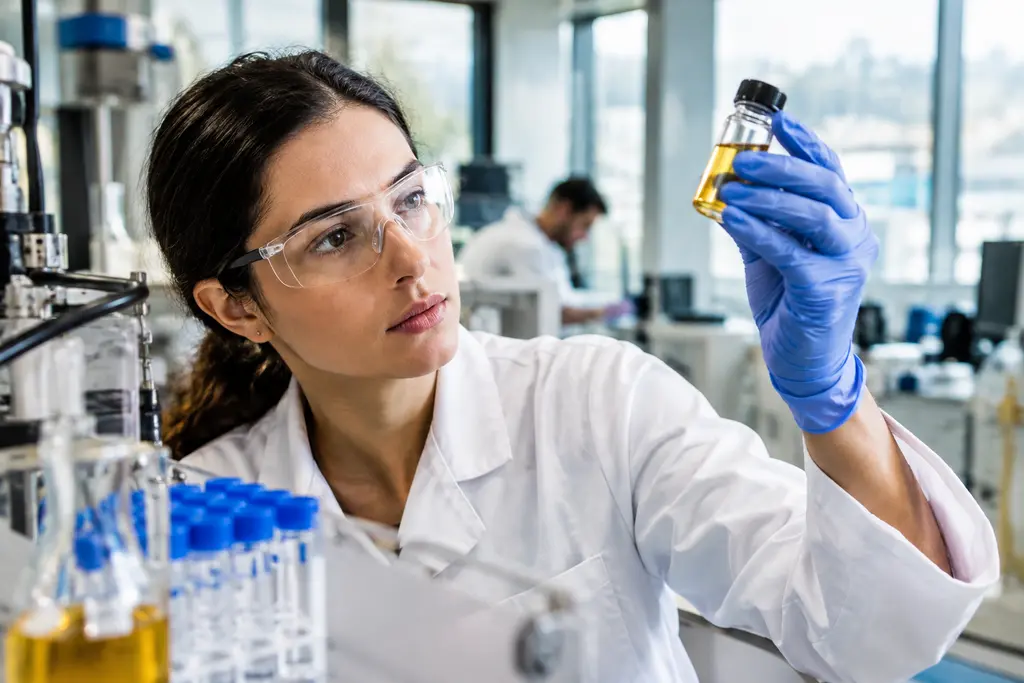
Alternative feedstocks moved further into federal industrial policy on September 4, 2026, when the U.S. Department of Energy’s Alternative Fuels and Feedstocks Office announced up to $58 million for the Accelerating Scale-up and Pre-piloting of Emerging Chemical Technologies funding opportunity, known as ASPECT. The program is not a commercial deployment award. It is aimed at the interim stages where promising chemistry must face larger equipment, less controlled inputs, and longer operating runs before industry can judge whether it has a credible path beyond the laboratory.
The distinction matters for chemical producers, investors, and public agencies assessing emissions and supply-chain claims. A lab reaction can show conversion, selectivity, or material performance under controlled conditions. A bench or pre-pilot system must begin answering different questions: whether feedstock variability disrupts performance, whether equipment can operate for useful durations, whether separation and purification steps remain practical, and whether costs can be estimated with enough confidence to support the next stage.
Why Alternative Feedstocks Are Being Funded Now
Alternative Feedstocks And The Scale-Up Gap
The DOE announcement described ASPECT as a funding opportunity of up to $58 million to promote chemical innovation using domestic alternative and waste feedstocks, with the stated aim of advancing technologies for U.S. chemical manufacturing DOE announcement. That framing places the program in a practical policy space: the United States already has large chemical markets, but many lower-carbon or waste-derived routes struggle to produce enough operating evidence to attract commercial capital.
For chemical producers, alternative feedstocks are not a single technical category. They can refer to waste-derived carbon, biomass-derived intermediates, residues, or other nontraditional inputs. Each route carries different processing challenges. Some materials vary by season or source. Some introduce impurities that affect catalysts, corrosion, separations, wastewater treatment, or product quality. Some may fit existing assets only after substantial pretreatment or process redesign.
That is why scale-up funding can be significant even when it does not prove commercial viability. The useful output from ASPECT may be operational data rather than immediate market volume. If a project documents where a route fails, that is still relevant information for industry. If it shows stable operation at a larger scale, the next question becomes whether the economics, permitting, feedstock logistics, and buyer specifications can support a larger demonstration.
What The DOE Announcement Actually Covers
The ASPECT program should be read as a pre-commercial industrial test, not as a guarantee that the funded technologies will be adopted by chemical manufacturers. DOE’s notice connects the funding to chemical technologies that convert alternative and waste feedstocks domestically. It also links the effort to national goals around chemical manufacturing, costs, performance, import reliance, and domestic supply-chain resilience. Those are policy objectives. Project outcomes will still depend on data generated after awards are made and systems are operated.
In an exploration of interconnected energy dynamics, Illinois Energy provides insights into regional energy and manufacturing issues, emphasizing how energy policy, process heat, feedstock availability, and manufacturing capacity interplay with public funding aimed at domestic production. For ASPECT, that interaction is especially relevant because chemical facilities often require reliable energy, transport access, qualified labor, environmental controls, and dependable input streams.
Program Design And Timing
Bench ASPECT Versus Pre-Pilot ASPECT
The ASPECT funding notice separates work into two main topic areas: Bench ASPECT and Pre-pilot ASPECT. Bench ASPECT is intended to move technologies beyond proof of concept toward bench and pre-pilot readiness. Pre-pilot ASPECT is directed at designing, constructing, and operating pre-pilot scale facilities, according to DOE’s funding notice ASPECT funding notice.
That structure is important because chemical scale-up risk changes with each step. At proof-of-concept scale, a team may focus on whether a pathway can make a target molecule or intermediate. At bench scale, repeatability, mass balance, impurity tolerance, and separations become harder to avoid. At pre-pilot scale, system integration begins to test whether upstream preparation, reaction, recovery, recycle streams, and waste handling can function together.
The ASPECT structure makes alternative feedstocks a test of systems engineering as much as chemistry. A promising reaction route can still face barriers if feedstock preparation consumes too much energy, if impurities shorten equipment life, or if product purification becomes too costly. The DOE program design appears to target that middle ground, where claims can be tested before the much larger expense of demonstration or commercial-scale construction.
Deadlines After The October Concept Paper Gate
As of November 10, 2026, the October 9, 2026 concept paper deadline had already passed. DOE’s funding notice listed full Stage 1 applications as due on December 1, 2026, at 5:00 p.m. Eastern Time, with selection notifications expected on April 8, 2027. Those dates mean the program had moved past initial concept screening but had not yet produced selected projects or public award results as of November 10, 2026.
This timing limits what can be said about impact. The $58 million ceiling defines the possible federal commitment under the opportunity, not the measured industrial result. Until DOE announces selections and awardees begin work, there is no project-level evidence on conversion performance, feedstock sourcing, cost, emissions effects, or readiness for later deployment. A related site analysis of the ASPECT scale-up test noted the same practical issue: deadlines and funding terms matter, but the harder evidence comes from execution.
- Concept papers were due on October 9, 2026.
- Full Stage 1 applications were listed as due on December 1, 2026.
- Selection notifications were expected on April 8, 2027.
- The program was aimed at bench and pre-pilot work, not immediate commercial rollout.
Industrial Impact Will Depend On Evidence

Feedstock Reality Is A Technical Filter
The policy case for alternative feedstocks is easy to state: use domestic resources and waste streams to support chemical manufacturing while reducing dependence on imported inputs where feasible. The engineering case is harder. Waste and biomass-derived inputs can carry moisture, ash, oxygenates, metals, chlorine, sulfur compounds, biological variability, or inconsistent composition. Those factors can affect process yield, catalyst life, corrosion risk, downstream purification, and waste management.
ASPECT’s potential value is that it pushes applicants toward more realistic testing. A project that works only with highly purified model compounds may not tell manufacturers enough about industrial conditions. A project that uses practical input streams and reports the consequences of real impurities gives stronger evidence, even if the results show trade-offs. For industrial buyers, that kind of information is often more useful than a high selectivity figure from a narrow laboratory test.
Still, the funding should not be treated as proof that a route will reduce emissions or costs. Such outcomes depend on feedstock collection, transport distance, energy source, process yield, co-product handling, facility utilization, and end-market requirements. A credible assessment would need life-cycle analysis, techno-economic analysis, and operating data. The DOE opportunity can support the generation of some of that evidence, but it does not settle those questions in advance.
Cost Share And Commercial Risk
Federal funding can reduce early scale-up risk, but it does not remove the need for private capital discipline. Pre-pilot systems can expose cost items that were minor at lab scale: pumps, heat exchangers, control systems, materials of construction, analytical systems, waste treatment, operator training, and maintenance. If a process requires unusual materials, expensive pretreatment, or narrow operating windows, those facts will weigh heavily on later investment decisions.
Application design also matters. Strong proposals are likely to show why a target chemical has meaningful market demand, why the feedstock supply is credible, and how the project will measure performance. Weak proposals may rely on broad sustainability claims without enough detail on mass balance, product specifications, process uptime, or cost drivers. For the public, the key question is not whether a technology sounds cleaner, but whether it can produce verified data under conditions that resemble industrial use.
There is also a workforce and siting dimension. Pre-pilot work needs engineers, operators, safety review, process controls, and environmental management. Facilities that handle waste-derived or variable feedstocks may need clear procedures for characterization and storage. These issues do not make the program less relevant; they make the scale-up stage more important. A pre-pilot project can identify such barriers before a company commits to a much larger asset.
Alternative Feedstocks Need Measured Expectations
ASPECT is best understood as a targeted attempt to gather evidence in the most difficult part of chemical innovation: the space between a successful lab result and an investable industrial system. The September 4, 2026 announcement created a funding path, while the December 1, 2026 full Stage 1 application deadline and April 8, 2027 expected selection date set the near-term administrative timeline.
For alternative feedstocks, the impact will depend less on the headline funding amount than on the quality of projects selected, the realism of feedstock testing, and the transparency of technical results. If funded teams can show durable operation, practical separations, credible cost assumptions, and consistent product quality, the program could help reduce uncertainty for later demonstrations. If projects mainly confirm unresolved barriers, that evidence will still be useful, provided it is reported clearly enough for industry and policymakers to learn from it.
The cautious reading is that DOE’s $58 million ASPECT opportunity may improve the evidence base for advanced chemical routes, but it had not produced industrial outcomes as of November 10, 2026. Its significance will be measured after selections, project execution, and data review, not by the announcement alone.