


The Green Chemistry Awards provide a useful, though not complete, evidence base for judging how chemical innovation can reduce environmental harm. Established in 1996, the program recognizes technologies that reduce or eliminate hazardous substances, use less energy and water, improve product sustainability, and show economic benefit, according to the ACS award criteria.
That framing matters because sustainability claims in chemistry can be difficult to compare across sectors. A solvent change in pharmaceutical manufacturing, a marine coating, a semiconductor heat-transfer fluid, and an agricultural biological product do not reduce harm in the same way. The award program does not make those technologies equivalent. It does, however, create a structured recognition pathway for innovations that report measurable reductions in waste, hazardous inputs, water use, energy demand, or climate impact.
What Green Chemistry Awards Measure
The program’s strongest value is its focus on source reduction rather than end-of-pipe control. In practice, that means the recognized chemistry is expected to reduce hazards or resource burdens within the design of the product or process, rather than relying only on later treatment, capture, or disposal. That distinction is central to green chemistry, because avoiding a hazardous substance can be more durable than managing it after use.
Green Chemistry Awards Criteria And Boundaries
The 2026 nomination requirements, as described in the research record, required eligible technologies to show significant milestones within the past five years, include a significant U.S. component, demonstrate source reduction of hazardous substances, and fit one of seven official focus areas. These conditions give the awards a practical filter: nominees must point to implemented or meaningfully advanced technology, not only a general sustainability goal.
At the same time, award recognition should not be read as a full lifecycle certification for every use case. A process may reduce manufacturing waste while still requiring attention to feedstock sourcing, worker exposure, downstream persistence, packaging, transport, and disposal. A product may reduce one category of impact while creating new questions in another. The awards are best interpreted as evidence of specific improvements documented for a defined technology, not as proof that all environmental concerns have been removed.
Reported Aggregate Reductions
The reported cumulative results are substantial. Through 2022, EPA stated that winning technologies had eliminated about 830 million pounds of hazardous chemicals and solvents per year, saved more than 21 billion gallons of water annually, and prevented about 7.8 billion pounds of carbon dioxide equivalent emissions each year, based on the EPA program description.
Those figures are useful indicators of scale, but they should be handled with care. They are aggregate estimates across many technologies and years, not a single controlled experiment. They do not tell readers which sector contributed most, how every estimate was verified, or how benefits changed after commercialization expanded. For procurement, EHS, and operations teams, the practical question is narrower: whether a given awarded technology can reproduce similar benefits under the conditions of a specific plant, supply chain, or product line.
What The 2026 Winners Show
The 2026 awards were announced on July 6, 2026, and the recognition ceremony was held on August 26, 2026, at the ACS Fall Meeting in Chicago. As of October 25, 2026, the program had honored 159 American businesses, academic institutions, and individuals. The 2026 examples show why the award program remains relevant: recognized technologies addressed manufacturing waste, agricultural inputs, persistent chemicals, marine fouling, and pharmaceutical process efficiency.
Manufacturing Waste And Process Efficiency
Corteva Agriscience’s process for manufacturing Adavelt™ active, a fungicide used in more than 30 crops, was recognized in 2026. The research record states that the process reduced waste generation by more than 90% and used renewable feedstocks such that 41% of the carbon atoms in the product came from renewable carbon. This is a process-level claim, not a blanket claim about every environmental impact connected with fungicide use. Its significance is that a high-volume agricultural chemistry route can be redesigned to reduce waste intensity at the point of manufacture.
In pharmaceuticals, NewAmsterdam Pharma and Snapdragon Chemistry received recognition for a scaled manufacturing route for the chiral core of obicetrapib. Reported improvements included approximately 80% yield, about 80% lower process mass intensity, elimination of aqueous waste, about 70% shorter manufacturing cycle time, and about 50% lower cost. These metrics matter because pharmaceutical routes can involve solvent-heavy, multi-step synthesis. Still, the available facts describe the manufacturing route for a specific intermediate, not the full medicine lifecycle.
Safer Materials And Climate-Linked Substitution
Several 2026 awards focused on replacing problematic materials or lowering climate-related burdens. Algenesis Labs’ Soleic® was recognized as a bio-based and fully biodegradable polyurethane system addressing polyurethane waste, against a global polyurethane production context reported as more than 25 million tonnes per year. The core issue is not simply whether a material is bio-based, but whether it can meet performance needs while reducing persistence and waste concerns in real applications.
PPG’s SIGMAGLIDE® 2390, a biocide-free marine coating, was recognized for avoiding toxic antifouling substances while improving hydrodynamic performance. Reported modeling indicated immediate power savings up to 20% and potential carbon dioxide emission reductions up to 35%, depending on vessel type and operating profile. The conditional wording is significant. Modeled savings can vary with ship design, speed, route, hull condition, maintenance, and duty cycle.
Micron Technology received the 2026 Climate Change category award for a fluorine-free, biodegradable, low-global-warming-potential heat-transfer fluid intended as an alternative to PFAS-based coolants in semiconductor dry etch chambers. This example is notable because it links climate considerations with toxic chemical concerns. It also shows the challenge of implementation: semiconductor manufacturing depends on tight process control, so substitution must be assessed for performance, reliability, safety, and supply availability.
Why Recognition Does Not End The Scale Test
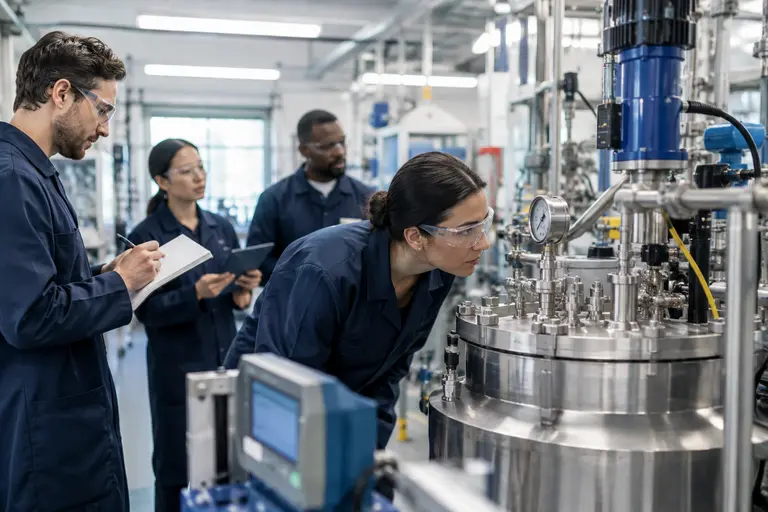
The Green Chemistry Awards can help identify credible candidates for lower-impact chemistry, but scale remains the difficult step. Laboratory success, pilot production, and full commercial operation have different constraints. Feedstock availability, process safety, capital equipment, quality specifications, waste handling, permitting, customer qualification, and cost stability can all affect adoption.
This is why award recognition should be paired with due diligence. A buyer or sustainability team should ask what baseline was used, which impacts were measured, whether the technology is commercialized or still limited in deployment, and whether the reported savings apply to the intended use. Related analysis on how recognized technologies face scale and verification questions is available in this scale-focused review.
Storage and handling are part of that due diligence. For detailed insight into how storage operations and industrial handling practices play a critical role, further context can be found on Mengo Industrial, which provides comprehensive guidelines for green chemical management.
Green Chemistry Awards And Practical Adoption
The most defensible reading of the Green Chemistry Awards is neither skepticism nor celebration. The program highlights technologies with documented environmental improvements, some of which report large reductions in waste, water use, hazardous inputs, or climate burden. It also provides a public signal that safer and less resource-intensive chemistry can align with economic performance.
For companies evaluating these innovations, the next step is specific verification. A technology should be reviewed against site conditions, regulatory duties, worker safety requirements, supply security, product performance, and end-of-life questions. Award status can start that review, but it cannot replace it. The practical value of the program lies in pointing attention toward chemistry that has moved beyond aspiration and into measurable reduction claims, while leaving room for careful assessment before broad adoption.