

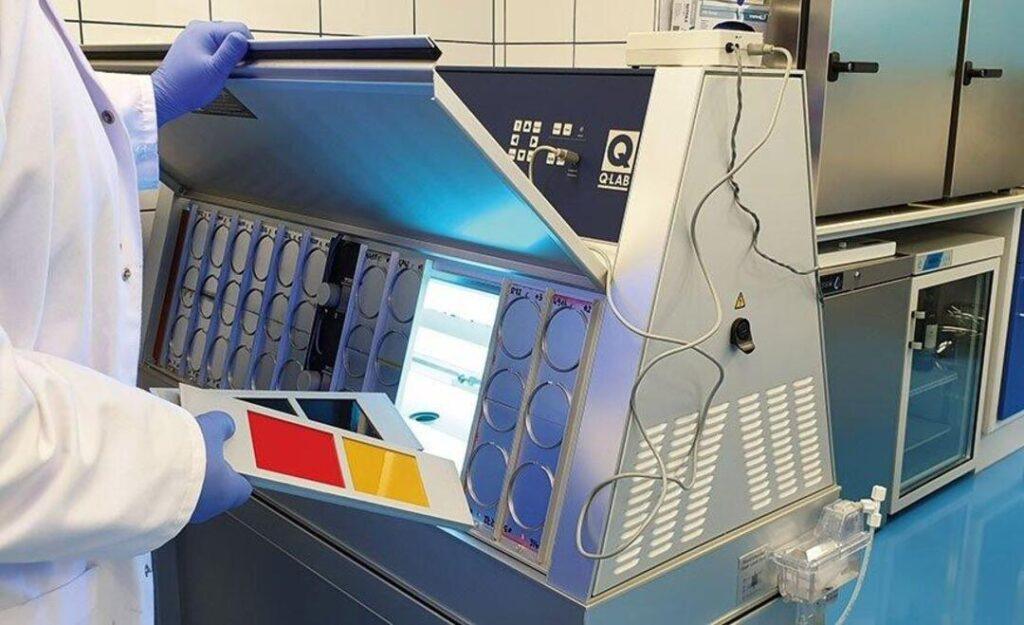
A coating formulation survives 1,000 hours in an accelerated UV weathering chamber without visible failure. Does that mean it will last five years outdoors?
No. Laboratory weathering hours cannot be converted into outdoor service years using a universal formula.
Accelerated weathering is valuable for comparing coatings, identifying potential degradation mechanisms and screening changes in raw materials. However, its usefulness depends on the exposure conditions, material characteristics and evidence connecting laboratory results with actual outdoor performance.
For manufacturers purchasing titanium dioxide (TiO₂) pigments for exterior paints, plastics and industrial coatings, this distinction matters.
A supplier may advertise strong weathering resistance or provide a laboratory exposure result. That information can support material qualification, but it cannot independently establish how long the finished product will perform in a particular climate.
The stronger purchasing decision asks what was tested, how it was exposed and which performance changes were measured.
Why Titanium Dioxide Can Affect Outdoor Coating Performance
Titanium dioxide is widely used in coatings because its optical properties provide whiteness and hiding power.
Commercial TiO₂ pigments are available in different grades, including rutile and anatase forms.
These forms share the same chemical formula but have different crystal structures and properties.
Rutile is commonly selected for demanding exterior pigment applications where weathering resistance is important.
However, the choice between rutile and anatase is only part of the material-selection decision.
Commercial titanium dioxide grades may also differ in surface treatment, particle characteristics and compatibility with the intended binder.
These differences can influence how the complete coating responds to ultraviolet exposure, moisture and heat.
Some titanium dioxide surfaces can promote photocatalytic reactions under suitable conditions. Those reactions may contribute to degradation of nearby organic materials.
Pigment engineering and surface treatments can help control unwanted interactions.
Nevertheless, a statement that a pigment is rutile or surface-treated does not prove that every coating containing it will have excellent outdoor durability.
The finished formulation matters.
The existing guide to anatase versus rutile titanium dioxide explains why crystal structure and grade selection affect industrial applications.
For weathering qualification, that foundation must be combined with controlled finished-product testing.
What an Accelerated Weathering Chamber Actually Does
Accelerated weathering systems expose test specimens to controlled environmental stresses intended to reproduce important aspects of natural aging.
Depending on the equipment and selected method, these stresses can include ultraviolet radiation, moisture, elevated temperature and repeated environmental cycles.
One established coating method is ASTM D4587-23, Fluorescent UV-Condensation Exposures of Paint and Related Coatings.
The standard describes accelerated weathering using fluorescent UV exposure and condensation, including guidance on preparing and evaluating test specimens.
Its purpose is to help laboratories assess changes in relevant material properties.
The method also emphasizes the importance of consistent equipment, exposure conditions and comparison materials.
The applicable standard and laboratory procedure must be identified when suppliers present results. Two reports using different exposure cycles should not automatically be compared as though they represent identical tests.
The Test Cycle Is as Important as the Exposure Duration
An accelerated test can expose coating panels to alternating periods of light and moisture.
The exact sequence matters.
Two tests may both last 1,000 hours but use different UV intensity, lamp types, temperatures and condensation conditions.
They may therefore place different stresses on the same coating.
A longer test under one set of conditions does not necessarily produce greater damage than a shorter test using another exposure program.
For chemical procurement, the number of hours should never be treated as a complete weathering specification.
A useful report identifies the standard, equipment, lamp type, exposure cycle and relevant measurement conditions.
ISO 16474-3:2021 Provides an International Testing Framework
The international reference for fluorescent UV exposure of paints and varnishes is ISO 16474-3:2021.
This standard describes methods for exposing coatings to fluorescent ultraviolet lamps, heat and water under controlled laboratory conditions.
It addresses environmental variables such as temperature, humidity and water exposure.
The standard also explains that specimen preparation and evaluation of changes in material properties are covered in related documents.
As of October 19, 2026, ISO 16474-3:2021 remains the published edition, while a replacement is under development.
That distinction is relevant when reviewing supplier technical reports.
A laboratory referencing the 2021 edition should not claim conformity with a future edition that has not yet been published.
Likewise, a supplier’s statement that a product passed an ISO weathering test is incomplete without the actual exposure conditions and performance criteria.
ISO 16474-3 establishes testing methods. It does not provide a universal guarantee of coating service life.
Why Laboratory Hours Do Not Translate Directly Into Outdoor Years
Outdoor weathering is influenced by several interacting environmental factors.
A coating used in a humid tropical environment may experience a different combination of heat, sunlight and moisture than the same material installed in a dry, high-altitude region.
Seasonal temperature changes, pollution, condensation and substrate conditions can introduce additional stresses.
An accelerated laboratory chamber cannot automatically reproduce all these conditions.
The relationship between laboratory exposure and outdoor degradation must therefore be established for the relevant material and failure mechanism.
This is a major subject of ongoing research at the U.S. National Institute of Standards and Technology.
NIST’s accelerated laboratory weathering research program studies the effects of UV spectral distribution, radiation intensity, temperature, moisture and light-exposure cycles on material performance.
The program develops measurement methods intended to improve the reliability of accelerated aging experiments and service-life predictions.
Its work demonstrates why reliable predictions require detailed exposure characterization rather than a simple hours-to-years conversion.
Different Coatings Can Have Different Acceleration Factors
A technical study published by weathering-equipment manufacturer Q-Lab provides a practical illustration.
In its research discussion on accelerated weathering testing, Q-Lab describes work connecting particular laboratory exposure protocols with outdoor results from Florida.
The publication reports that acceleration factors varied considerably between the coating technologies studied.
For particular automotive coatings, the calculated factors ranged from approximately 8 to 16 under the examined protocol and reference conditions.
For aerospace coatings evaluated in that research, the reported factors were approximately 3 to 4.
Those numbers are research findings for specific materials and exposure conditions. They are not general conversion factors for titanium dioxide pigments or exterior paints.
The publication emphasizes that its findings do not establish a universal acceleration factor and that outdoor testing remains necessary.
This is a critical distinction for buyers.
A coating manufacturer’s successful comparison using one validated weathering protocol cannot automatically justify a service-life claim for another coating formulation.
What a Useful Weathering Report Should Contain
A supplier’s weathering claim becomes more useful when it includes the information needed to interpret and reproduce the test.
The following distinctions are especially important.
| Reported information | What it establishes | What it does not establish |
|---|---|---|
| Exposure duration | How long the specimen was tested | Equivalent years outdoors |
| Test method and cycle | Laboratory exposure conditions | Complete simulation of every climate |
| Comparison with a control | Relative performance under the test | Universal superiority over all other coatings |
| Measured property changes | Specific observed effects after exposure | Performance of unmeasured characteristics |
| Outdoor correlation evidence | Relationship for tested systems and conditions | Automatic prediction for unrelated formulations |
A result such as “passed 1,000 hours” should be accompanied by the acceptance criteria.
For example, passing might mean that a coating remained within an agreed color-change limit.
It might instead refer to gloss retention, cracking, blistering or another property.
Those outcomes are not interchangeable.
A coating could retain color while losing gloss or showing other forms of degradation.
A complete report should therefore identify the performance requirements relevant to the finished product.
Why Pigment Grade Should Be Tested in the Finished Formulation
Titanium dioxide rarely determines coating durability by itself.
The finished product also contains binder, additives and other ingredients that influence performance.
The behavior of a particular TiO₂ grade can therefore depend on the surrounding formulation.
Consider a manufacturer evaluating two rutile titanium dioxide grades for an exterior coating.
Both grades meet their published chemical specifications.
One has a higher price and is marketed as offering improved exterior durability.
The manufacturer’s purchasing decision cannot be settled by the two technical data sheets alone.
The company needs representative coating evaluations.
Ideally, comparisons should control the relevant formulation variables and use an agreed exposure protocol.
Where one pigment requires a different dispersant or binder adjustment, that change should be documented because it may affect the interpretation of results.
Weathering performance should be considered alongside initial hiding power, color, gloss and application behavior.
The site’s broader guide to titanium dioxide specifications provides additional context for reviewing pigment characteristics beyond nominal TiO₂ content.
For outdoor applications, the appropriate grade is the one that meets the complete product specification, including demonstrated durability under relevant conditions.
Field Exposure Still Has a Role
Accelerated testing offers speed and controlled comparisons.
Outdoor exposure provides a different kind of evidence.
A real-world test can reveal degradation associated with environmental conditions that were not adequately represented in the laboratory.
However, outdoor testing also has limitations.
Weather conditions vary between locations and years. Specimens may experience different exposure histories, and a result from one climate cannot automatically represent another.
These limitations do not make outdoor testing unnecessary.
They mean the laboratory and field programs should be designed to answer complementary questions.
For important exterior products, manufacturers may use accelerated testing to screen candidate formulations and controlled outdoor exposure to strengthen confidence in long-term performance.
Historical field results from an approved formulation can be useful reference evidence when assessing a proposed pigment change.
The most important comparison is whether the test reproduces the relevant degradation mechanisms and distinguishes materials in a way that corresponds to their intended service conditions.
What Procurement Teams Should Require Before Approving a Claim
Purchasing teams should ask suppliers to identify the exact titanium dioxide grade and the coating formulation used to support a weathering claim.
A technical data sheet describing a pigment as weather-resistant may help select candidate materials.
It does not automatically establish that the customer’s final coating will achieve the same performance.
A meaningful approval file should document the relevant test method, edition, exposure conditions, specimen preparation and evaluation criteria.
It should also explain whether the result came from an internal laboratory, independent testing organization or another source.
An independently conducted weathering test can strengthen the evidence, but it establishes only what was tested under the specified conditions.
A certificate of analysis usually reports selected material properties for an identified pigment lot. It does not automatically certify finished-coating service life.
A safety data sheet provides chemical hazard and handling information. It is not a weathering-performance certificate.
An agreed purchasing specification should define the properties and acceptance limits relevant to the intended product.
If a supplier changes the grade’s surface treatment or other performance-relevant characteristics, the buyer should assess whether the original qualification remains applicable.
Use Accelerated Weathering to Compare Materials, Not Promise Calendar Years
The most useful accelerated weathering result is often a controlled comparison between candidate coatings and a suitable reference material.
Such testing can identify weaknesses, support formulation development and provide evidence for supplier qualification.
It cannot automatically establish that 1,000 laboratory hours equal five, ten or any other fixed number of outdoor years.
For titanium dioxide purchasing, the practical decision is to require a documented test basis and relevant performance evidence.
Manufacturers should be cautious when a supplier presents a weathering duration without explaining the exposure cycle, measured outcomes or relationship to real service conditions.
A laboratory result is most valuable when it helps predict a defined product risk—not when it is converted into an unsupported lifetime guarantee.