

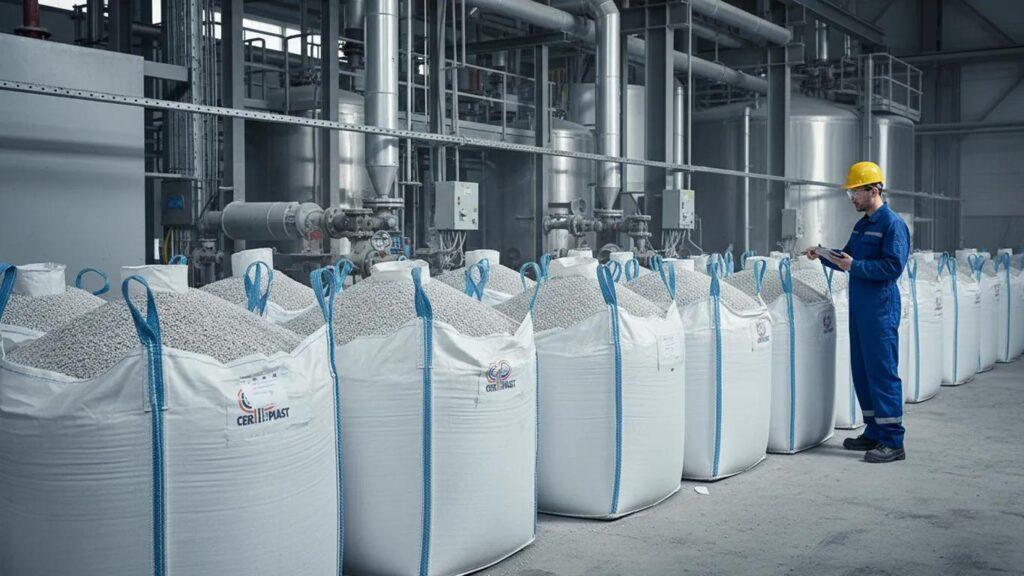
Chemical manufacturers, plastic processors and industrial raw-material distributors operating in the European Union face new requirements for preventing plastic pellet losses. Although the regulation entered into force in December 2025, most operational requirements will apply from December 17, 2027.
The rules cover the handling, storage and transportation of plastic pellets, including relevant polymer granules and powders used as manufacturing feedstocks.
For industrial procurement teams, the biggest change is that supplier qualification may need to consider more than material specifications, packaging costs and delivery performance.
Buyers must also understand whether their facilities, suppliers and transportation partners fall within the new requirements for preventing pellet spills and environmental releases.
The EU plastic pellet loss rules establish responsibilities for risk management, employee training, transportation controls and documentation. Larger operations may also need independent certification.
However, the requirements do not apply equally to every chemical, facility or transportation activity.
Understanding the thresholds and application dates is essential before changing purchasing agreements or operating procedures.
What the EU Plastic Pellet Regulation Requires
Regulation (EU) 2025/2365 establishes a European framework for preventing plastic pellets from escaping into the environment during industrial activities.
The legislation was adopted on November 12, 2025, and published in the Official Journal on November 26, 2025.
Under the official EU plastic pellet loss regulation, covered businesses must prioritize preventing pellet spills, containing material that escapes its primary packaging, and cleaning up losses using environmentally appropriate practices.
The regulation addresses activities throughout the supply chain, including production, recycling, compounding, storage, processing, distribution and transportation.
It does not establish a general ban on plastic pellets.
Instead, its objective is to reduce preventable releases of small plastic particles into soil, waterways and other environments.
Which Businesses Fall Within the Rules?
For industrial installations, a central threshold is five tonnes of plastic pellets handled during the previous calendar year.
Businesses meeting or exceeding that threshold may fall within the regulation’s scope.
The rules also cover operators of installations used to clean plastic pellet containers and tanks, along with EU and non-EU carriers transporting pellets within the EU.
Certain maritime activities are subject to separate application arrangements.
This means a chemical distributor does not necessarily escape the requirements simply because it does not manufacture the material.
A warehouse handling qualifying plastic pellets can be relevant, as can a logistics company transporting those pellets between facilities.
However, the five-tonne threshold should not be applied indiscriminately to every transportation operator or tank-cleaning installation. The regulation defines those categories separately.
The 2027 Deadline Is Not the Only Important Date
Different provisions take effect at different times.
| Date | Regulatory development |
|---|---|
| December 16, 2025 | Regulation entered into force; certain general prevention and related provisions began applying |
| December 17, 2027 | Most installation and transportation requirements become applicable |
| December 17, 2028 | Specified maritime shipping requirements begin applying |
The distinction prevents a common compliance mistake.
A business should not assume that every obligation can be postponed until December 2027.
The regulation’s general requirement to avoid losses and respond promptly when they occur has already applied since December 16, 2025.
At the same time, future registration, documentation and operational duties should not be represented as already fully applicable when their legal application dates have not arrived.
The European Commission’s explanation of the new pellet-loss legislation confirms that the framework covers manufacturers, recyclers, processors, storage operators and carriers.
The Commission also identifies December 17, 2026, as a deadline for work on implementation support and a request for harmonized standards addressing estimates of pellet losses.
That milestone is distinct from the principal December 2027 operational deadline.
Why Five Tonnes and 1,500 Tonnes Mean Different Things
Two numerical thresholds are especially important.
The first is the five-tonne threshold used to determine whether many industrial installation operators fall within the regulation.
The second is the 1,500-tonne threshold, which helps determine additional compliance obligations.
An installation handling at least 1,500 tonnes during the previous calendar year may face independent certification requirements depending on the size of the enterprise.
The regulation establishes different deadlines.
Large enterprises meeting the relevant threshold must obtain certification by December 17, 2027, and generally renew it every three years.
Medium-sized enterprises have until December 17, 2028, with a four-year renewal cycle.
Small enterprises have until December 17, 2030, for their initial certification. Their certificates are valid for five years, after which the regulation provides a choice of renewal or the applicable self-declaration route.
Microenterprises and operators below the relevant certification threshold generally follow a simplified self-declaration approach.
Specific alternatives are available where qualifying permit or environmental management arrangements satisfy the regulation’s conditions.
These requirements concern the relevant installation and responsible economic operator, not simply a company’s total global plastic purchases.
A Practical Procurement Example
Consider two hypothetical EU industrial facilities.
Facility A handled six tonnes of qualifying plastic pellets during 2026.
Facility B, operated by a large enterprise, handled 1,600 tonnes during the same year.
Both may fall within the regulation’s installation-related scope.
However, Facility B reaches the threshold for additional certification duties, while Facility A would ordinarily follow the applicable self-declaration process.
The figures illustrate how the thresholds work. They are not actual company records or legal determinations for particular facilities.
For businesses operating several installations, each location’s activities and quantities should be evaluated against the relevant provisions.
Why Packaging and Transfer Points Matter
Plastic pellets can escape during bag filling, container opening, material transfer, transportation and unloading.
Small releases may initially remain within a production or warehouse area.
However, pellets can subsequently move outside the facility through drainage systems, surface runoff or other pathways.
The regulation distinguishes a spill, involving pellets escaping primary containment within an installation or transport means, from a loss, involving their release into the environment.
That distinction is important because preventing a spill from becoming an environmental loss is a central objective of the legislation.
For packaging operations, the regulation addresses container strength, suitable closure and measures intended to prevent material escaping under normal transportation conditions.
It also requires risk-management arrangements appropriate to the installation.
Depending on the identified risks, these arrangements can address material-transfer locations, containment equipment, drainage protection, cleaning equipment and responsibilities for responding to incidents.
The regulation sets requirements, but the appropriate implementation depends on the actual facility.
Qualified operations and environmental-safety personnel should determine the measures suitable for specific equipment and working conditions.
Pellets and Powders Are Not Always Equivalent
The legal definition of plastic pellets includes qualifying polymer-containing materials used for moulding operations, regardless of their particular shape or size.
Therefore, the term is not limited to conventional round plastic granules.
Certain polymer powders, flakes and other feedstock forms can also fall within the definition.
However, an ordinary inorganic chemical powder is not automatically a plastic pellet.
For example, titanium dioxide pigment, TiO₂ (CAS 13463-67-7), is not itself a polymer-containing moulding material.
A plastic masterbatch pellet incorporating titanium dioxide may be covered because the pellet is a polymer-containing feedstock.
The relevant question concerns the identity and intended manufacturing function of the complete material.
The site’s existing guide to powder versus granular chemicals explains why physical form can affect material transfer, dust generation, storage and process suitability.
For the EU regulation, buyers must go one step further and determine whether the product meets the specific legal definition.
What Chemical Buyers Should Ask Their Suppliers
Companies purchasing plastic pellets for EU manufacturing operations should review their existing supplier documentation before the principal requirements take effect.
The first task is to identify the actual material and its physical form.
A product description such as polymer granules or plastic resin powder may not provide enough information to establish the correct regulatory treatment.
The supplier should be able to identify the product and relevant manufacturing or supply-chain characteristics.
Buyers should also clarify packaging arrangements and the responsibilities assigned to each party.
For example, a purchasing contract may need to establish who is responsible for packaging integrity, shipment information, supplier notifications and documentation relevant to compliance.
The agreement should distinguish the obligations of the pellet manufacturer, distributor, warehouse operator and carrier.
Supplier Declarations Are Not All the Same
A product specification defines the technical requirements for a supplied material.
A certificate of analysis reports selected test results associated with a particular production lot.
A safety data sheet communicates chemical hazards and relevant precautions.
None of these documents automatically demonstrates that a warehouse or transportation operator has implemented the risk-management requirements established by the new regulation.
A self-declaration of conformity or third-party certification under the pellet-loss framework concerns the applicable installation and compliance arrangements.
Purchasing teams should therefore avoid using a conventional chemical CoA as evidence that an operator has met its environmental release-prevention obligations.
The appropriate evidence depends on the supplier’s actual role and the legal requirements applicable to it.
Why the New Rules Are Different From REACH Microplastics Reporting
The EU already regulates certain synthetic polymer microparticles under REACH Annex XVII, Entry 78.
That framework includes restrictions, exemptions, supplier-information requirements and annual environmental-release reporting obligations for specified activities.
Regulation (EU) 2025/2365 addresses a different, though related, problem.
Its central purpose is preventing plastic pellets from escaping during handling and transportation.
The two systems may affect the same industrial supply chain, but they are not interchangeable.
A manufacturer subject to REACH microplastics reporting should not automatically assume that completing its annual report satisfies the new pellet-handling requirements.
Likewise, holding a pellet-loss prevention certificate does not automatically satisfy every applicable REACH obligation.
For industrial chemical companies, the practical solution is to maintain separate records of the responsibilities arising under each framework and identify where the supporting information overlaps.
How Businesses Can Prepare Before December 2027
The most useful preparation begins with a realistic assessment of the materials handled and the processes involved.
Companies should identify facilities that handle qualifying plastic pellets and review their annual quantities.
For installations potentially within scope, the next step is to determine where spills or environmental losses could occur.
Packaging, material transfer, warehouse operations, loading and unloading, and contractor activities may all be relevant.
The risk-management plan should reflect the actual installation and its operations.
It should identify responsibilities, relevant equipment and procedures, and the information needed to maintain records of handled quantities and estimated losses.
Companies should also assess whether certification, self-declaration or another permitted compliance route applies.
For transportation arrangements, responsibilities should be assigned clearly between the facility and the carrier.
Non-EU carriers transporting pellets within the Union should additionally examine the requirements concerning an authorized representative.
Businesses using maritime transport must account for the distinct December 2028 provisions rather than applying the same deadline to every shipping activity.
The Strongest Compliance Decision Begins With the Supply Chain
The EU’s plastic pellet loss regulation introduces a new reason to examine industrial material handling beyond product quality and price.
Chemical buyers should understand whether their suppliers and logistics partners are covered, which facilities cross the relevant thresholds and what evidence will support compliance.
The central distinction is between a technically acceptable raw material and an appropriately controlled supply chain.
A polymer pellet may meet its purchasing specification while still being handled through arrangements that create unnecessary environmental release risks.
For businesses preparing for December 2027, the most valuable action is to identify those risks and establish clear responsibilities before the new requirements become broadly applicable.
The objective is not simply to obtain another supplier declaration. It is to prevent pellet losses and maintain evidence that the applicable responsibilities have been addressed.